


Year of Birth
Nationality
Location
Social
After many years of living in Cape Town, Liza Grobler and her family now reside in Oudtshoorn – a town in the semi-desert Karoo region, surrounded by churches, birds from many places and very big skies that shift with the seasons. The Klein Karoo is home to the Cango Caves, the earliest traces of modern man and various outmoded habits. As a compulsive constructor of alternative landscapes and realities, she explores ideas that bring together physical and psychological spaces and historical and ecological scapes. Her practice is built around process; creating a tension between the materiality and ephemerality of media. She invites the viewer to take a leap of faith and step into these constructive worlds alongside
Grobler is an award-winning South African artist and curator whose practice spans visual art, film, public art and site-specific installation. She received a KANNA Award for curating the 30th-anniversary exhibition PLEK / PLACE in 2026 and the award for Best Visual Contribution at the Klein Karoo National Arts Festival in 2023. She also serves as curator of the KKNK Visual Arts Programme for 2025 and 2026. Her international recognition includes the Centre Luigi di Sarro VAA Award in Italy for her short film Voices from a Divided Fountain in 2022 and the Africa Centre Award in 2016. Career highlights include solo exhibitions at Rauma Art Museum in Finland, projects for the Cape Town International Art Fair and Cape Town’s International Design Capital programme, and screenings of her films in Serbia, Ethiopia, Tasmania and beyond. She has participated in residencies across Europe, Africa, Asia and the Americas, and her work has been presented in solo and group exhibitions, international art fairs and public projects. Grobler is represented by Everard Read Galleries in Cape Town, Johannesburg, Franschhoek and London.
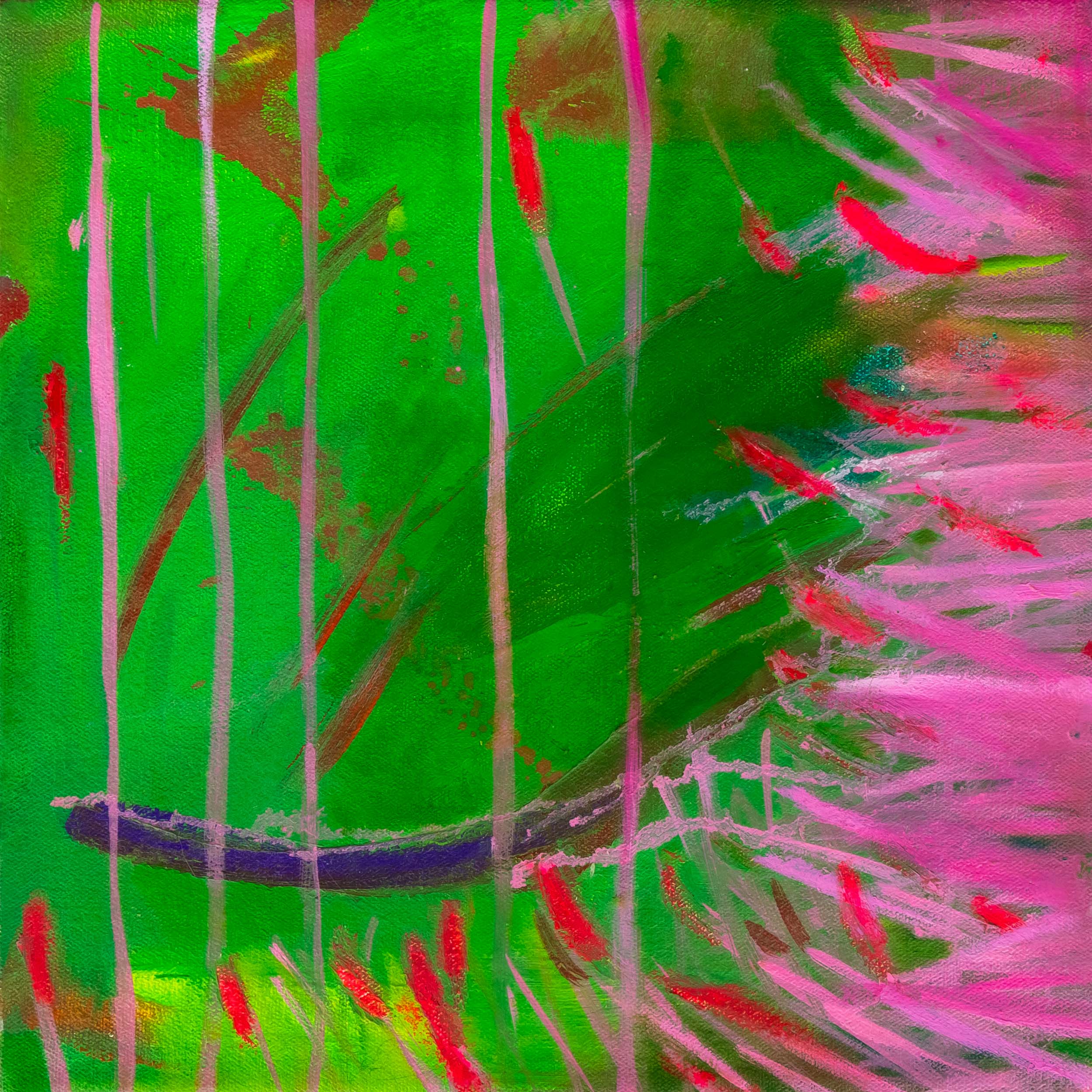
A Short Walk takes its cue from walking through a flat, dry landscape ringed by mountains, where green can appear suddenly after rain and plant life seems to expand almost overnight. Liza Grobler does not paint the view but the impression of moving through it: looking down at a small patch of ground while aware of a wider depth beyond. Pink enters from the side in a rush of heat and growth, and the image never settles into one fixed orientation. It reads as a fragment of experience, somewhere between what is seen, what is felt and what is remembered afterwards.
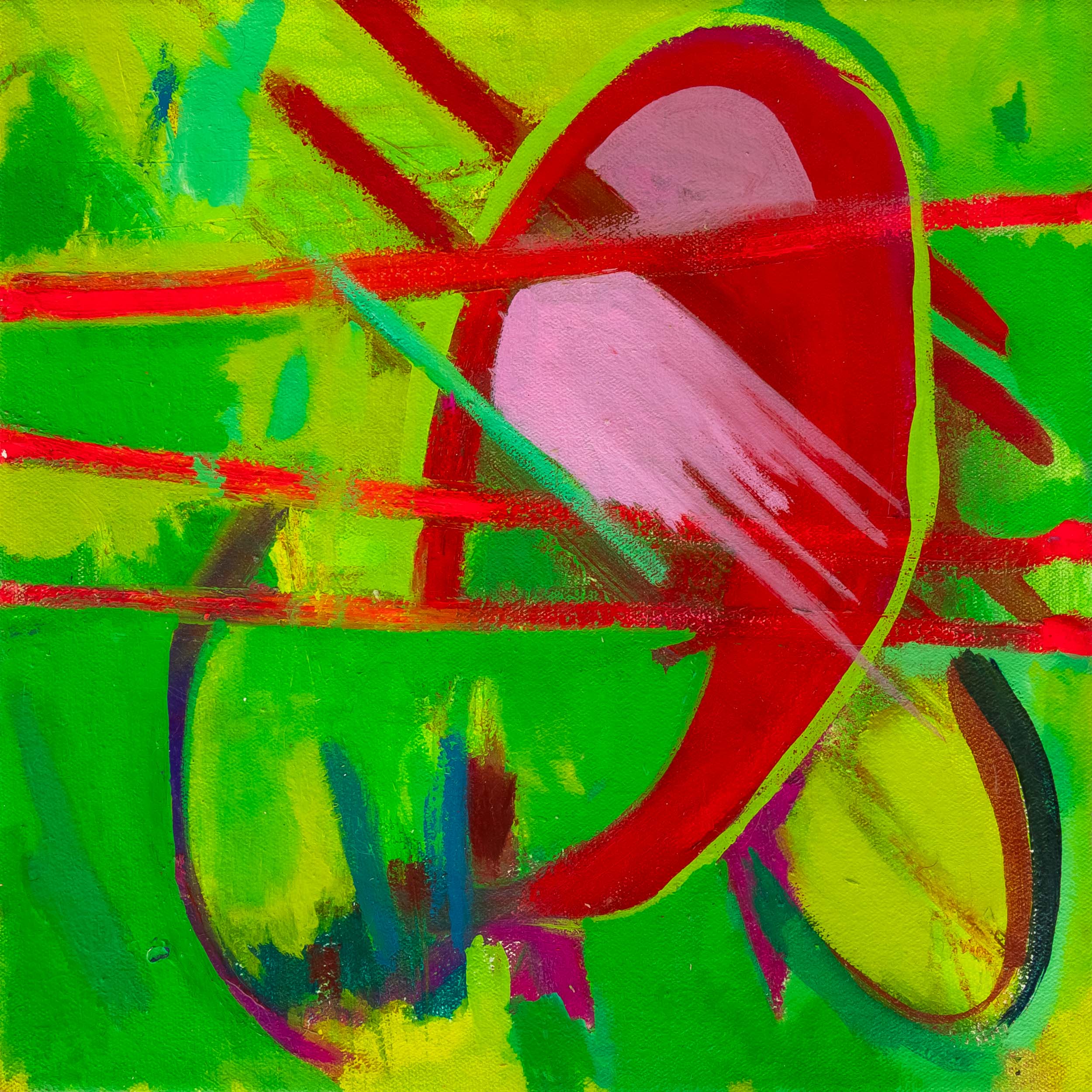
“Things That Grow” looks onto a patch of ground, where three rounded forms swell like seeds, fruit or small hills. Liza Grobler paints impressions gathered while walking through a landscape, and here she turns to what lies close to the earth: life building quietly, then appearing all at once. Red lines slice across the green, giving the soft shapes something hard to push against. There is no obvious top or bottom, so the image can be turned and still hold together, as if revealing the energy hidden in the ground.