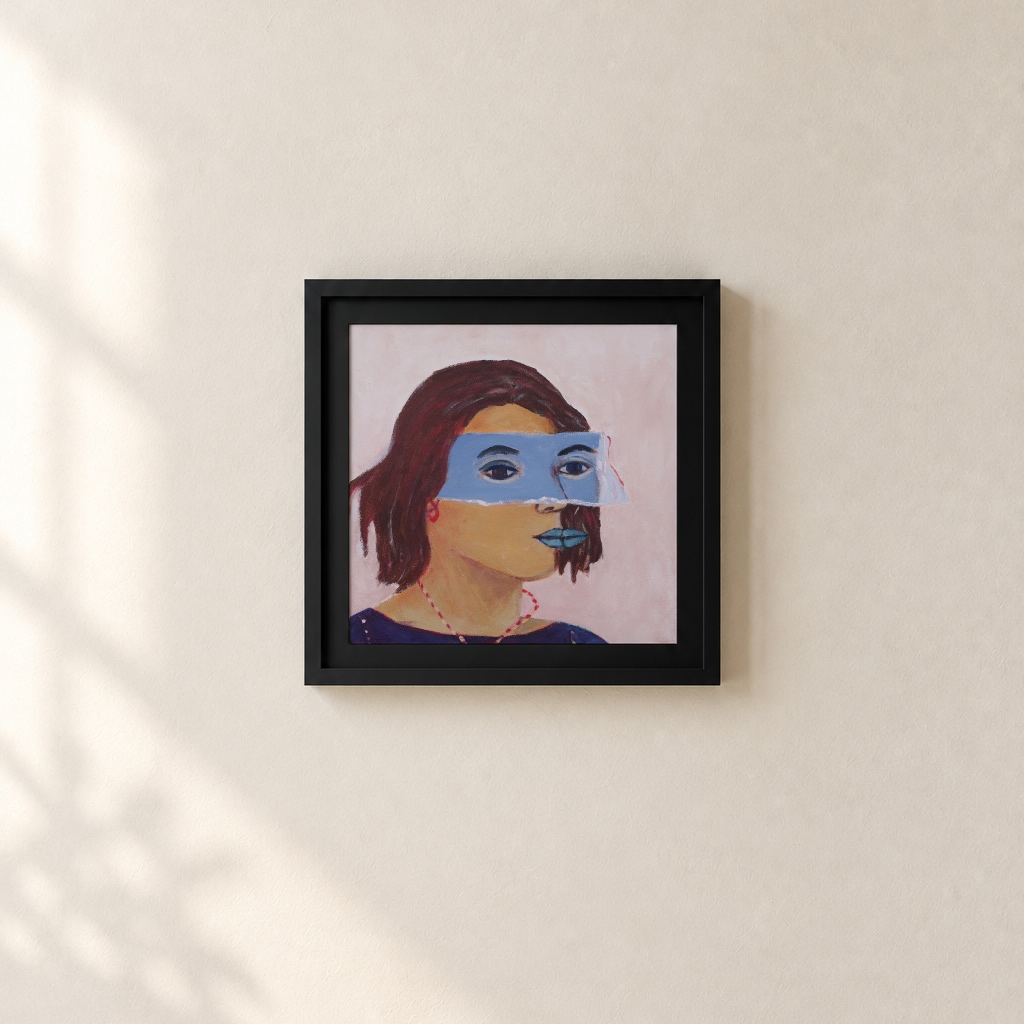
Salon exists to make the contemporary art world easier to enter, without compromising artistic intent or undermining collectors’ intelligence.
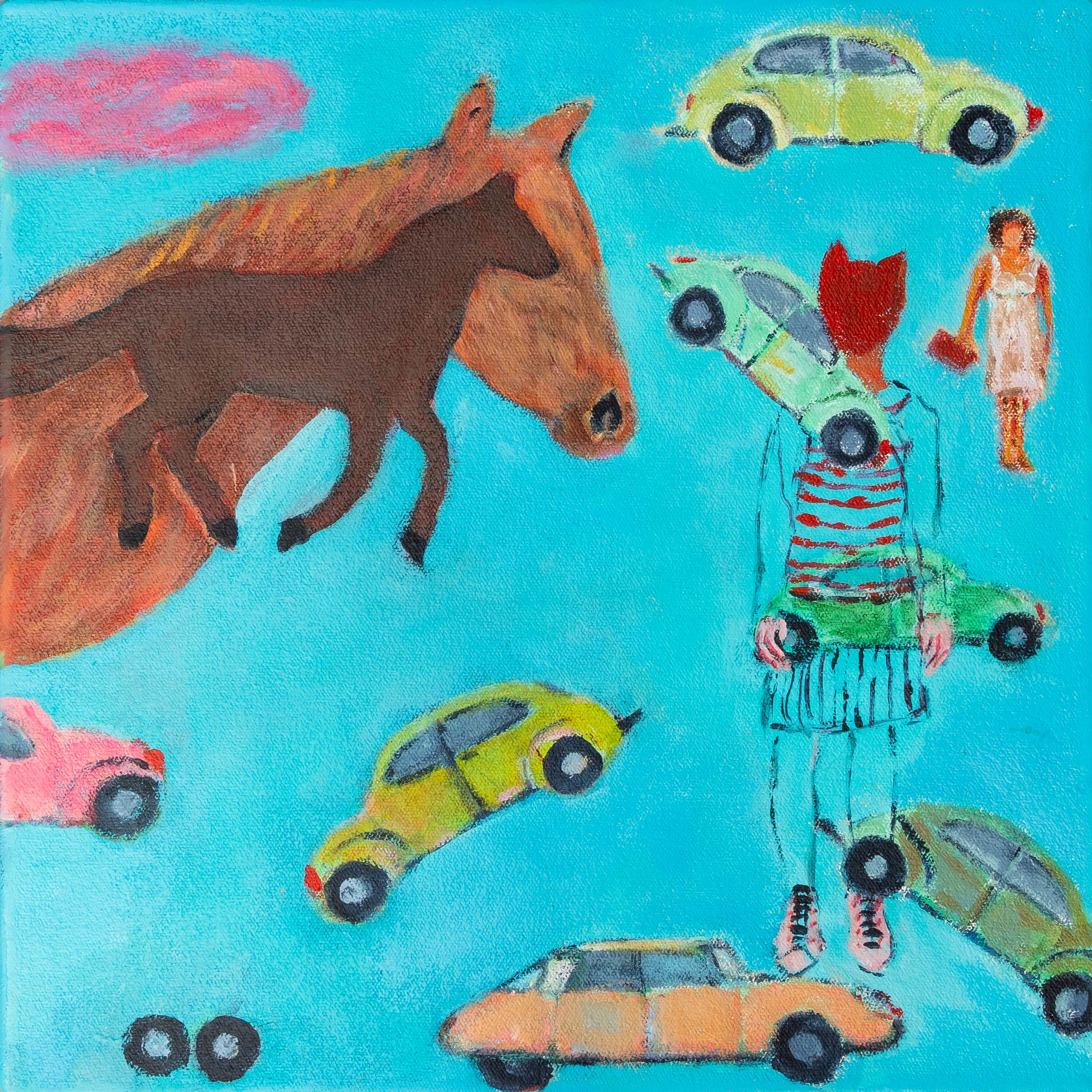
“Horsepower” brings two very different kinds of movement into conversation. A horse dominates the composition, while cars, simplified figures and repeated forms introduce the mechanical world around it. Rather than depicting speed directly, Diana creates energy through rhythm, positioning and the relationships between the different elements. The horse becomes more than an animal here: it carries ideas of strength, freedom and vulnerability, while the title invites us to reconsider what power and movement might mean.
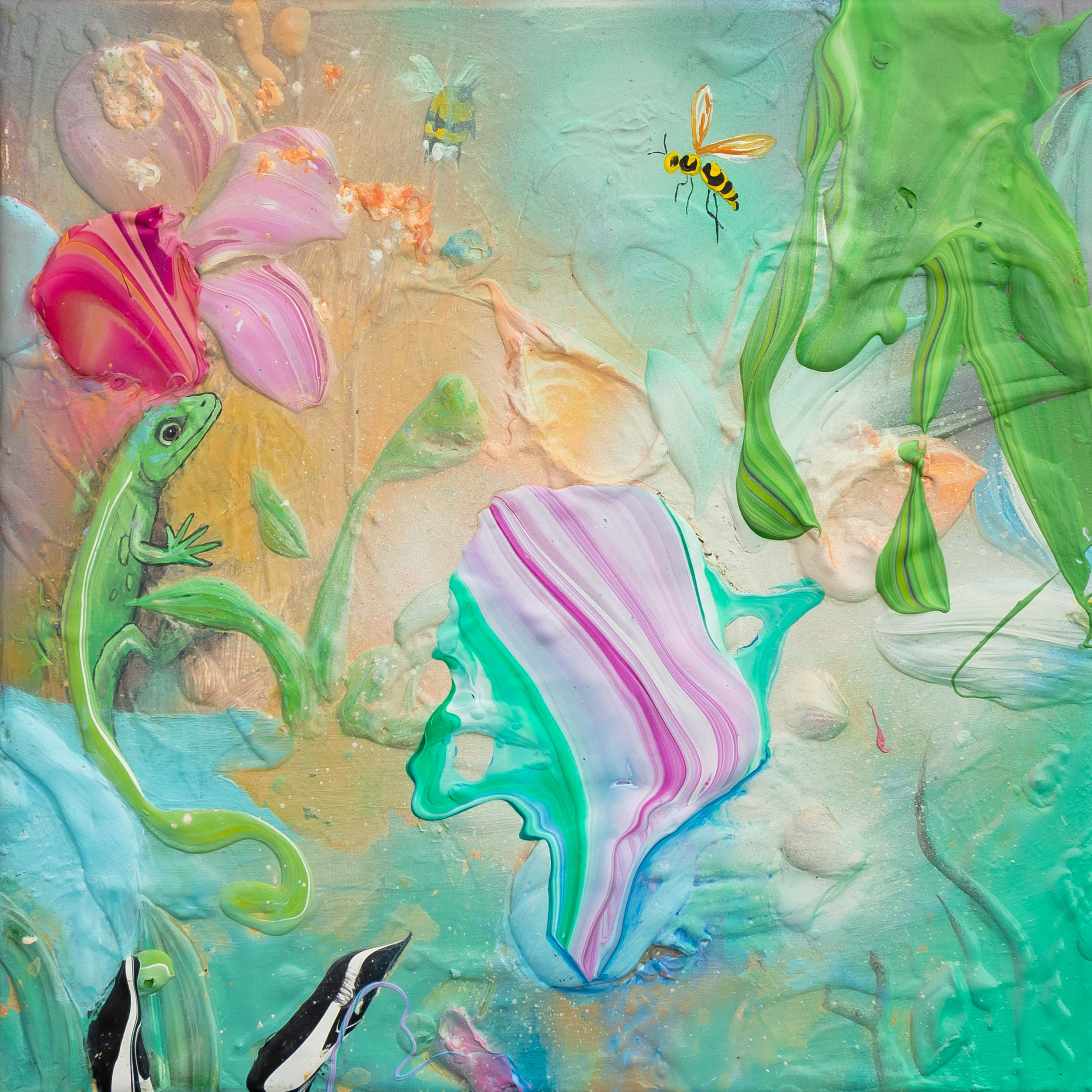
“Wasp and Lizard” captures a moment of predation, as the lizard closes in on the wasp. Yet the encounter forms only one part of a more complex ecological tension. Across the surface, raised and relief-like marks suggest forces that extend beyond the immediate food chain—a larger threat to the balance and interdependence of the natural world. Through vivid colour, movement and sculptural texture, Tarik Chebli presents nature as both sensorially compelling and profoundly vulnerable.
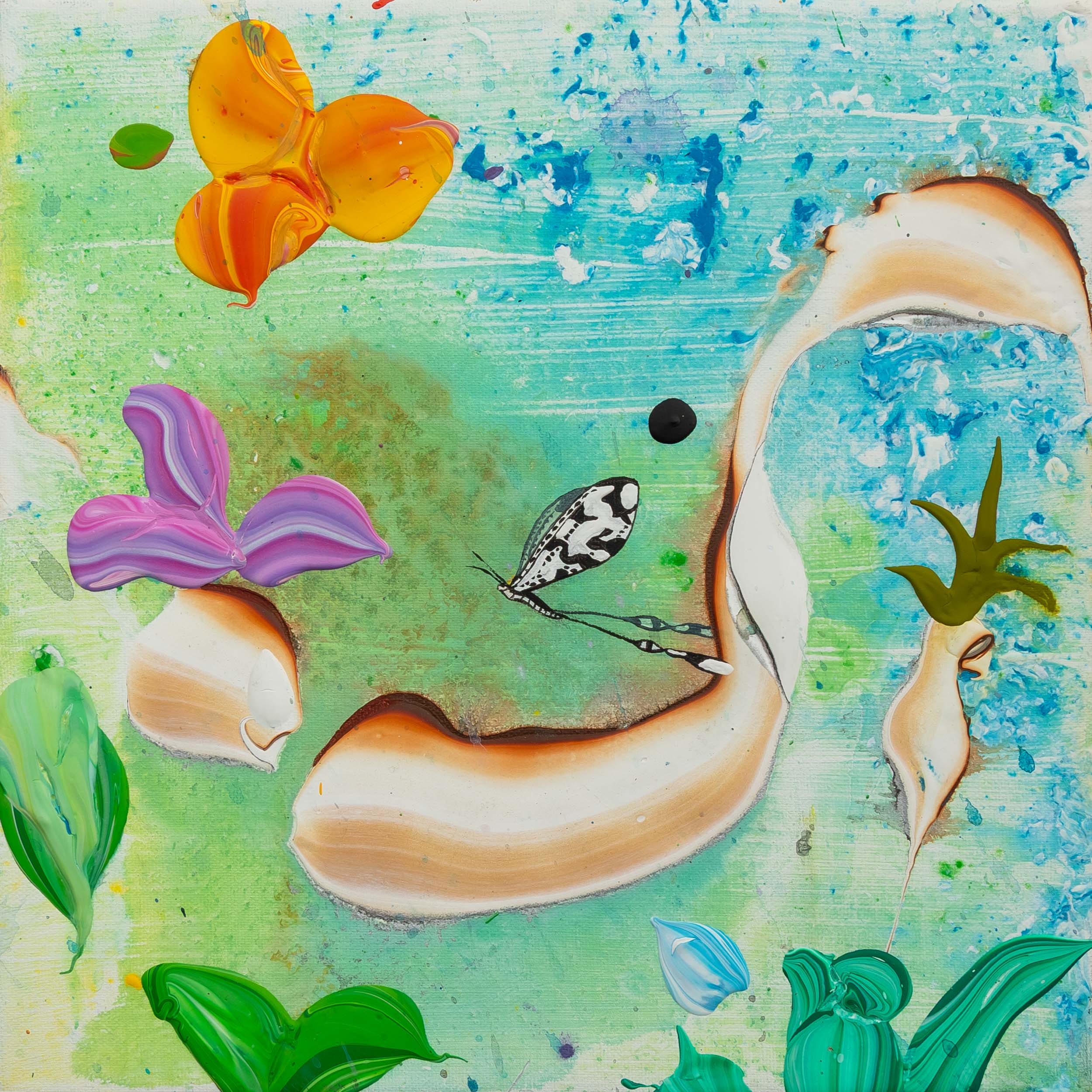
In Little Rakuen 3, Tarik Chebli builds an imagined ecological space from a pale blue-green ground, bright plant-like forms, and a ribbon-like line that moves through the composition. The insect at the centre gives the painting a point of recognition, while the surrounding marks and colours keep the image open and shifting.
The work belongs to Chebli’s wider interest in a fantasised nature free from human presence, where biodiversity, material texture, and invented species become ways of looking beyond the everyday. Here, abstraction and representation sit close together: the painted world feels abundant, but never fully fixed.
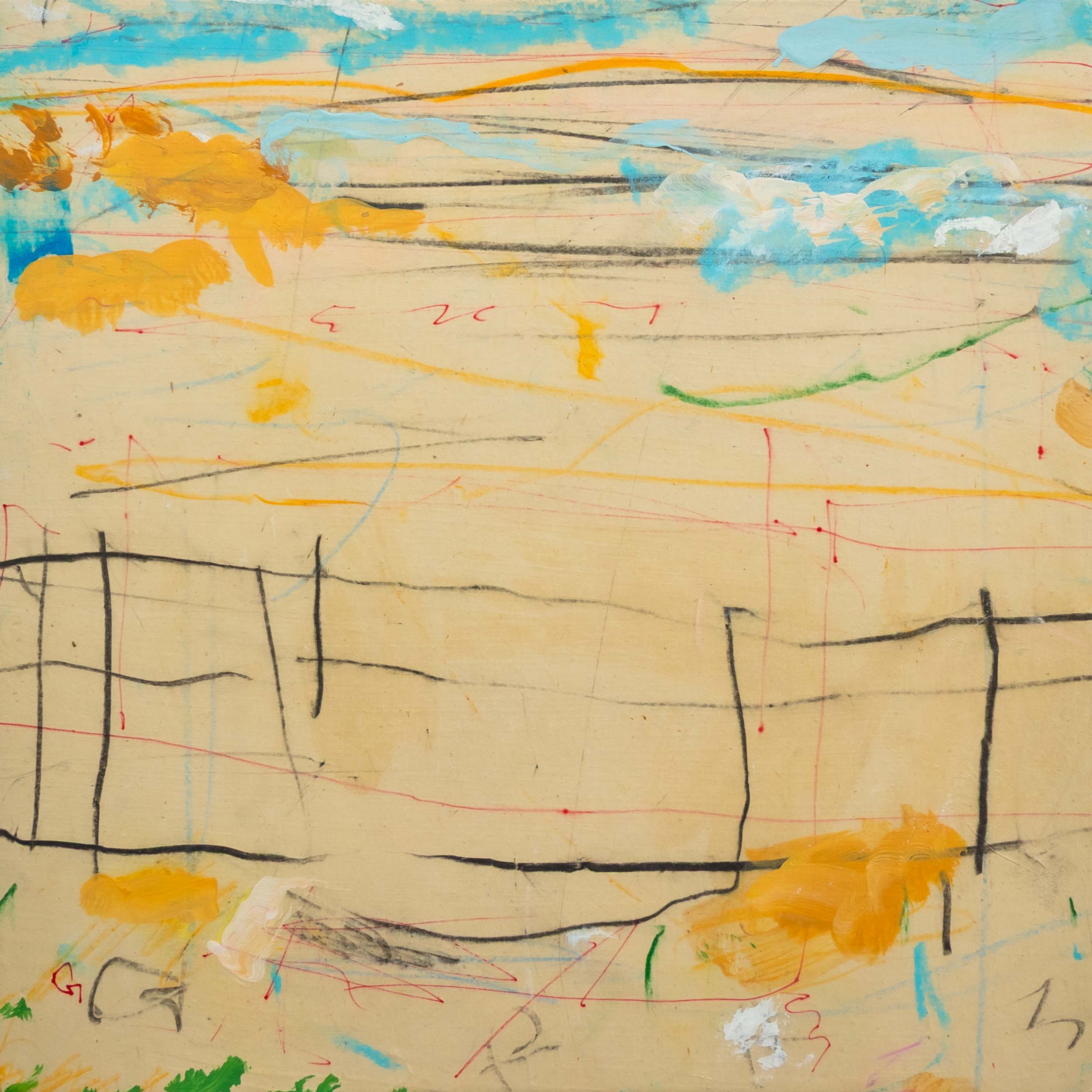
In *Power Lines No. 4*, graphite lines and paint marks cross the surface with an unapologetic directness; nothing appears tidied away or corrected. Dark, angular power lines anchor the lower field, while longer horizontal strokes and passages of blue and ochre sweep across the composition like land, sky and changing weather. Working with transparent layers of Kitakata paper, Seth Bauserman allows fainter marks to remain visible beneath the surface. Drawn partly from his daughters’ artwork, their spontaneity is preserved within a landscape that feels both immediate and carefully held in balance.
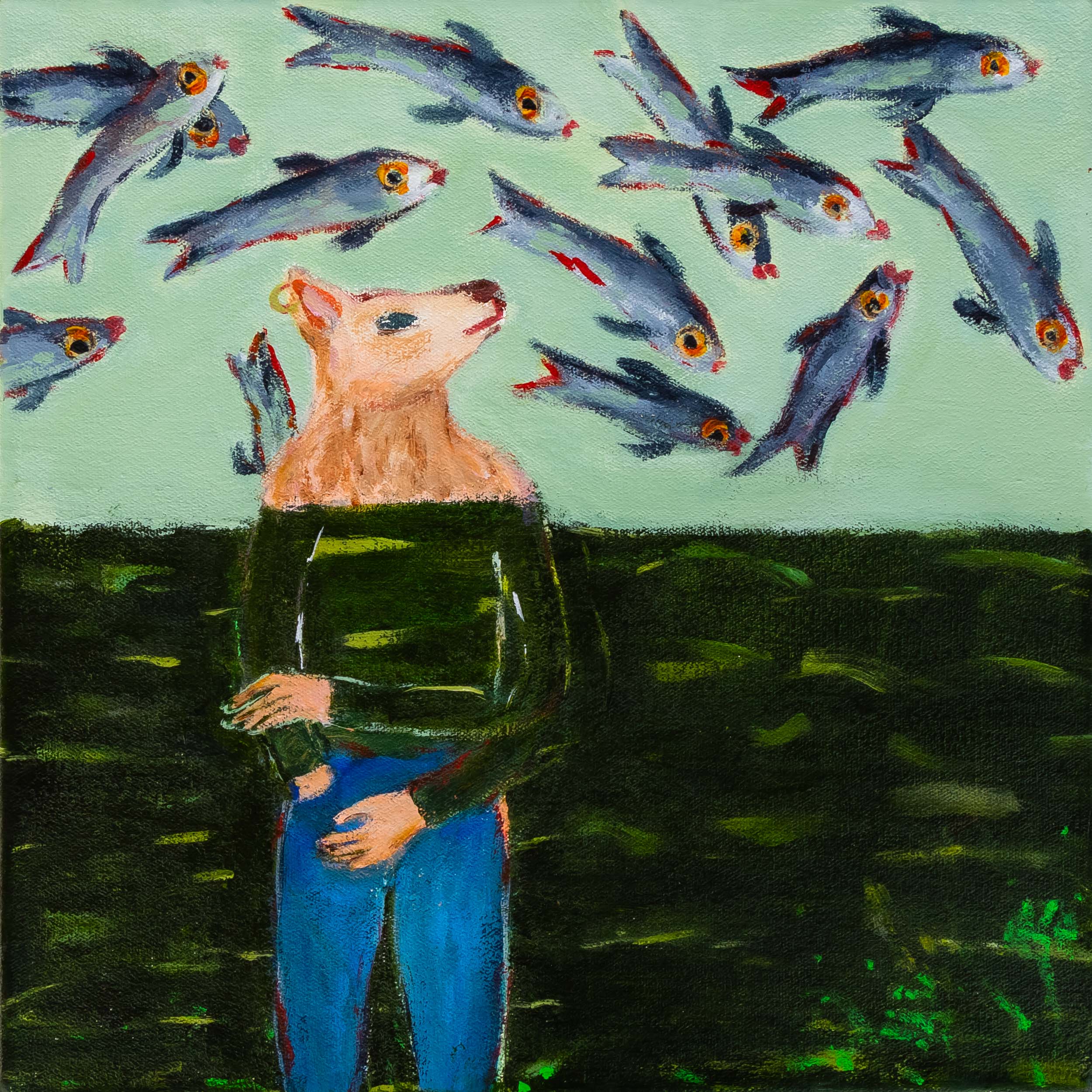
Fish out of Water fills a pale mint sky with a school of grey-blue fish, each with a bright, glinting eye that seems to look back. Below them an animal-headed figure stands with folded arms, half-sunk in dark green, its face tilted up as if watching and being watched in turn. Diana Hyslop often lets animals stand in for herself, and with sky and water reversed, it is unclear who is out of place, the observer or the observed.
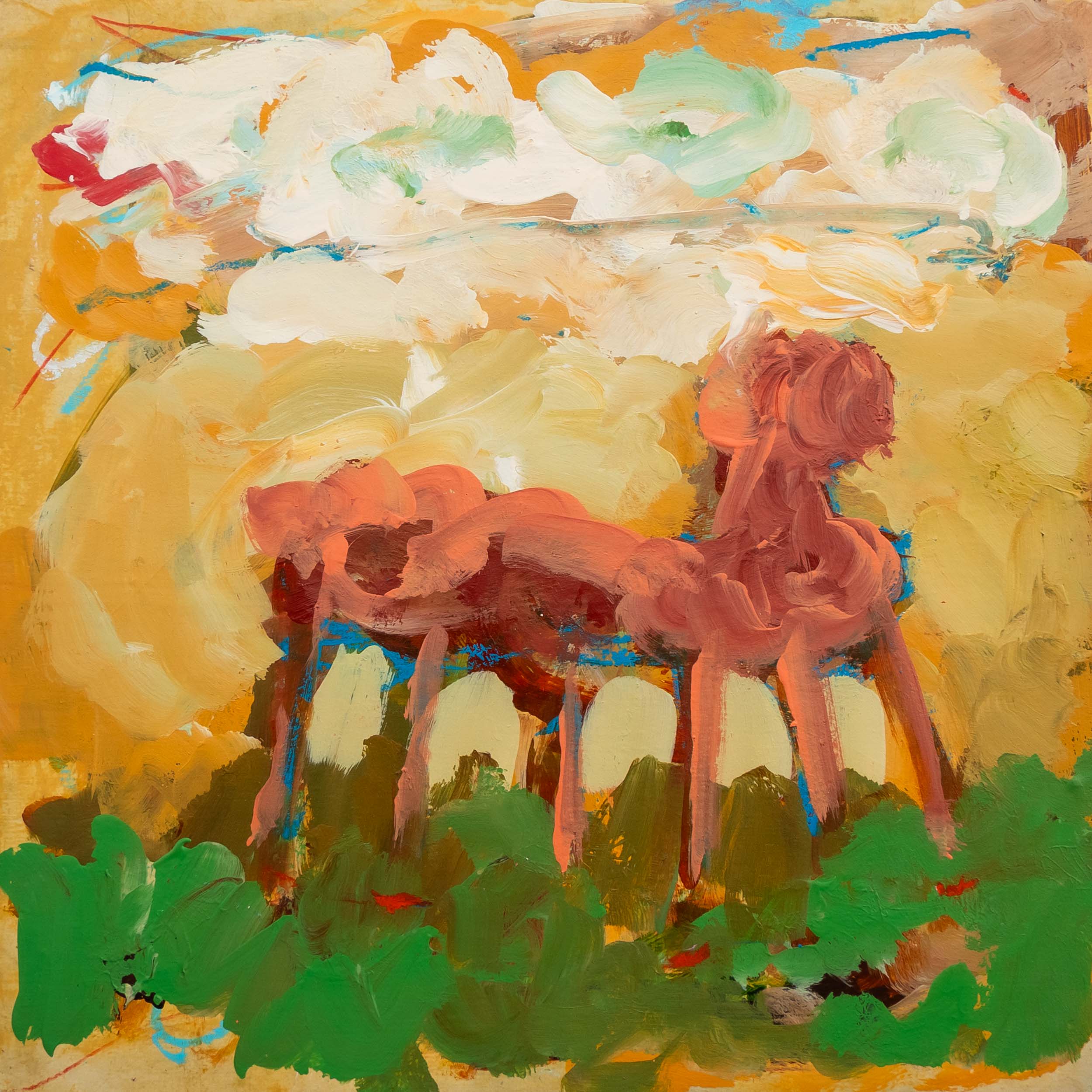
New Pastures #5 is part of Seth Bauserman’s ongoing series drawing on images taken from the artwork of his young daughters. Working with acrylic paint and pastel on transparent Kitakata paper over wood panel, Bauserman layers and abstracts these source images to explore innocence, memory, time, and familial identity across generations.
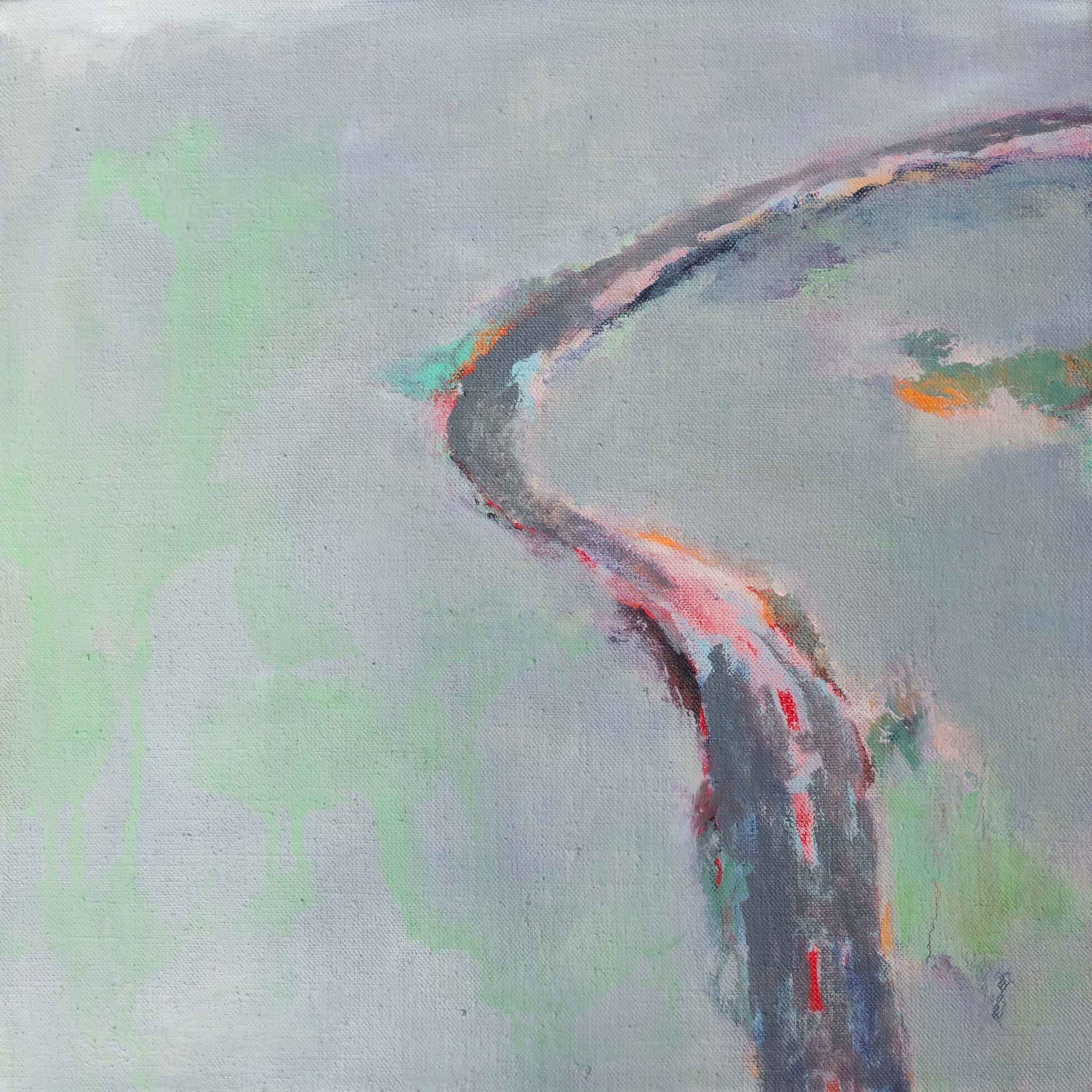
“In The Curve”, a bending road draws the eye into the distance before beginning to blur and break down. Wonder painted this landscape from memory after travelling through the Karoo and Eastern Cape, working not from a photograph or drawing, but from what remained afterwards. The curve gives the painting a clear sense of movement, while the surrounding haze makes the scene feel less like a fixed place than something being recalled—its beauty carrying a subtle undercurrent of uncertainty and exposure.
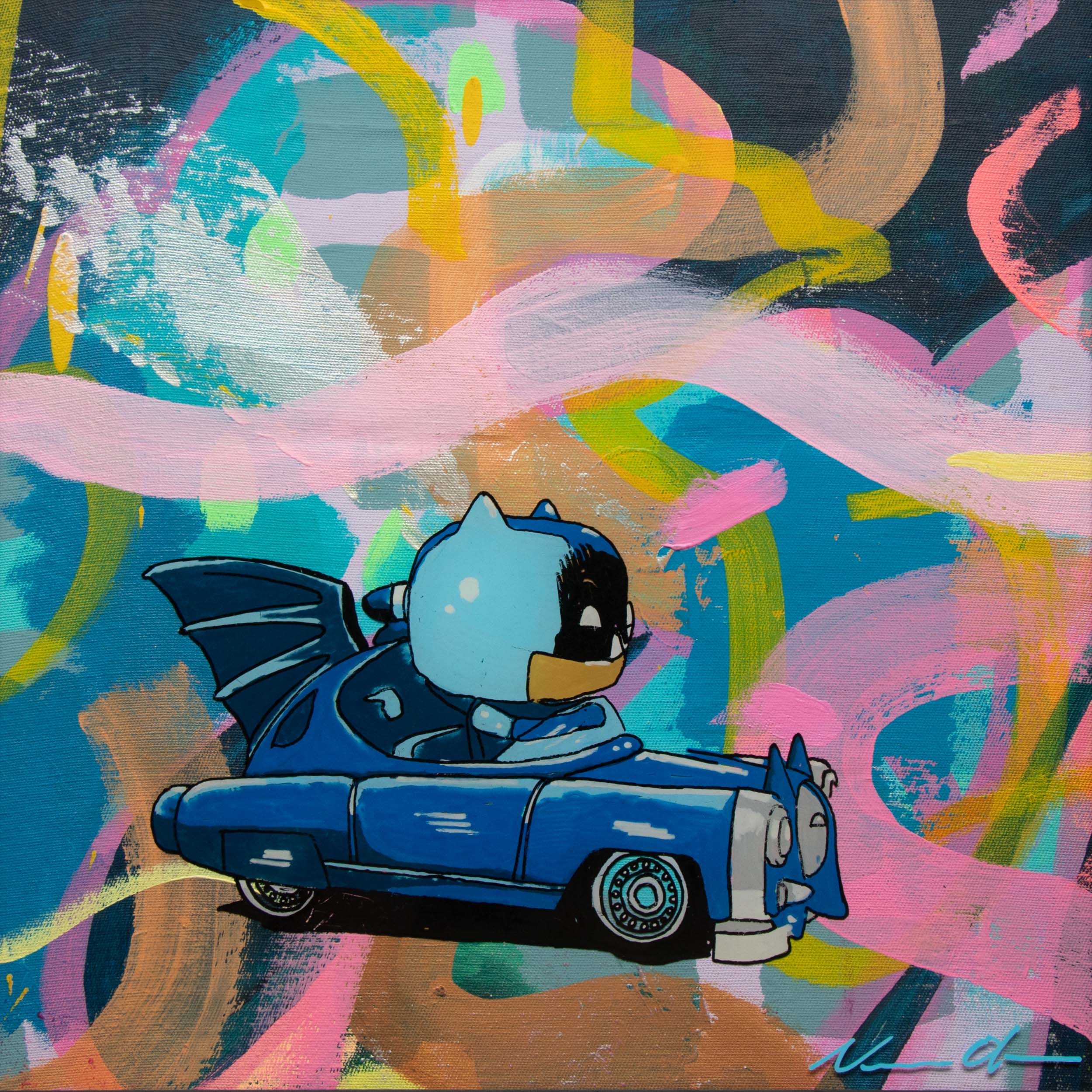
In “The Batmobile”, a toy-like Batman is folded into the form of his equally toy-like vehicle, becoming a comic image of his own. Painted in Norman’s intricate reverse-plexiglass technique, the familiar cultural icon is lifted out of context and set against loose, swirling colour. The result is playful and humorous, but also wonderfully strange—creating the kind of visual “noise” Norman uses to disrupt familiar images and send the viewer towards unexpected associations.
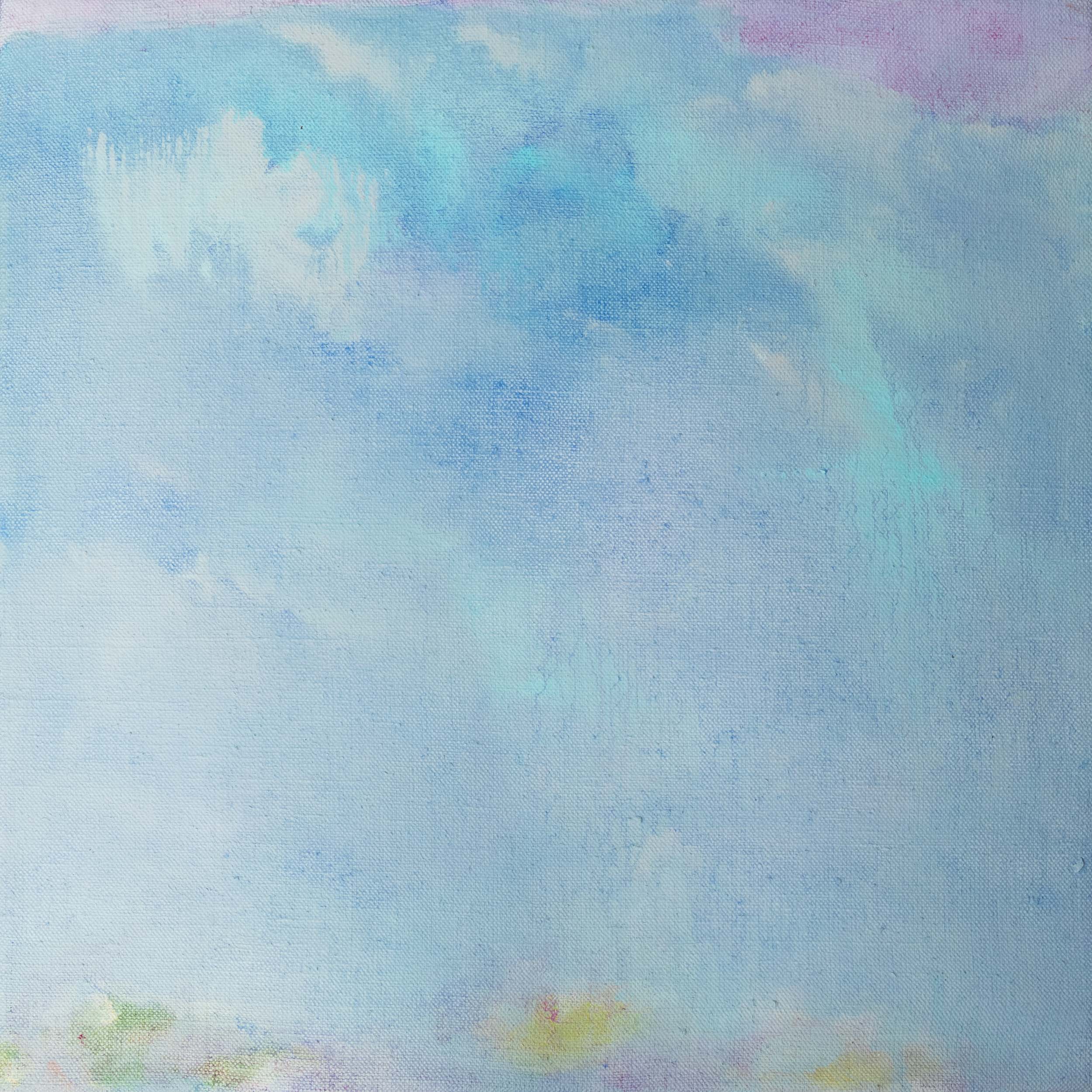
Quiet and delicately restrained, Hindsight barely announces itself as a landscape. Its softened colours and diffused edges bring it close to a colour-field painting, as though the view has been filtered through time and memory. Rather than returning to a specific image, Wonder has painted what remained after an extended journey through the Karoo and Eastern Cape: an atmosphere held at a distance, poised somewhere between beauty, vulnerability and recollection.
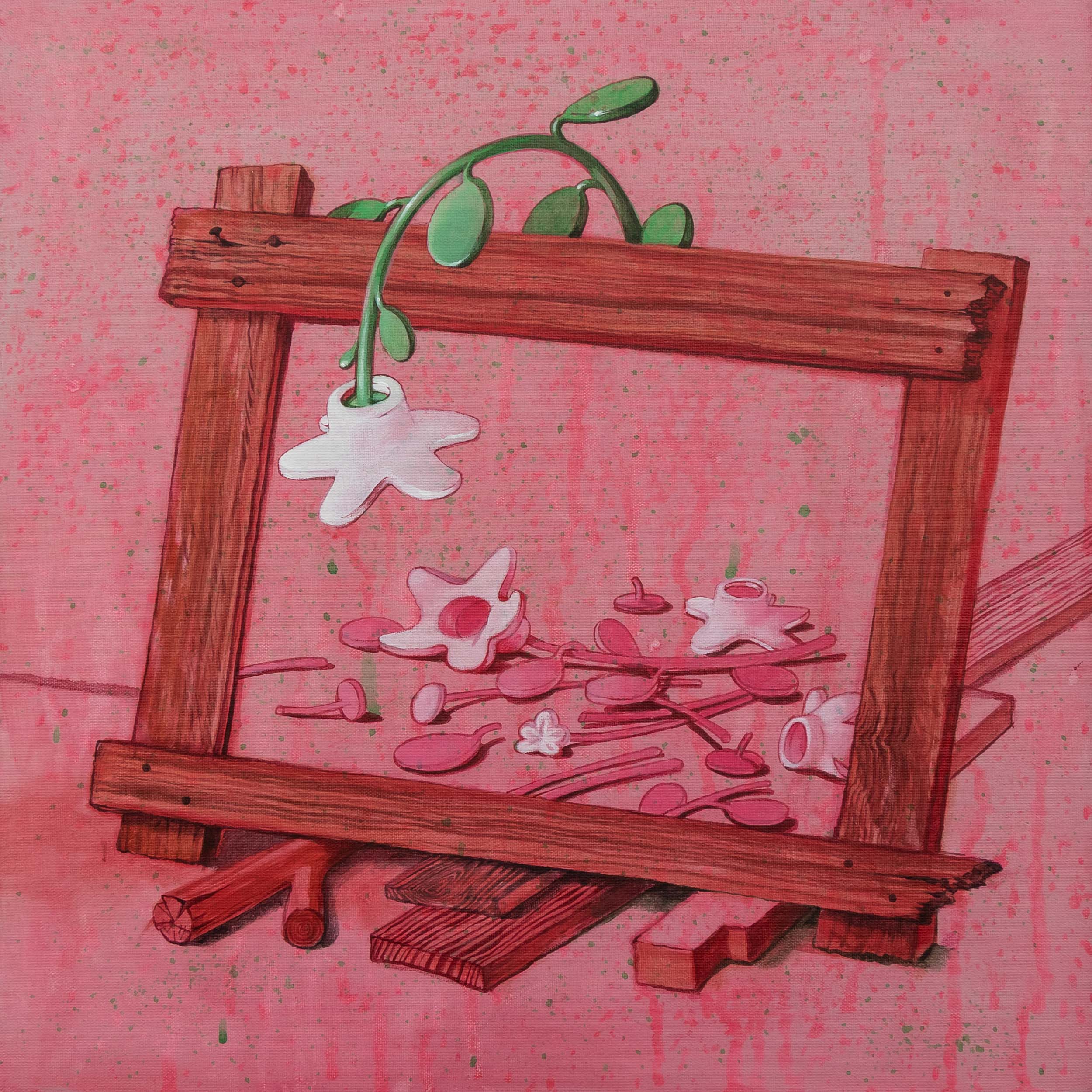
“Trap II” transforms the trap into a frame, enclosing a scene of scattered flowers and a plant bending into view. Its restrained palette and suspended action create a quiet tension, inviting the viewer to imagine what has happened—or may be unfolding—beyond the painting’s edges.
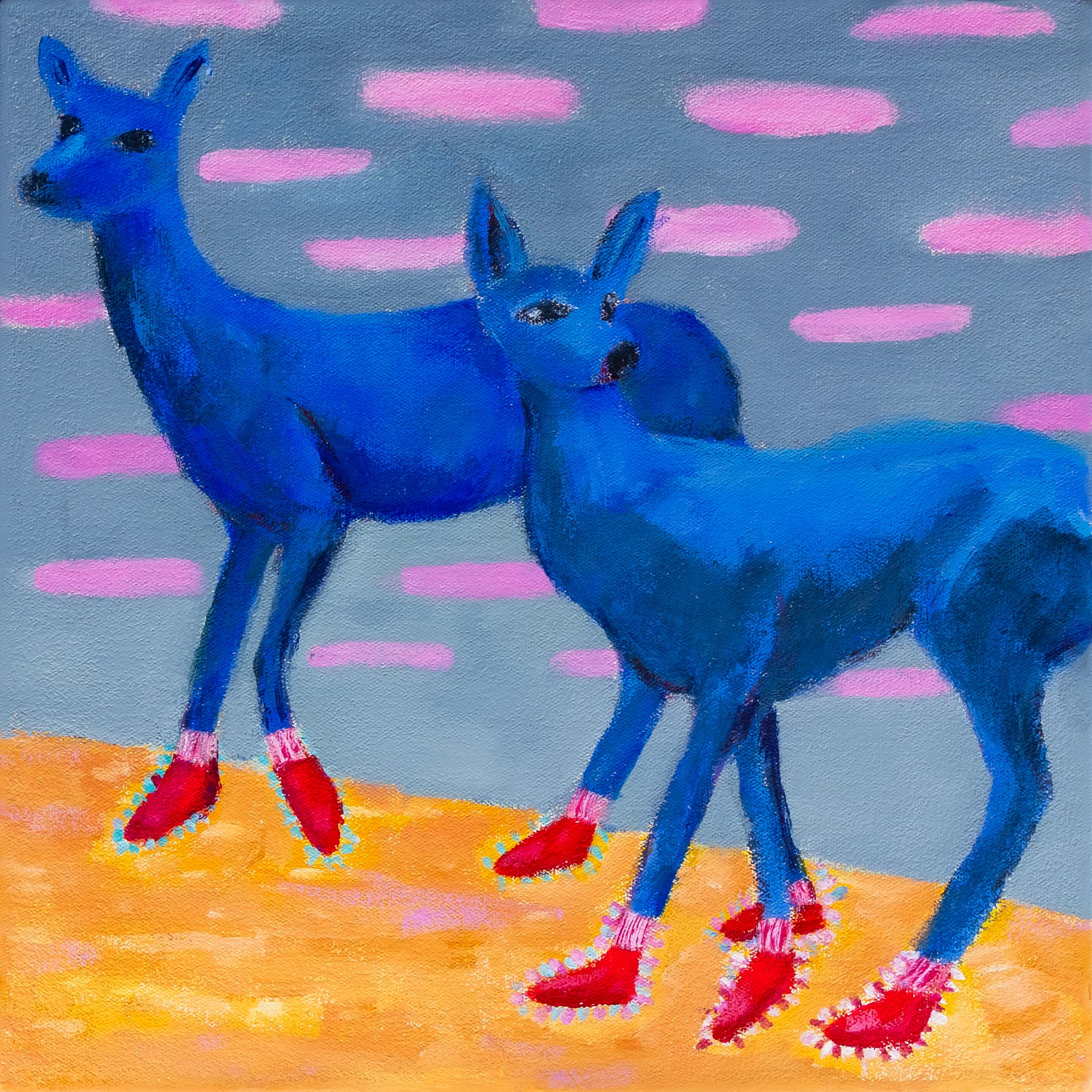
“Tread Softly” places two bright blue deer on an orange ridge beneath a grey sky dotted with pink clouds. Each wears a pair of red slippers trimmed with frills and pale socks, as if they had been told to step carefully and taken the instruction literally. One looks away into the distance; the other turns its head with an open mouth, caught between speaking and holding back. Diana Hyslop’s animals often stand in for herself, and here the reversed, artificial colours make a gentle scene feel tense, a landscape where caution has become costume.
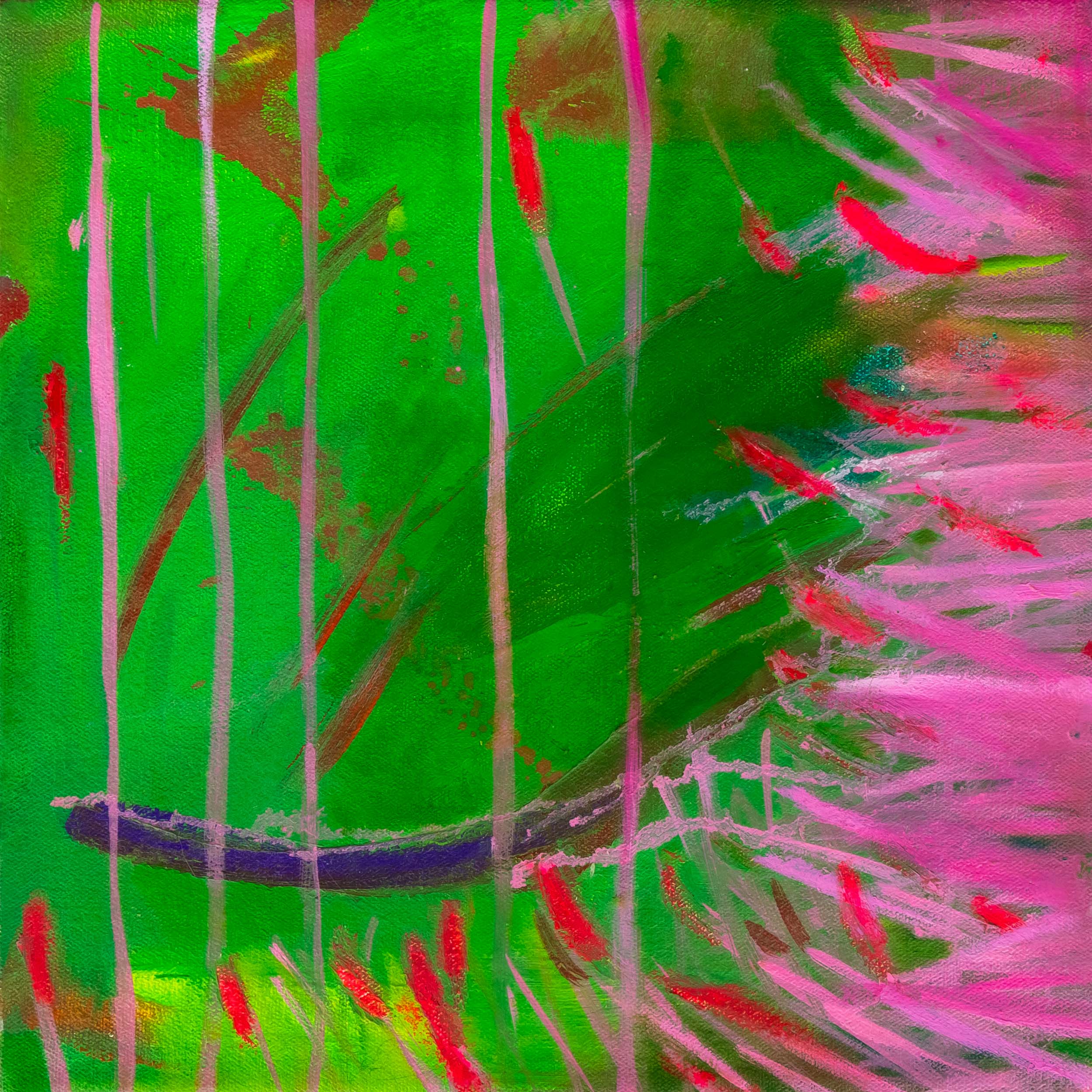
A Short Walk takes its cue from walking through a flat, dry landscape ringed by mountains, where green can appear suddenly after rain and plant life seems to expand almost overnight. Liza Grobler does not paint the view but the impression of moving through it: looking down at a small patch of ground while aware of a wider depth beyond. Pink enters from the side in a rush of heat and growth, and the image never settles into one fixed orientation. It reads as a fragment of experience, somewhere between what is seen, what is felt and what is remembered afterwards.
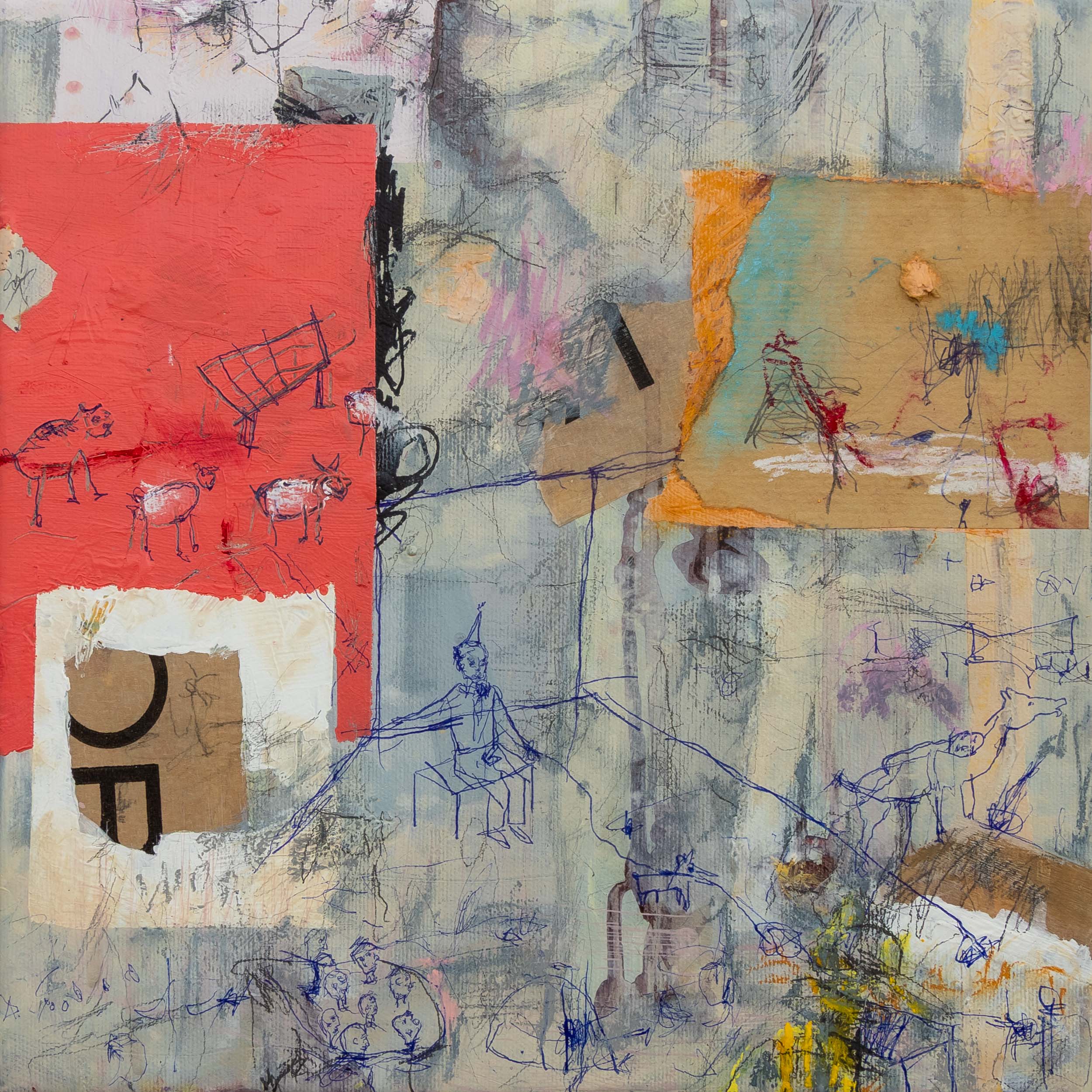
In Delusions That Contain Existential Truth, Patrik Dvorščak brings together drawn figures, fragments of colour, and layered surface marks into a scene that feels provisional, crowded, and unstable.
Small bodies, objects, and architectural suggestions appear across the work, as if personal perception is trying to find its place within a larger social field. The painting reflects Dvorščak’s interest in the fragile relationship between individual consciousness and the structures that shape everyday life.
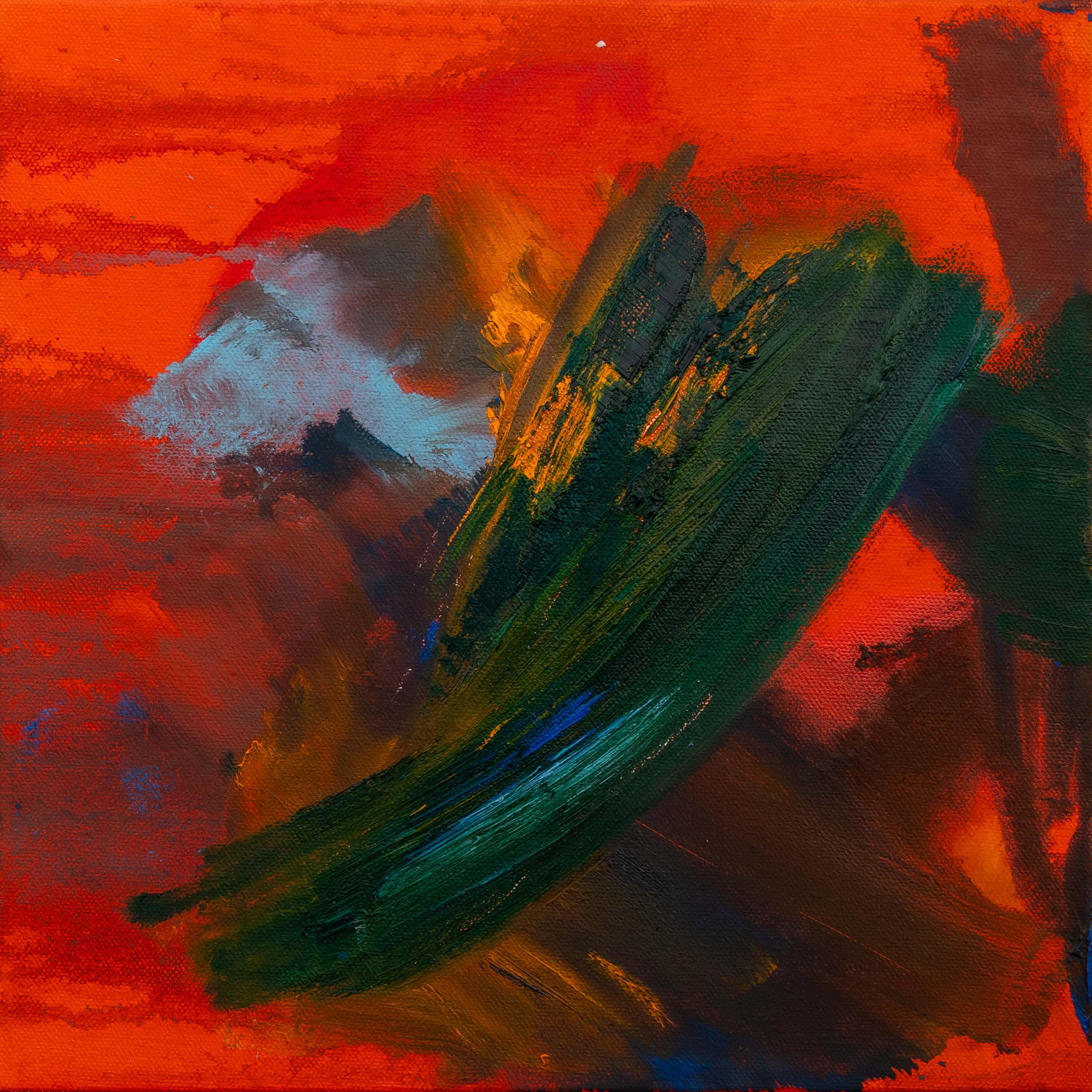
In Mountain Scene, Tommaso Fattovich compresses saturated colour, directional gesture, and layered surface into a small field of pressure and movement.
The painting sits between abstraction and suggestion: a red ground holds sweeping green-black marks, flashes of orange and blue, and areas where the paint appears pushed, dragged, or disrupted. The sense of a landscape is not fixed, but emerges through the work’s internal tension — between control and accident, balance and interruption.
Fattovich’s practice is rooted in a process of visceral response. Rather than beginning with a fixed image, he allows colour, surface, and mark to lead the composition until the work reveals itself.
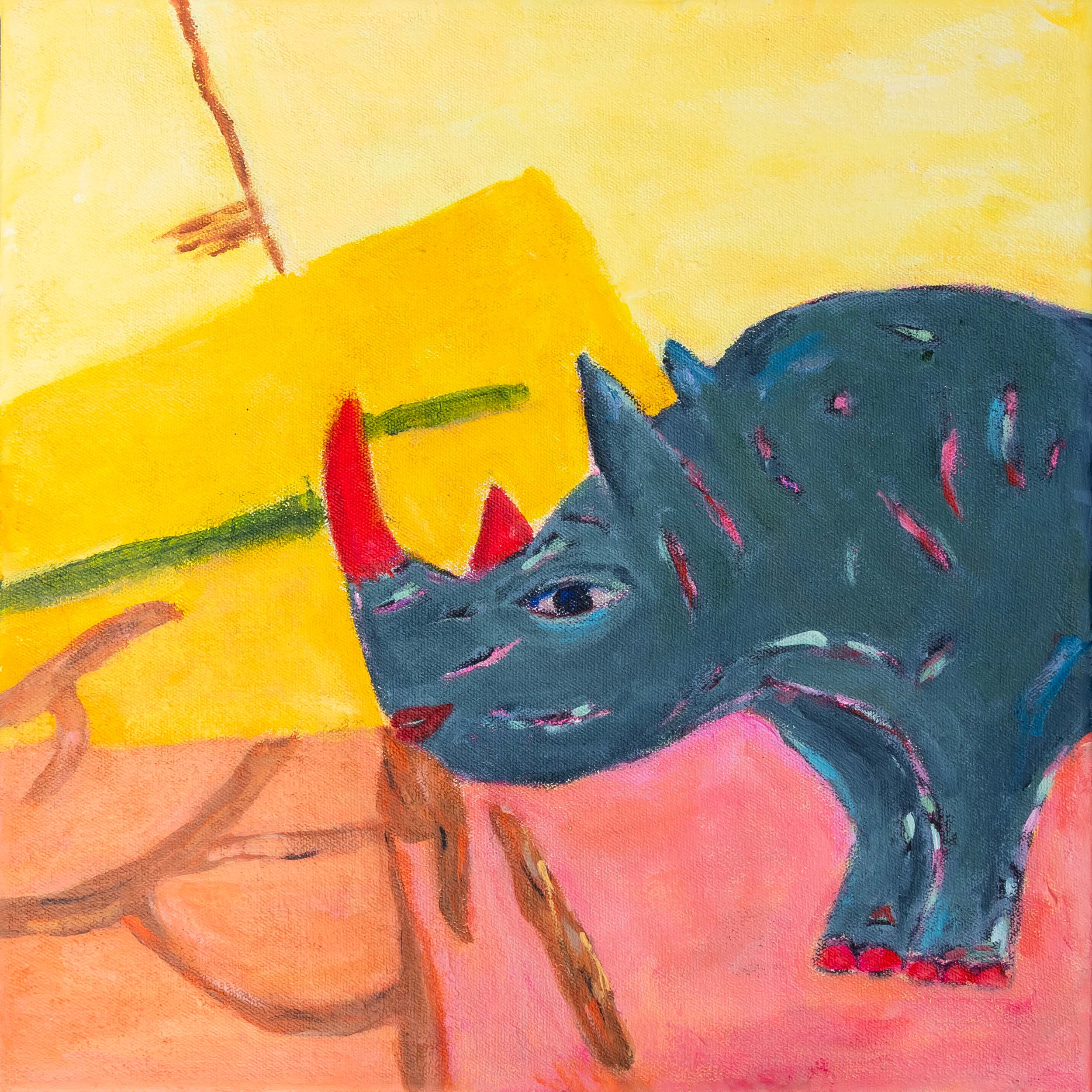
“Rhino in the Sun” began when sunlight cast branching shadows across an earlier rhino painting in Diana Hyslop’s studio. She recreates that moment in radiant blocks of yellow and coral, against which the blue-grey animal takes on a solid, physical presence. Yet this solidity is unsettled by the red horn and sharp pink marks cutting across its body, evoking the violence and vulnerability of rhino poaching. Small, closed red lips, a recurring symbol in Hyslop’s work, suggest speech withheld through fear of judgement. Colour makes the image immediately alluring, while these details bring in a quieter sense of threat and silence.