
by Wim Legrand
1 200,00 € incl. VAT
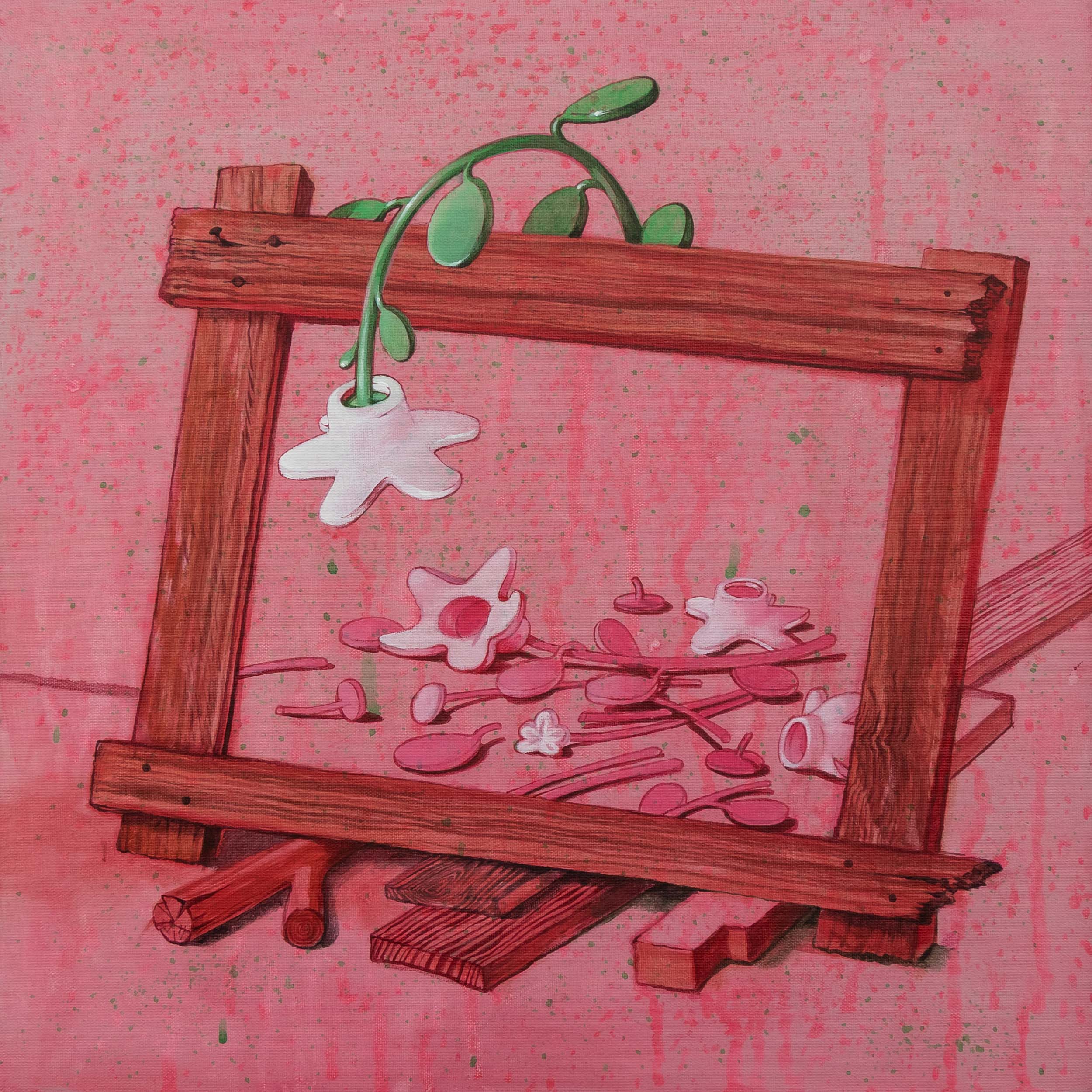
“Trap II” transforms the trap into a frame, enclosing a scene of scattered flowers and a plant bending into view. Its restrained palette and suspended action create a quiet tension, inviting the viewer to imagine what has happened—or may be unfolding—beyond the painting’s edges.
1 in stock
Dimension
Year
Frame

Wim Legrand’s (b. 1978) work offers a playful take on the paradoxical strangeness of everyday reality, while commenting on our postmodern condition as victims to the barrage of information and news feeds. Mundane and forgettable objects usher the familiar into peculiar allegorical narratives, where past blurs with present and fact with fiction – setting scenes in a liminal zone, in the unfettered “now” of a dream, meanings just out of reach and continually open to interpretation. He combines painting with drawing, cartoons and pop culture with aesthetic references to North European history painting and Surrealist traditions – the post-modern world overlaid onto the art historical atmosphere in which he was raised. To date, Legrand has held solo shows in Belgium and South Africa and has participated in numerous group exhibitions across the globe. His most recent accolades include a group exhibition in Shanghai, various Art Fairs and his first solo in The Netherlands.
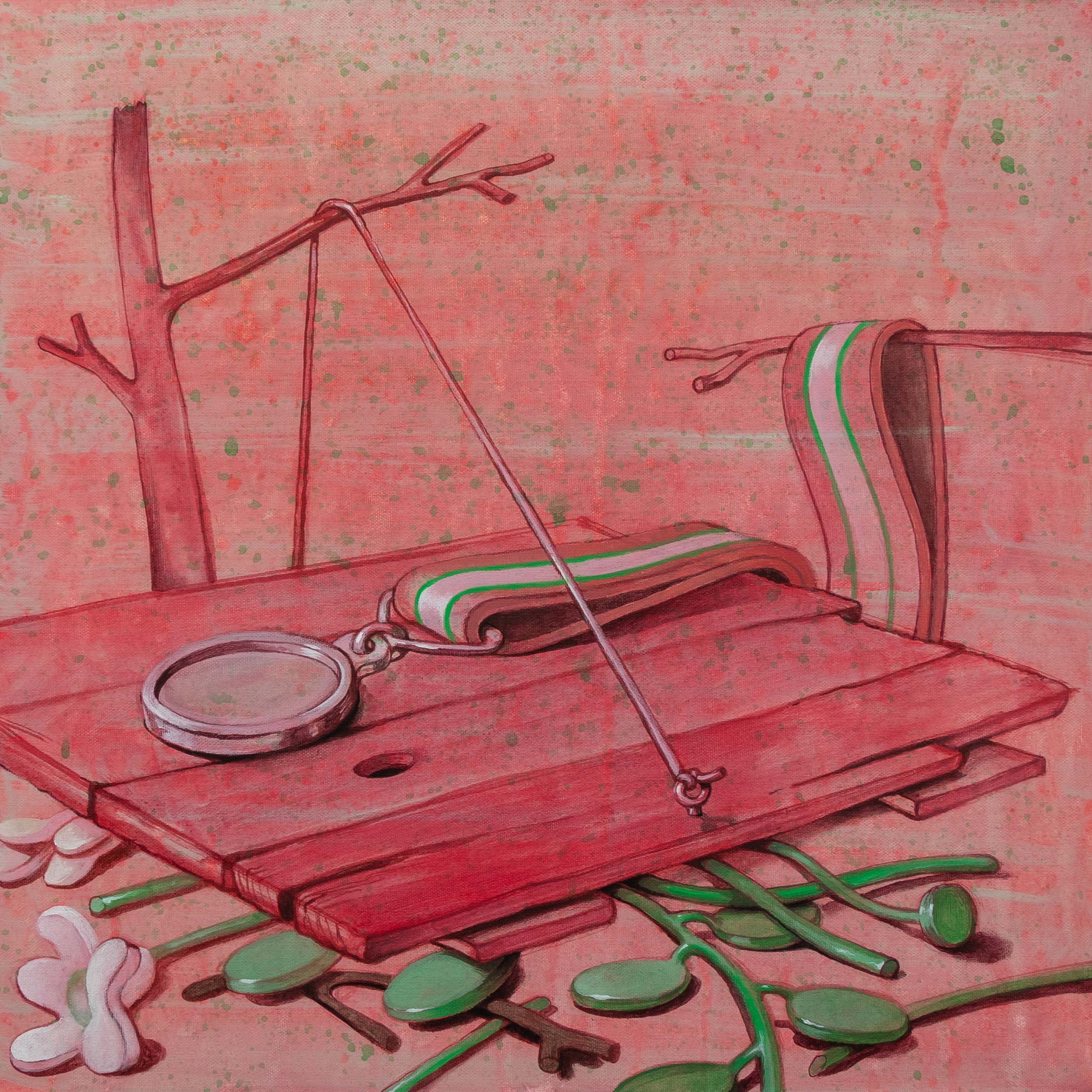
“Trap I” suspends a simple trap mechanism between anticipation and aftermath. A restrained palette of rose-pink, pale green and earthy tones gives the scene an uncanny stillness, while a blank attendance medal introduces questions of recognition, memory and the value we attach to symbolic rewards.