


Year of Birth
Nationality
Location
Social
Norman O’Flynn’s practice explores how images circulate through contemporary culture and the ways they shape perception, memory and belief. His work is driven by an interest in the lives that images acquire beyond their original contexts: how familiar symbols are repeated, manipulated and repurposed until they become part of a shared visual vocabulary.
Working primarily in painting and sculpture, O’Flynn draws on imagery that is immediately recognisable. Rather than presenting fixed narratives, he assembles fragments that invite multiple readings, encouraging viewers to consider why certain images attract us, how they influence us, and what they reveal about the cultural moment in which they exist.
Reverse-glass painting plays a central role in his practice. By painting the foreground first and building the image backwards beneath acrylic glass, the surface becomes luminous, polished and seductive. This heightened finish reflects the way images are packaged and consumed, creating a tension between visual attraction and critical reflection.
At the heart of O’Flynn’s practice is an invitation to look more carefully. His works use the familiarity and allure of popular imagery to slow the act of looking, creating space to question not only what we see, but also why certain images continue to command our attention.
Norman O’Flynn (b. 1971) is a South African painter and sculptor based in Cape Town. Over a career spanning more than three decades, he has developed a distinctive visual language that draws on globally recognisable imagery to examine contemporary image culture, media and visual communication. Working across painting, sculpture and interdisciplinary projects, his practice combines conceptual rigour with an immediately engaging visual presence.
O’Flynn has presented numerous solo exhibitions and participated in group exhibitions, residencies and art fairs throughout South Africa and internationally, including SCOPE Miami, Moniker Art Fair London, Sydney Contemporary and the Investec Cape Town Art Fair. His work is held in significant private and corporate collections, including Deutsche Bank, Rand Merchant Bank, Nando’s Contemporary Art, Hollard Insurance, MTN, Luciano Benetton and the University of Cape Town.
Best known for his reverse-glass paintings and sculptural works, O’Flynn continues to investigate the ways images circulate, persuade and accumulate meaning within contemporary visual culture.
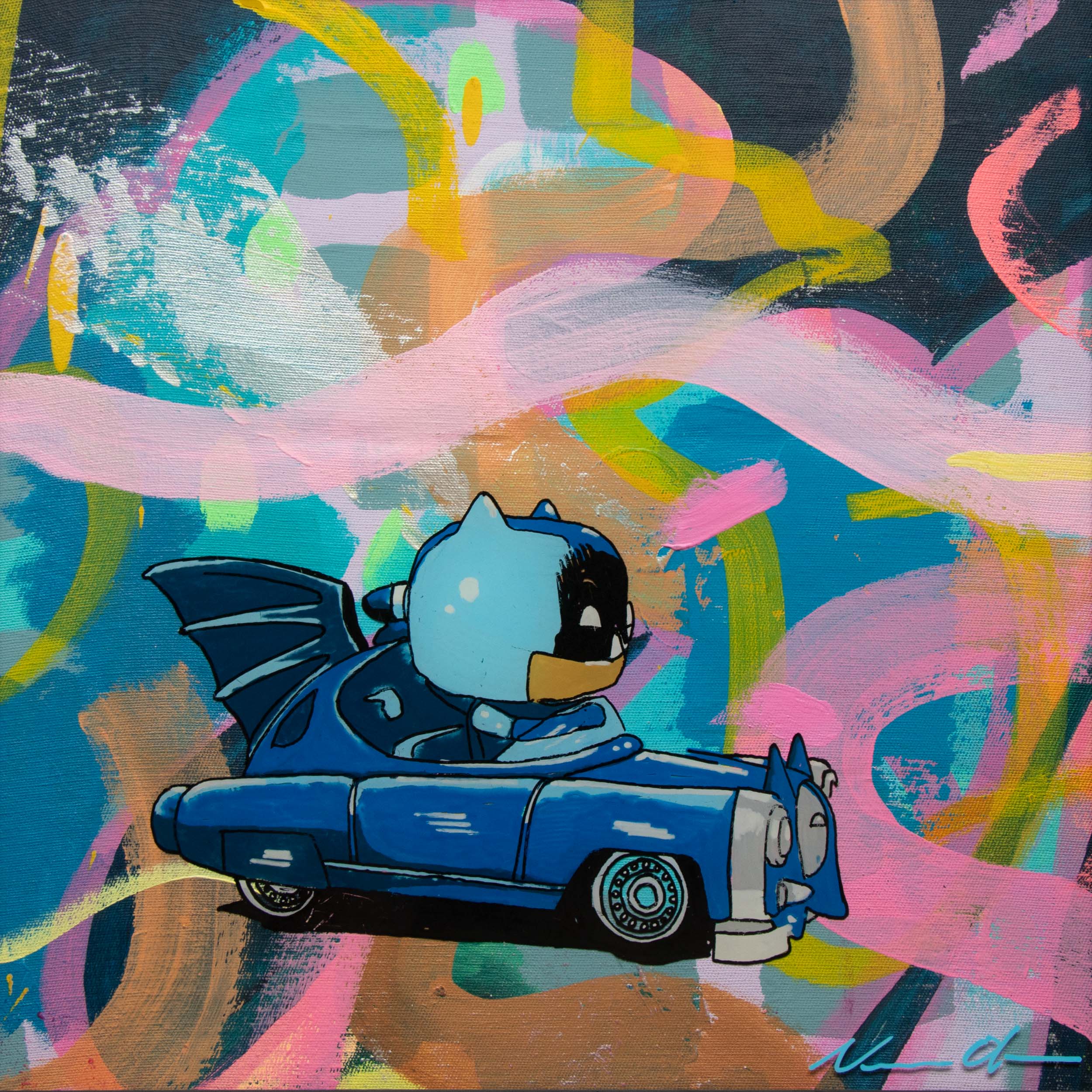
In “The Batmobile”, a toy-like Batman is folded into the form of his equally toy-like vehicle, becoming a comic image of his own. Painted in Norman’s intricate reverse-plexiglass technique, the familiar cultural icon is lifted out of context and set against loose, swirling colour. The result is playful and humorous, but also wonderfully strange—creating the kind of visual “noise” Norman uses to disrupt familiar images and send the viewer towards unexpected associations.
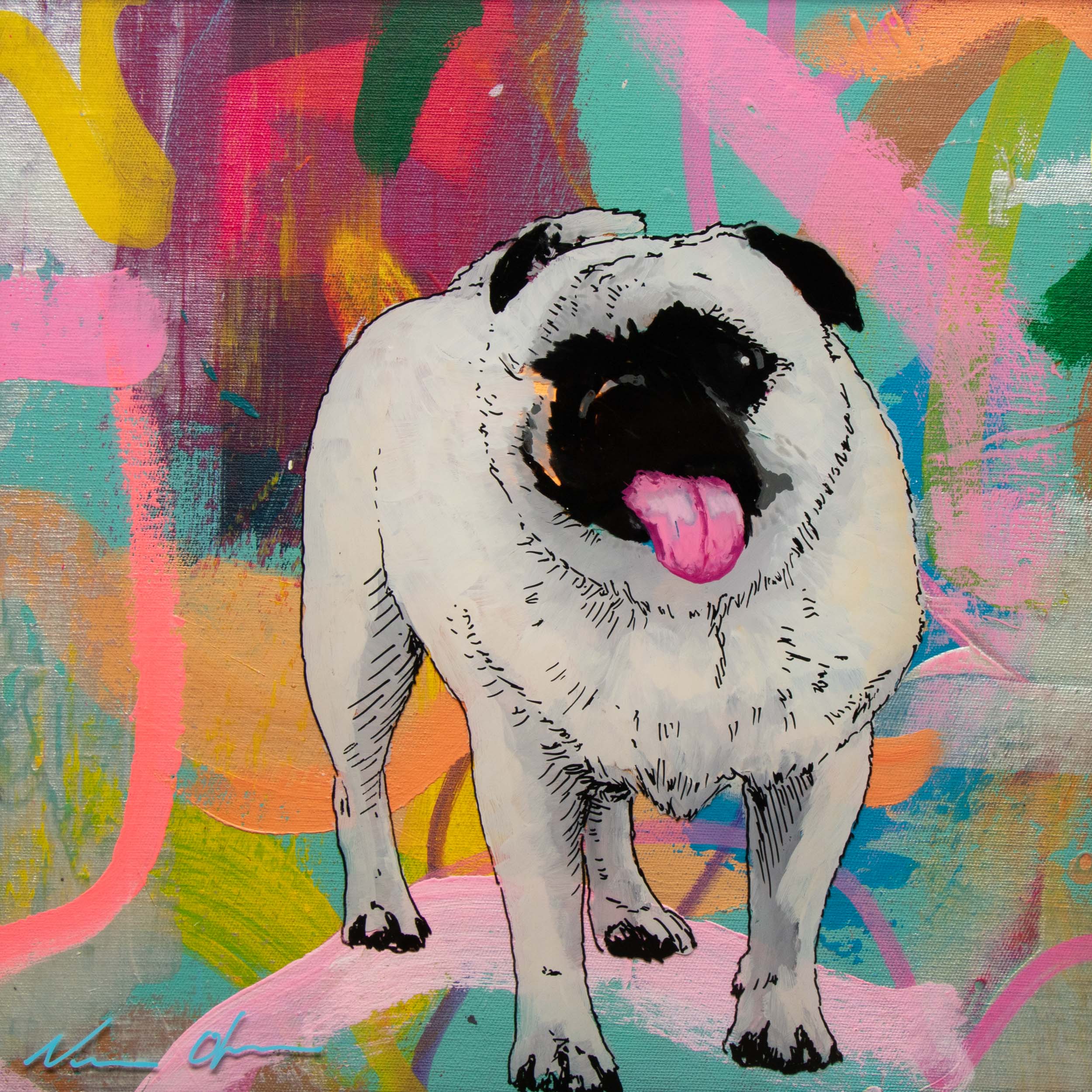
A highly realistic pug sits at the centre of Dog Days 2, isolated against a background of fluid, brightly coloured marks. The contrast gives the familiar animal the character of a pop-cultural emblem: immediately recognisable, yet subtly transformed by its new surroundings. Painted on the reverse of acrylic glass, the work also changes with the light and reflections around it, adding another shifting layer to its playful collision of figuration and abstraction.