
by Tarik Chebl
1 200,00 € incl. VAT
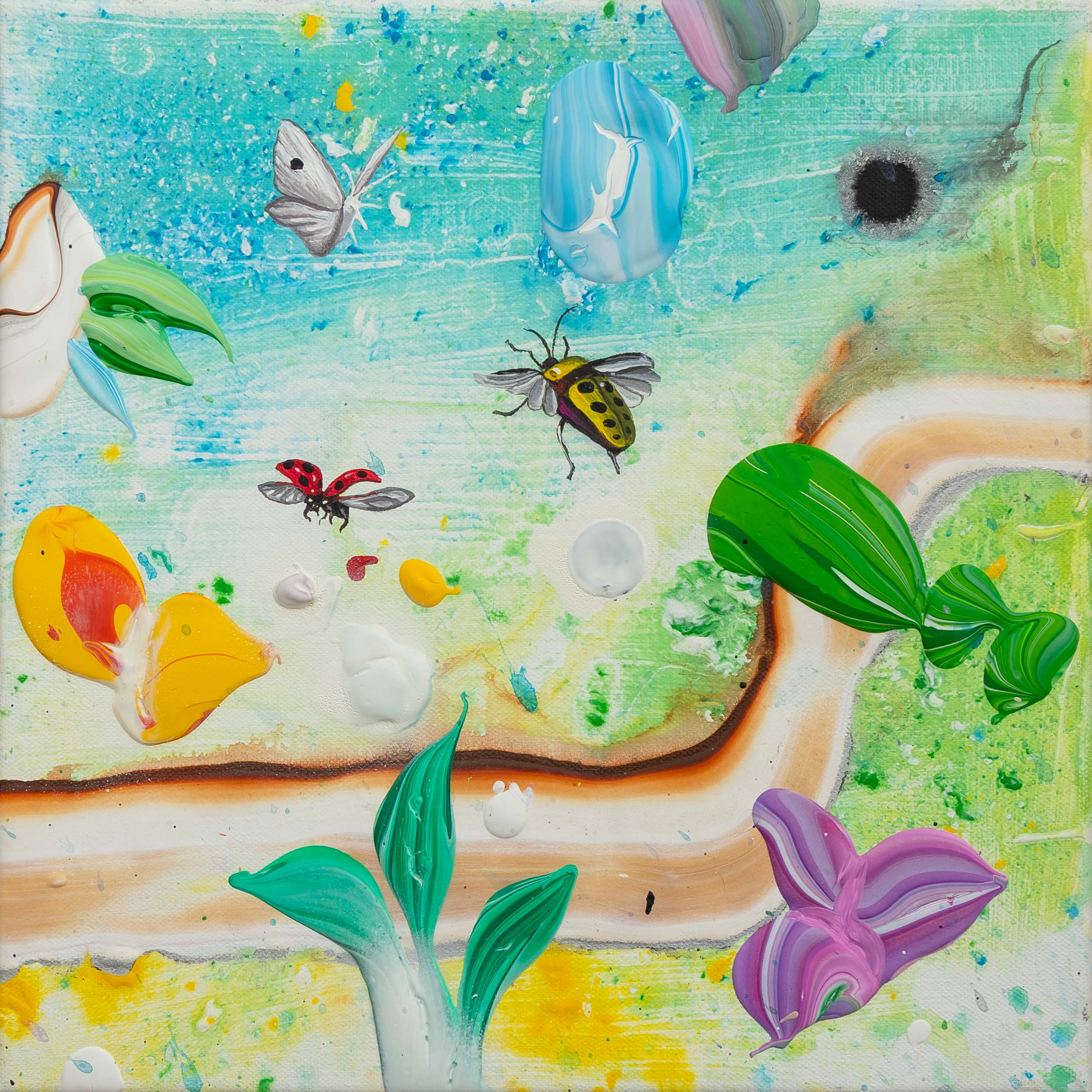
In Little Rakuen, Tarik Chebli extends the imagined world of his Rakuen series: a blue-green field crossed by a winding ribbon, with insects, plant forms, and thick passages of paint appearing across the surface. The composition holds together through movement, as the eye travels between small details and broader atmospheric areas.
Chebli describes his practice as a way of painting an idealised, non-human nature — a space shaped by biodiversity, ecosystems, and sensory abundance. In this work, the insects and plants bring moments of recognition, while the abstract ground keeps the environment fluid and speculative.
1 in stock
Dimension
Year
Frame

I paint a fantasized, idealized nature, free from human presence. This imagined world is both a space for formal exploration and a statement — a conscious refusal of anthropocentrism and the everyday. My practice draws on travels in Asia (China, Thailand, Indonesia) and a deep fascination with biodiversity and ecosystems, often inspired by wildlife documentaries.
Materiality is central to my work. I use paint in large quantities, engaging physically with the surface. Nature becomes an excuse for a sculptural approach: accumulations, textures, layers that evoke mud, bark, fluids, or dense vegetation. Relief often blurs the line between painting and low relief.
Within these thick pictorial masses, I return to more detailed, meticulous brushwork, revealing animals and plants from a dreamed world — birds and primates with unusual colors, creatures that seem to demand to be seen, painted, remembered.
In a world saturated with human images, I choose to look elsewhere: toward rare, sublime, sometimes endangered life forms. Painting nature becomes both an aesthetic pursuit and a gesture of resistance — a way of honoring what may soon disappear.
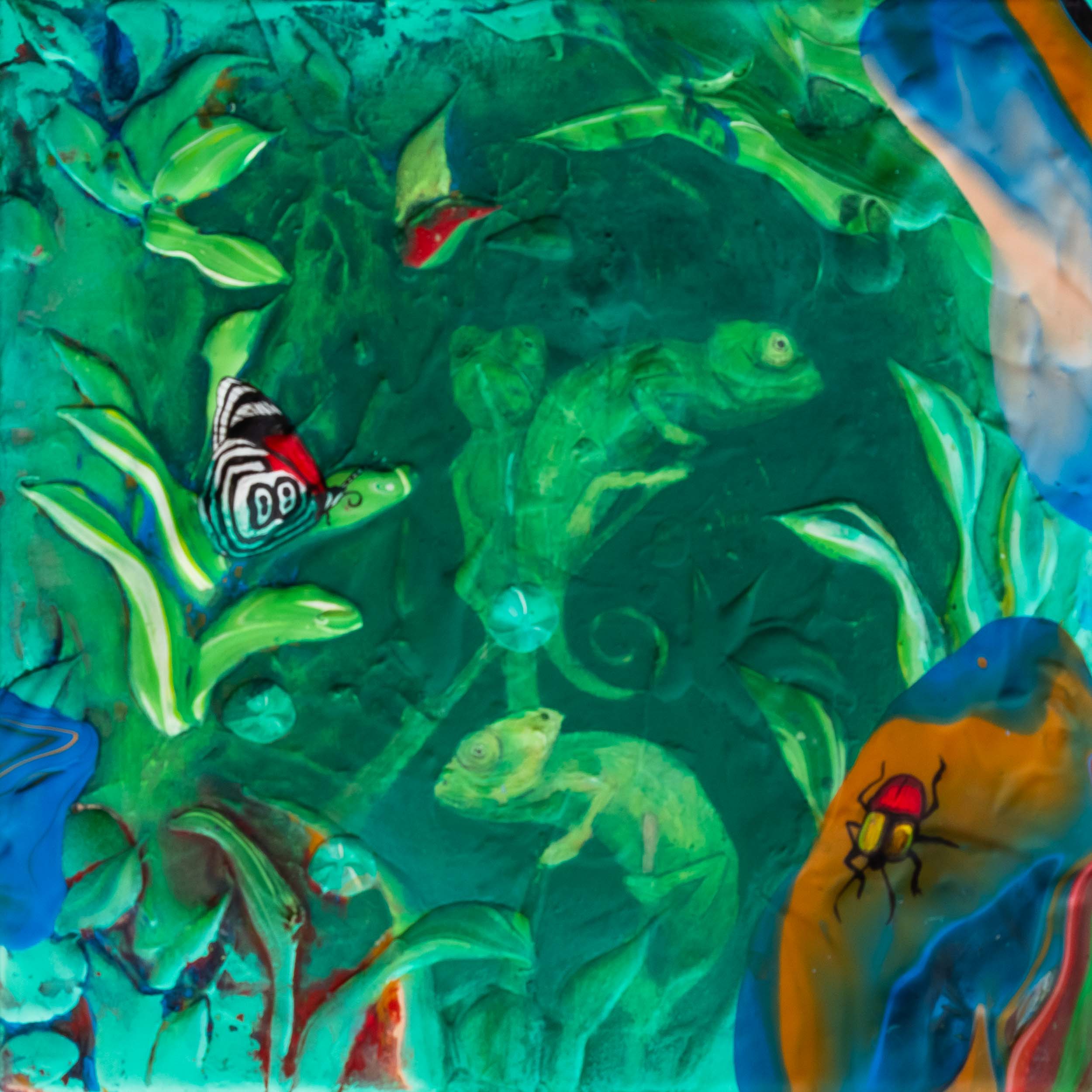
“Chameleons and Cie” is a small ecosystem in which figure and environment dissolve into one another. Two chameleons surface from a dense, jewel-green ground, half-hidden among leaves and sharing their world with a butterfly and a beetle. Tarik Chebli builds the surface from thick layers of acrylic, so the paint becomes terrain, a place of growth and mutation rather than a backdrop. Nature is imagined here free of human presence, vivid and slightly poisonous in colour, beautiful but never quite safe to enter.
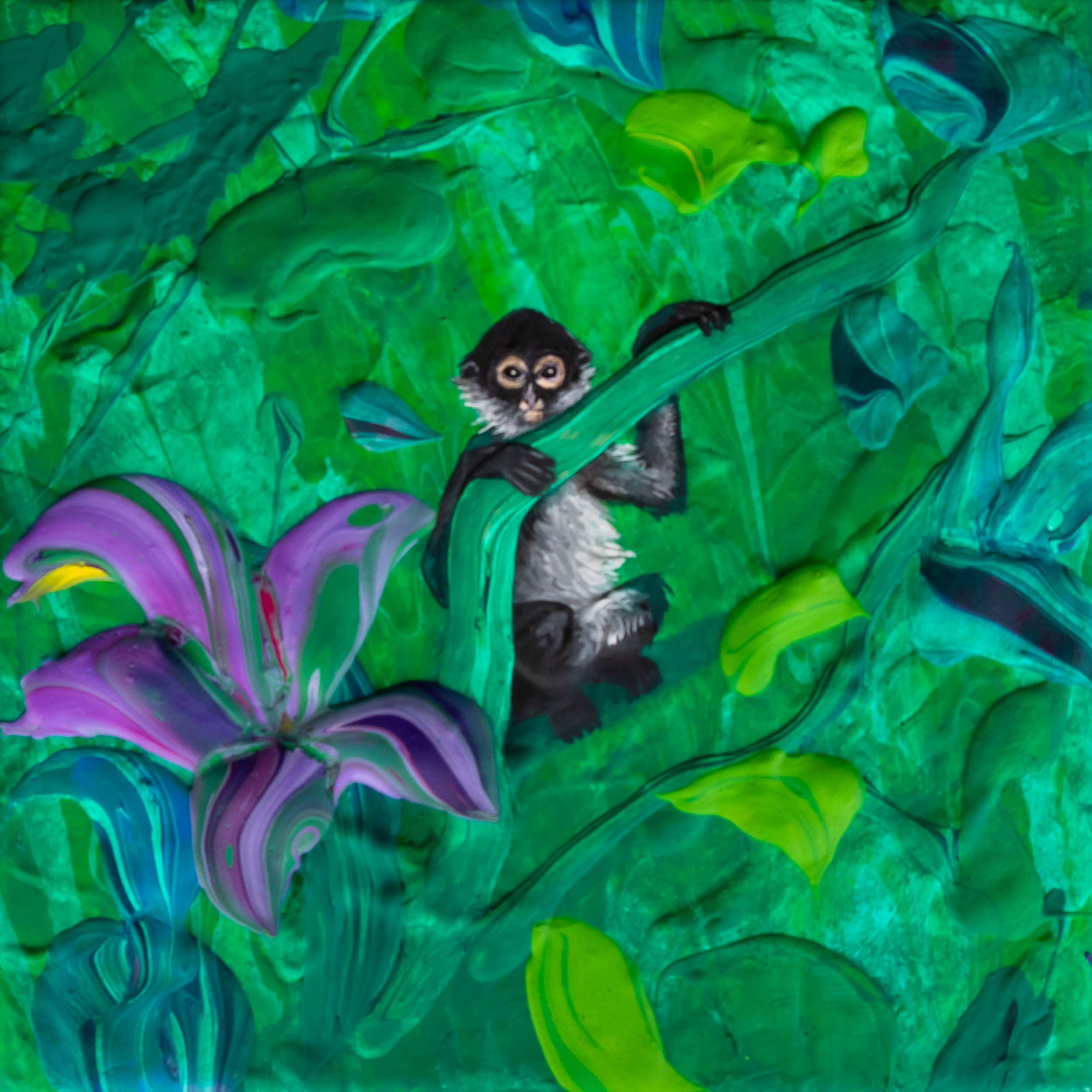
“Baby Spider Monkey” is seductive and tender in equal measure. A small, wide-eyed animal clings to a thick ribbon of vine, its dark fur and pale chest set against a jungle of acid greens built from heavily layered acrylic. Beside it, a violet lily opens at the edge of the frame, as delicate as the creature itself. Tarik Chebli chose the subject for its fragility, and the painting holds it within an environment so vivid and overgrown that charm shades into unease: a young life, and a single flower, held in a world far larger and stranger than themselves.
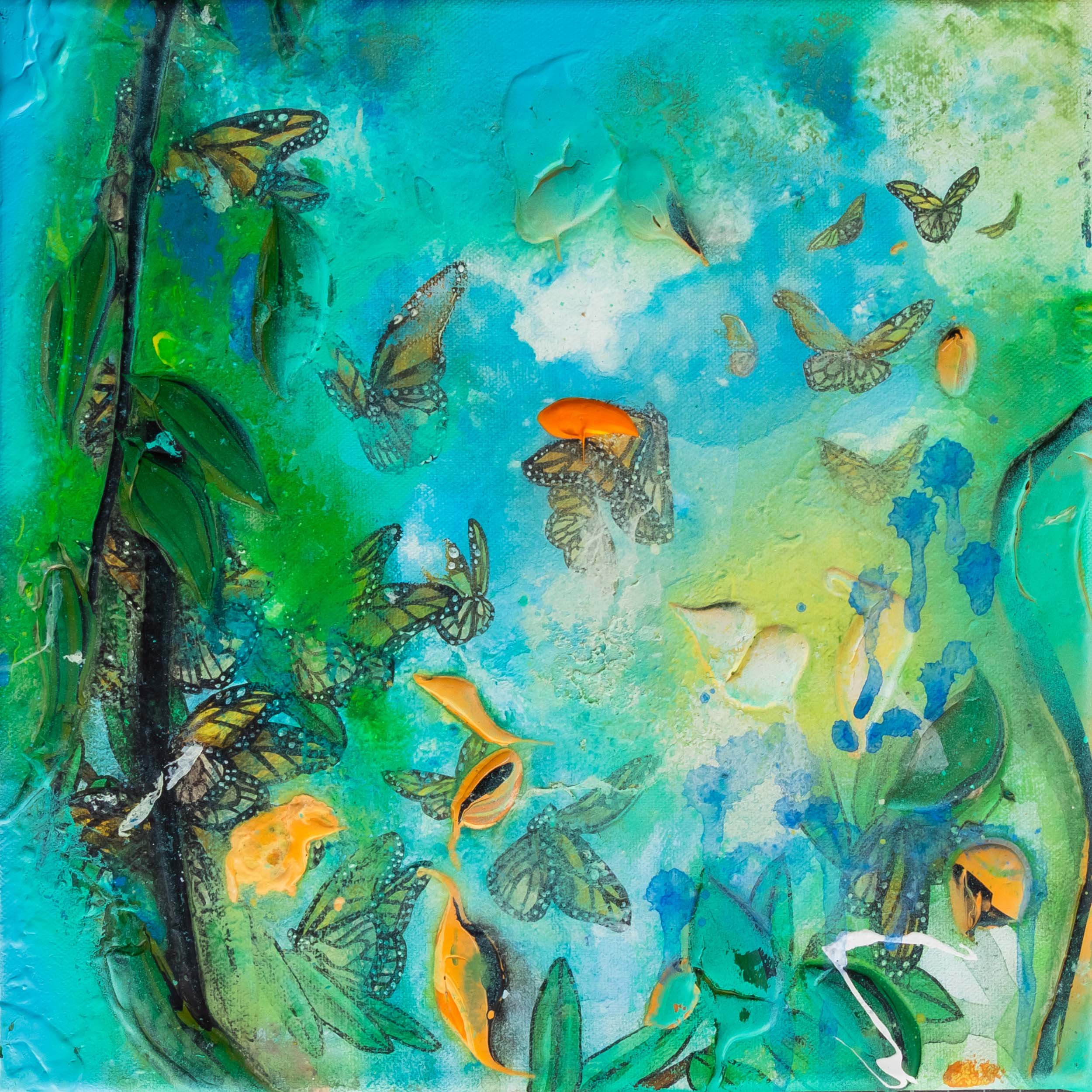
“Monarchs Migration” follows a swarm of monarch butterflies drifting through a luminous, watery field of turquoise, lime and sky blue. Tarik Chebli is drawn to the monarch’s long journey from Mexico to Canada, a route followed for generations. In Mexican tradition, the monarch is also linked to the return of the dead. Lighter and more atmospheric than his dense jungle paintings, the work sets this unbroken passage against the national borders it now crosses, a quiet reminder that nature moves freely where people draw lines.
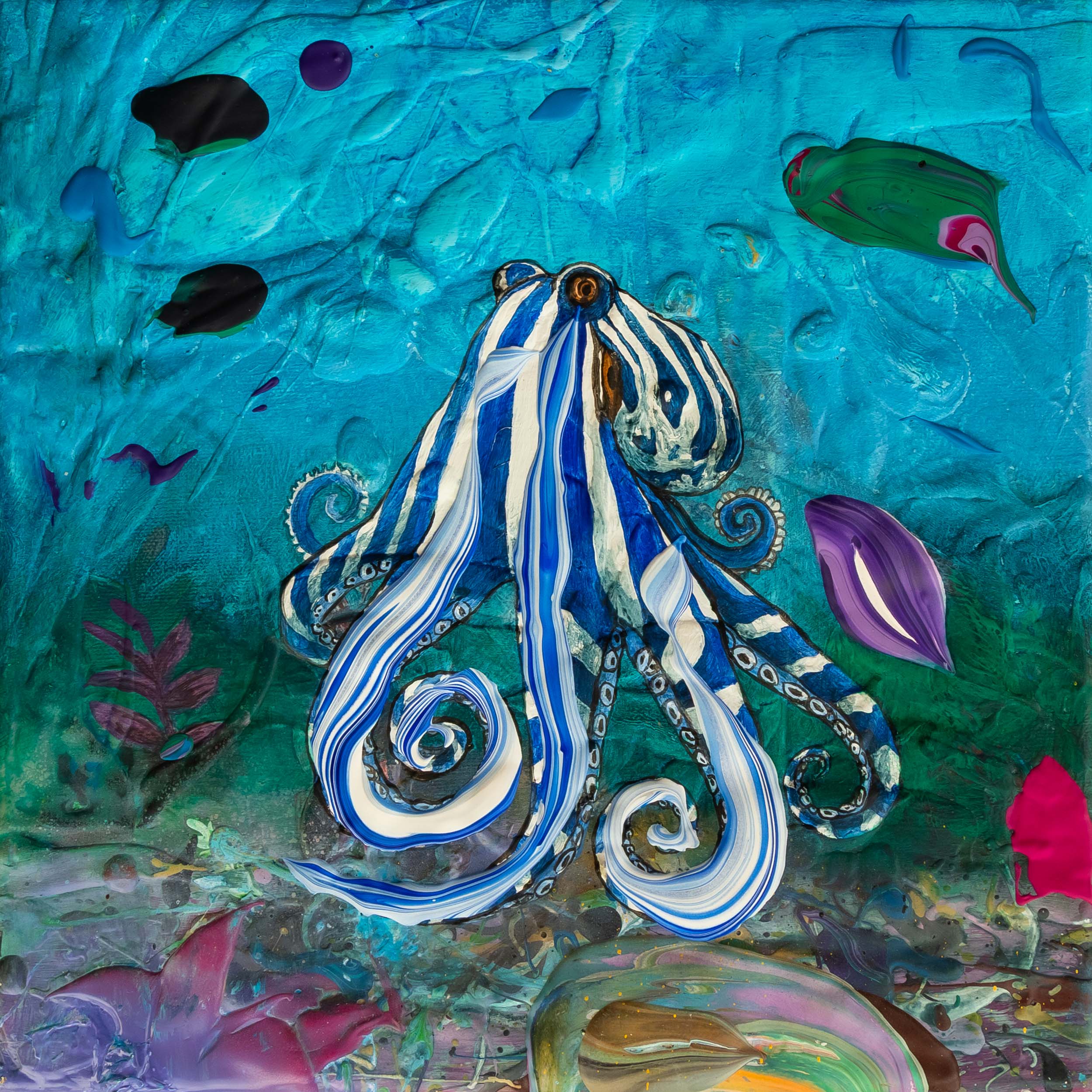
In “Blue Octopus” bold blue-and-white lines articulate the creature’s curling tentacles, giving it a striking graphic rhythm and almost calligraphic grace. Thickly applied paint lends the octopus a vivid physical presence, while other raised passages appear partially obscured by the water, creating the illusion of forms suspended at different depths. Against a scraped and layered field that descends from luminous blue into deeper green, the octopus emerges with the clarity of a portrait, surrounded by an underwater world that remains strange, dense and only partly knowable.
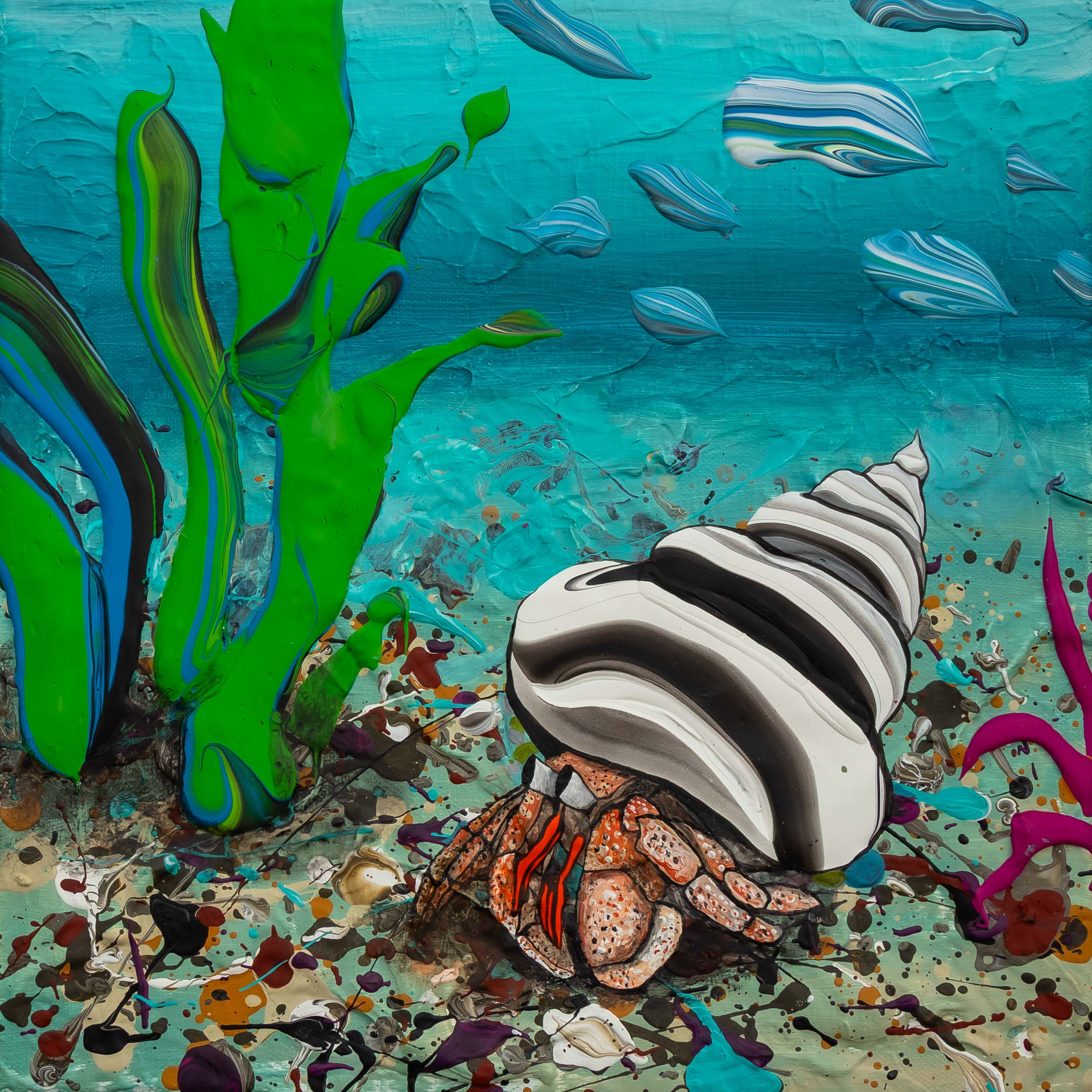
In Tarik Chebli’s Hermit Crab, the creature sits firmly in the foreground, its striped shell and finely worked body emerging from a dense seabed of marks, splashes, and textured paint. Around it, green plant forms rise through a vivid turquoise field, while small marbled fish-like shapes move across the upper part of the composition.
The work brings together two important parts of Chebli’s practice: close attention to rare or overlooked life forms, and a physical, almost sculptural use of paint. Here, the environment does not simply surround the hermit crab; it seems to hold it, giving the image a clear relationship between figure, ground, and habitat.
Chebli describes his paintings as a way of looking away from the human world and toward imagined ecosystems. In Hermit Crab, that imagined
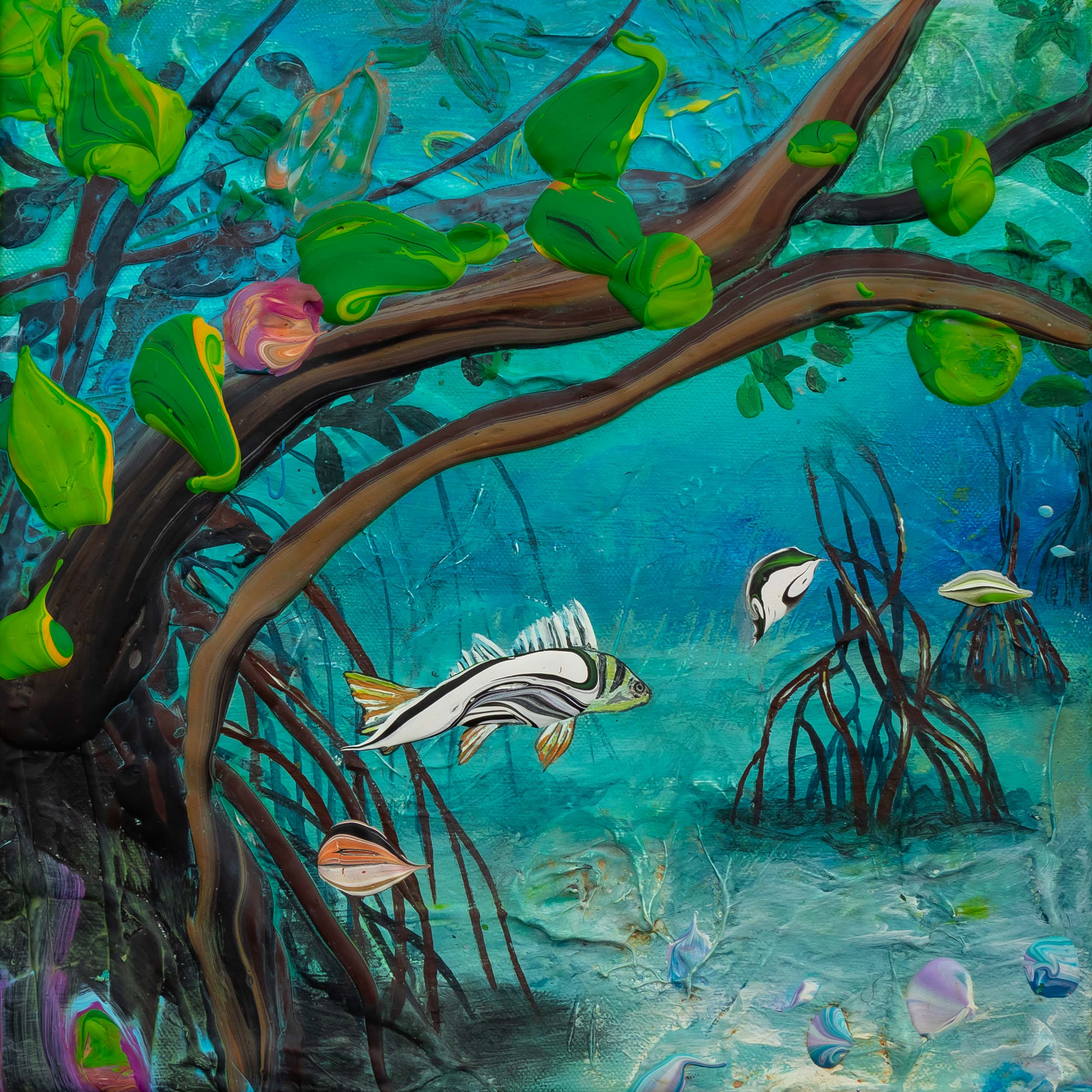
Tarik Chebli’s Mangrove places a small fish within a layered underwater environment of branching roots, saturated blues, and thick green foliage. The composition is built through depth: dark root systems enter from the edges, the fish holds the centre, and quieter passages of water and vegetation recede behind it.
The painting moves between observation and invention. Some details feel closely noticed — the direction of the fish, the structure of the roots, the shifting water — while other passages remain more ambiguous, allowing the surface itself to suggest organic matter, movement, and density.
Chebli’s work often imagines nature as a world apart from human presence. In Mangrove, that world feels active and self-contained: a small ecosystem in which the central creature and its surrounding habitat belong to the same visual rhythm.
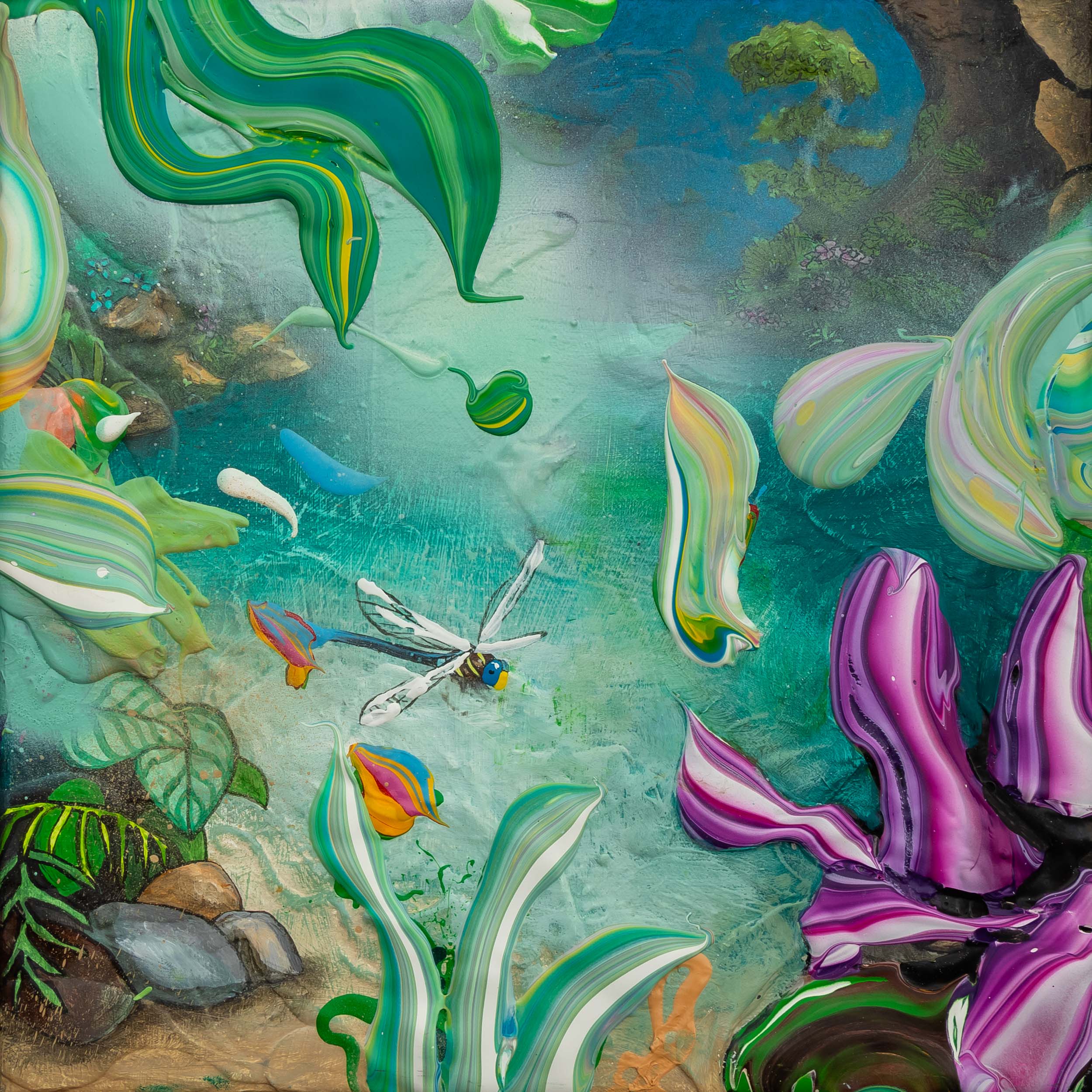
In ‘Dragonfly’, Tarik lets the creature emerge gradually from a dense, vividly coloured environment. Strong gestures and foliage-like forms draw the eye inward from the edges, creating a small moment of discovery as the dragonfly comes into view. Behind it, a delicately detailed background brings a quieter register to the painting, with an atmosphere reminiscent of traditional Japanese prints. The work moves between observation and imagination, reflecting Tarik’s view of a composition as an ecosystem in which every element has its place within a fragile balance.
Chebli’s practice often moves between detailed brushwork and thick, material surfaces. In Dragonfly, that balance gives the image its particular tension: the creature is precise, while the world around it remains open, dense, and partially hidden.
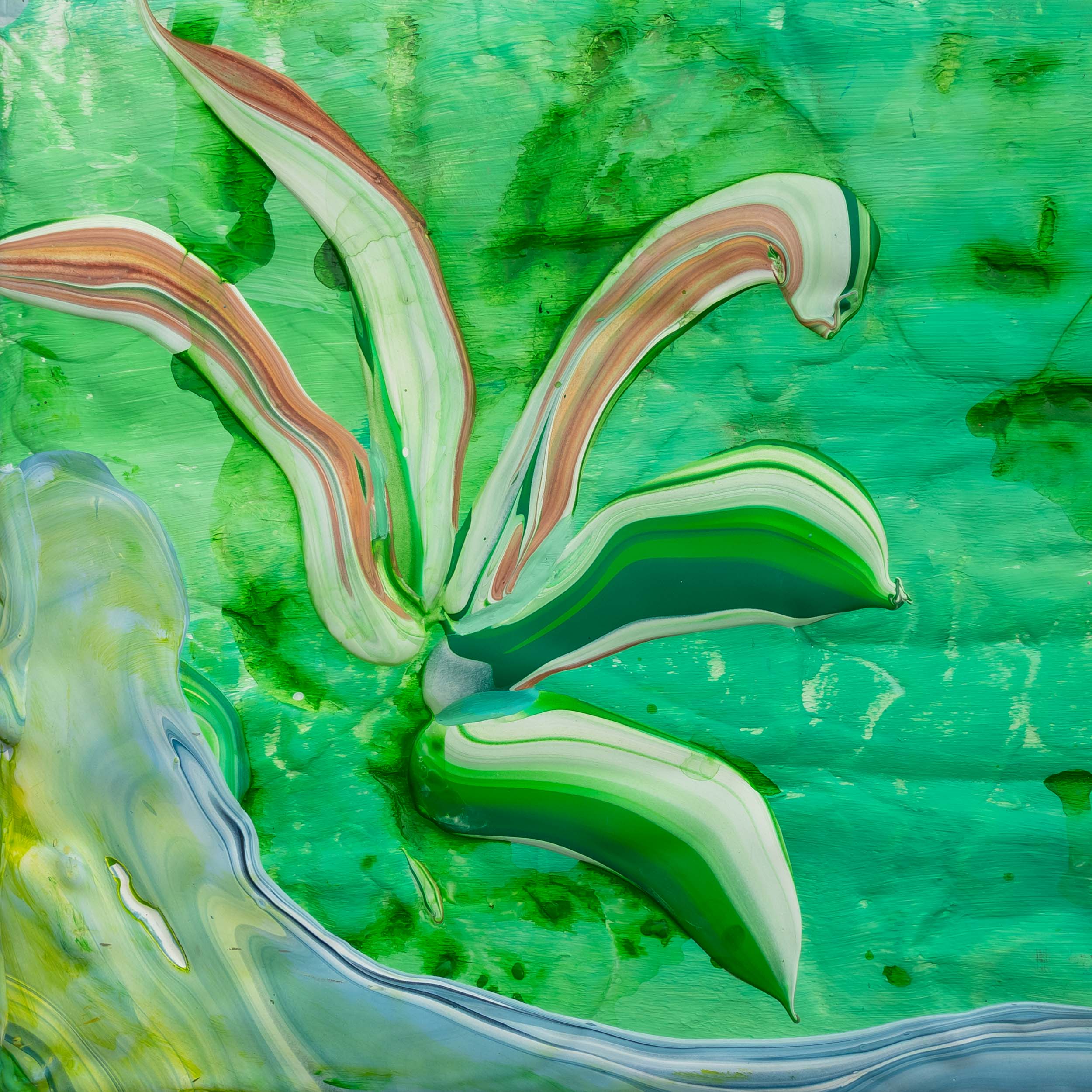
Plant brings a single ribbon-like botanical form into close focus, allowing it to unfurl across a richly textured ground. Its fluid movement and layered surface make the familiar feel newly animated—part plant, part gesture, part imagined life. By isolating a detail that might otherwise disappear within a larger scene, Tarik Chebli invites sustained looking and reveals nature as something strange, energetic and continually transforming.
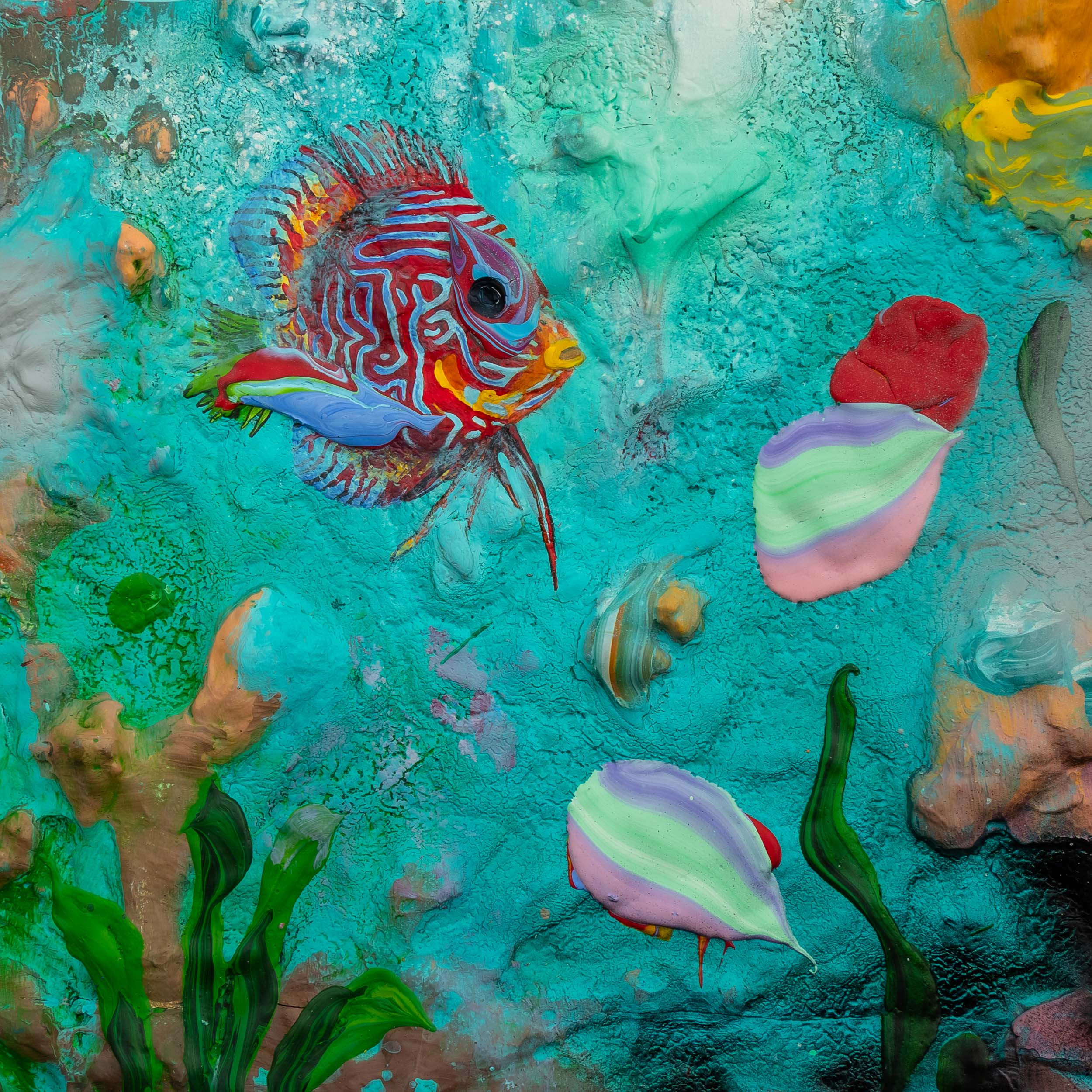
“Discus” depicts a vividly patterned fish emerging from a densely built-up, almost volcanic surface. Its body shifts between clarity and concealment—partly sculptural, partly translucent and partly absorbed into its surroundings—suggesting both camouflage and display. The fish’s watchful eye gives the painting a quietly disconcerting presence, as though the act of looking is being returned. Layered colour and relief-like passages of paint allow the work to shift continually between recognisable image and sculptural surface, while the fish’s gaze gives it an arresting sense of life.
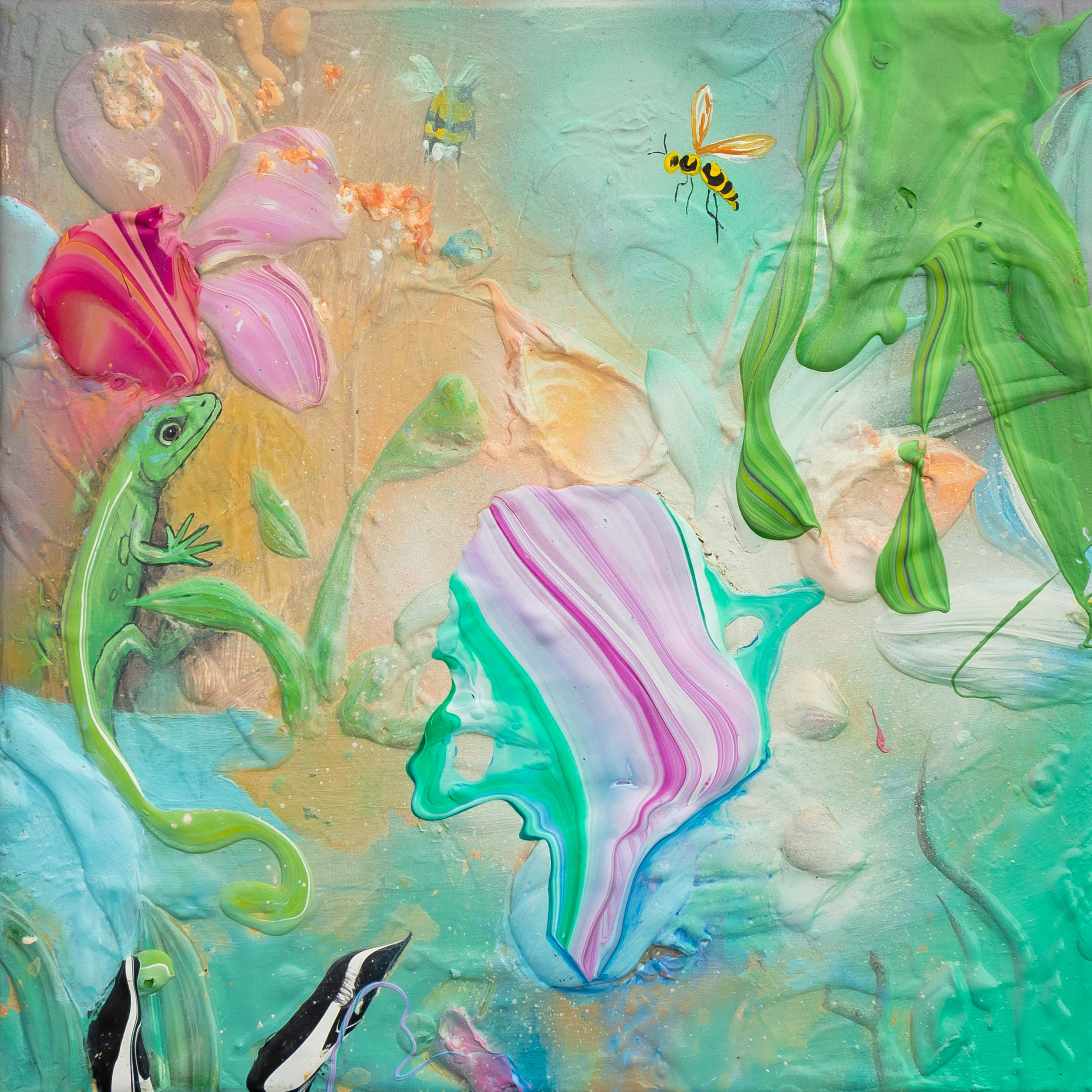
“Wasp and Lizard” captures a moment of predation, as the lizard closes in on the wasp. Yet the encounter forms only one part of a more complex ecological tension. Across the surface, raised and relief-like marks suggest forces that extend beyond the immediate food chain—a larger threat to the balance and interdependence of the natural world. Through vivid colour, movement and sculptural texture, Tarik Chebli presents nature as both sensorially compelling and profoundly vulnerable.
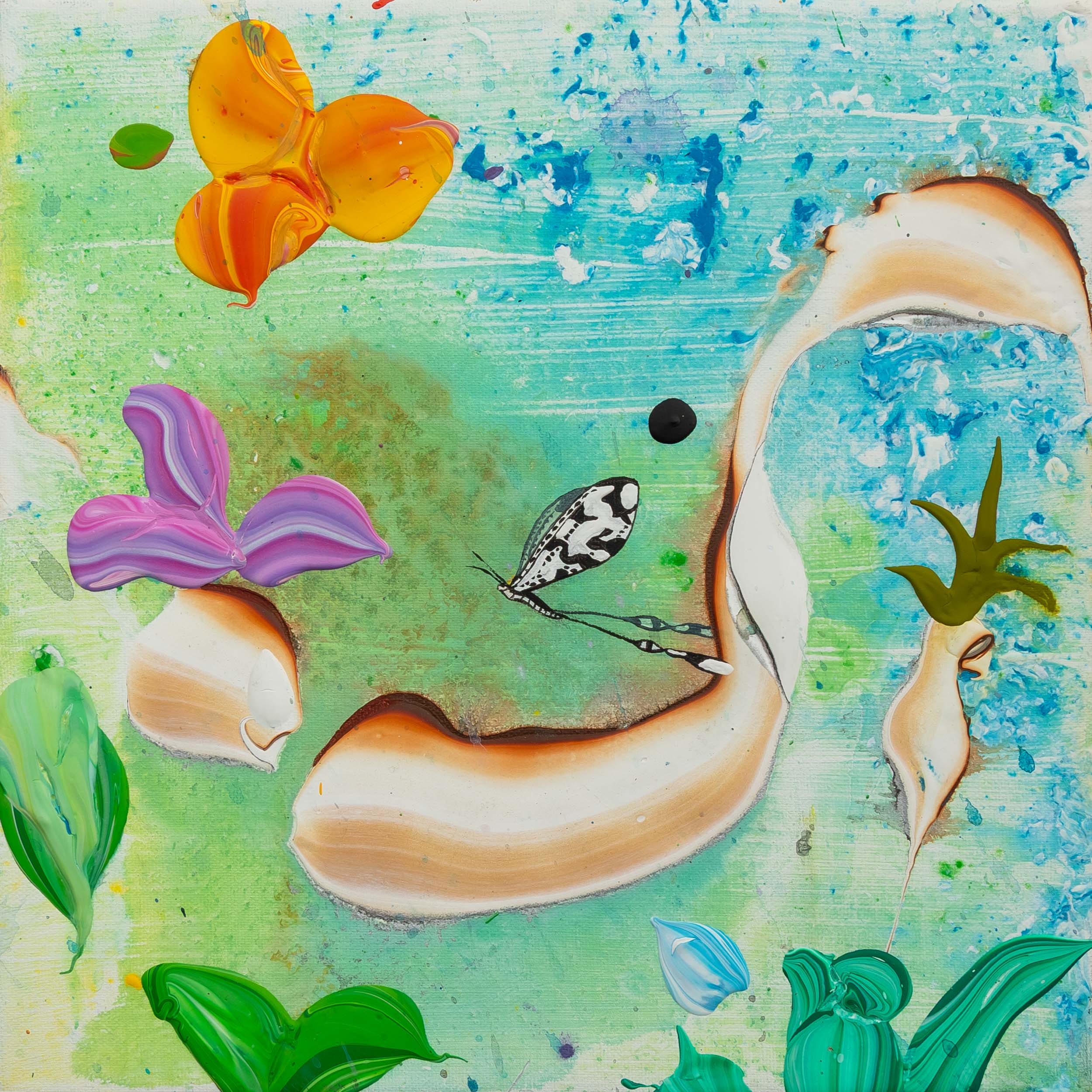
In Little Rakuen 3, Tarik Chebli builds an imagined ecological space from a pale blue-green ground, bright plant-like forms, and a ribbon-like line that moves through the composition. The insect at the centre gives the painting a point of recognition, while the surrounding marks and colours keep the image open and shifting.
The work belongs to Chebli’s wider interest in a fantasised nature free from human presence, where biodiversity, material texture, and invented species become ways of looking beyond the everyday. Here, abstraction and representation sit close together: the painted world feels abundant, but never fully fixed.
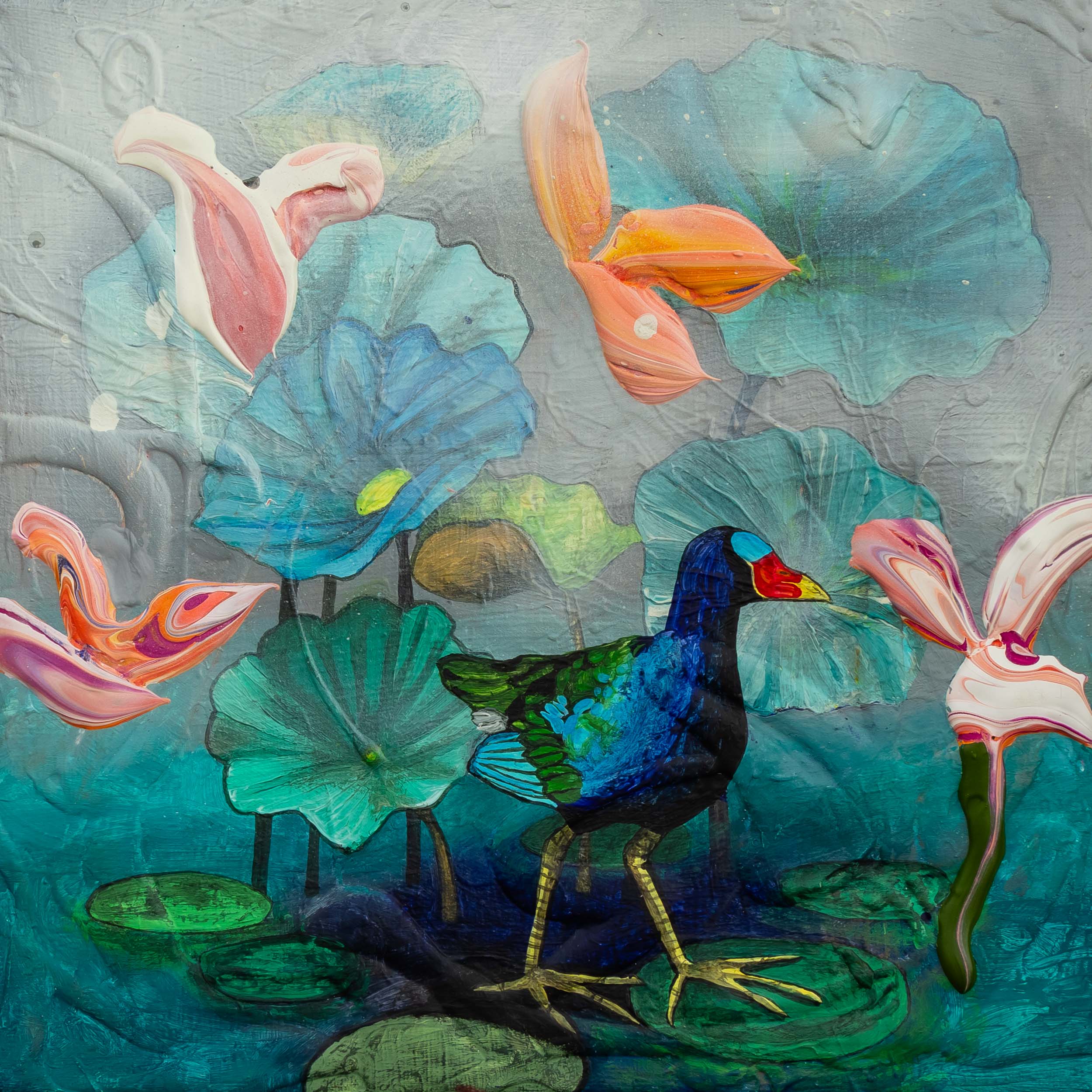
In Acquatic Bird, Tarik Chebli builds an imagined wetland from dense paint, softened colour, and layered organic forms. Lily pads, flowers, water, and bird appear to emerge from the surface rather than sit neatly on top of it.
The bird becomes the work’s quiet centre: vivid, alert, and slightly strange, held within a world that feels abundant and withdrawn from human presence. Around it, the thickened surface suggests the dense stuff of its ecosystem — vegetation, water, mud, and growth — while more precise passages allow individual forms to come elegantly into focus.
Chebli’s practice often turns toward fantasised, non-human nature as a place of attention and resistance. Here, that imagined nature world concentrated into one small scene: a creature seen closely, within a world still forming around it.
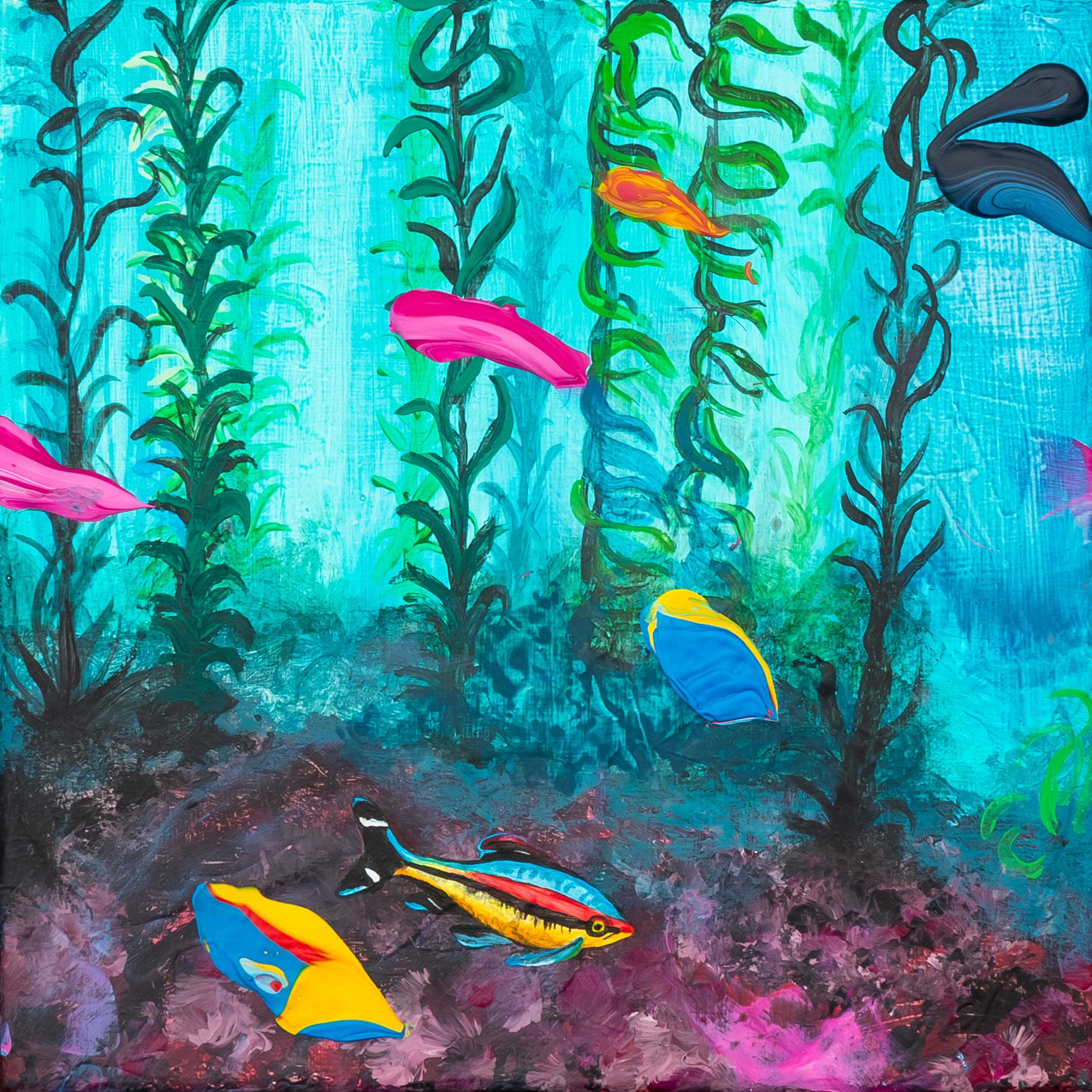
Seaweed Forest by Tarik Chebli opens into an imagined underwater world, where strands of kelp rise through a blue field and thick passages of paint gather like organic matter on the seabed.
The work holds together two registers central to Chebli’s practice: dense, tactile materiality and moments of precise revelation. Small fish-like forms appear from within the surface, their bright colour and relief drawing the eye without fully separating from the painted ecosystem around them.
Chebli describes his work as a way of looking away from the human image and toward rare, fragile, non-human life. Here, that idea is carried through a scene that feels less like a fixed view than a habitat slowly emerging from paint.
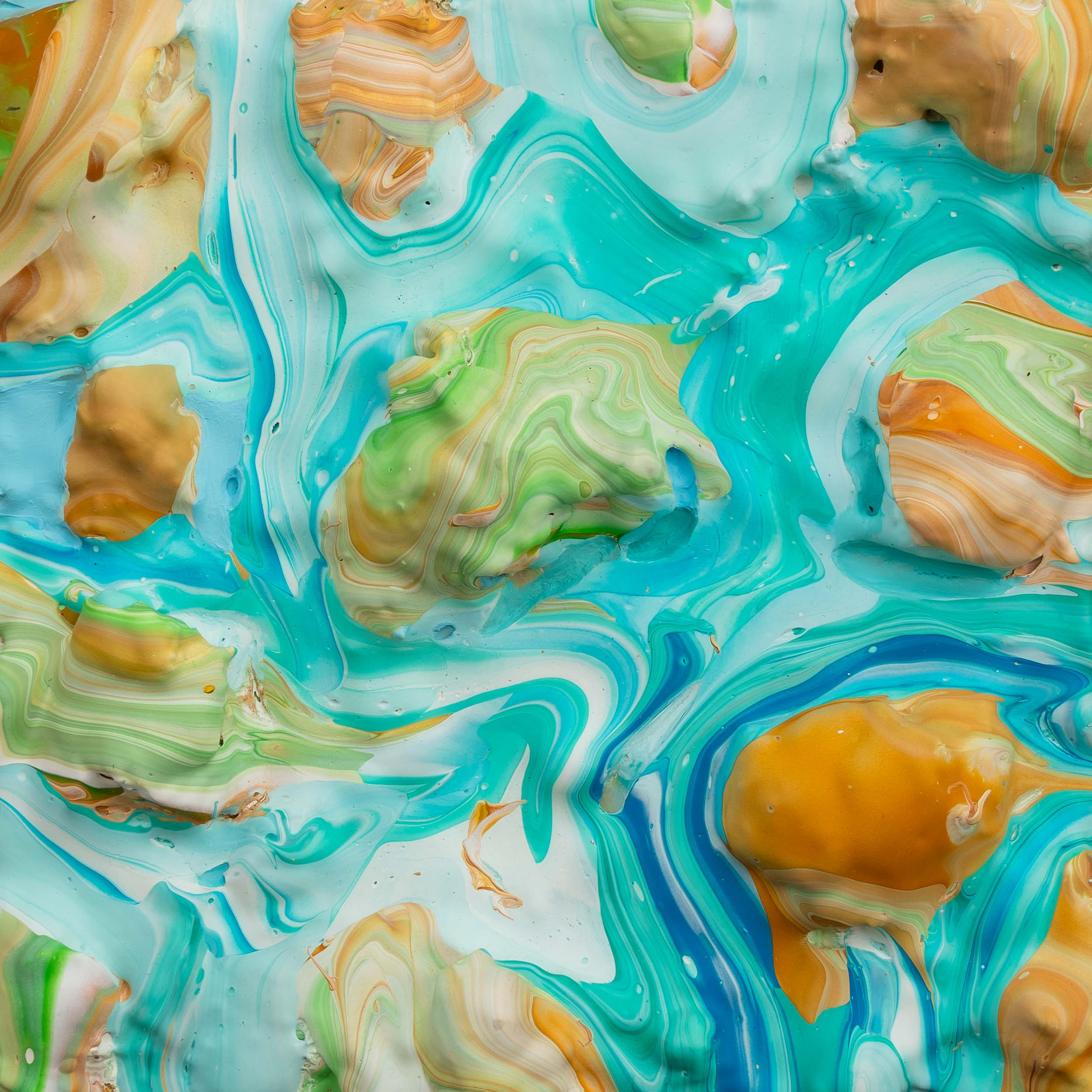
In Island Fragment, Tarik Chebli moves toward a more abstract and object-like language. Poured and accumulated paint creates a dense, topographical surface, where colour and material seem to settle into islands, channels, and geological formations.
Rather than depicting nature directly, the work approaches it through texture, mass, and viewpoint. Seen almost from above, the painting suggests a terrain in formation: part image, part relief, part imagined fragment of an ecological world.
This material intensity sits at the centre of Chebli’s practice, where nature becomes a way to explore paint as substance — layered, physical, and suggestive of mud, water, bark, vegetation, and shifting ground.