
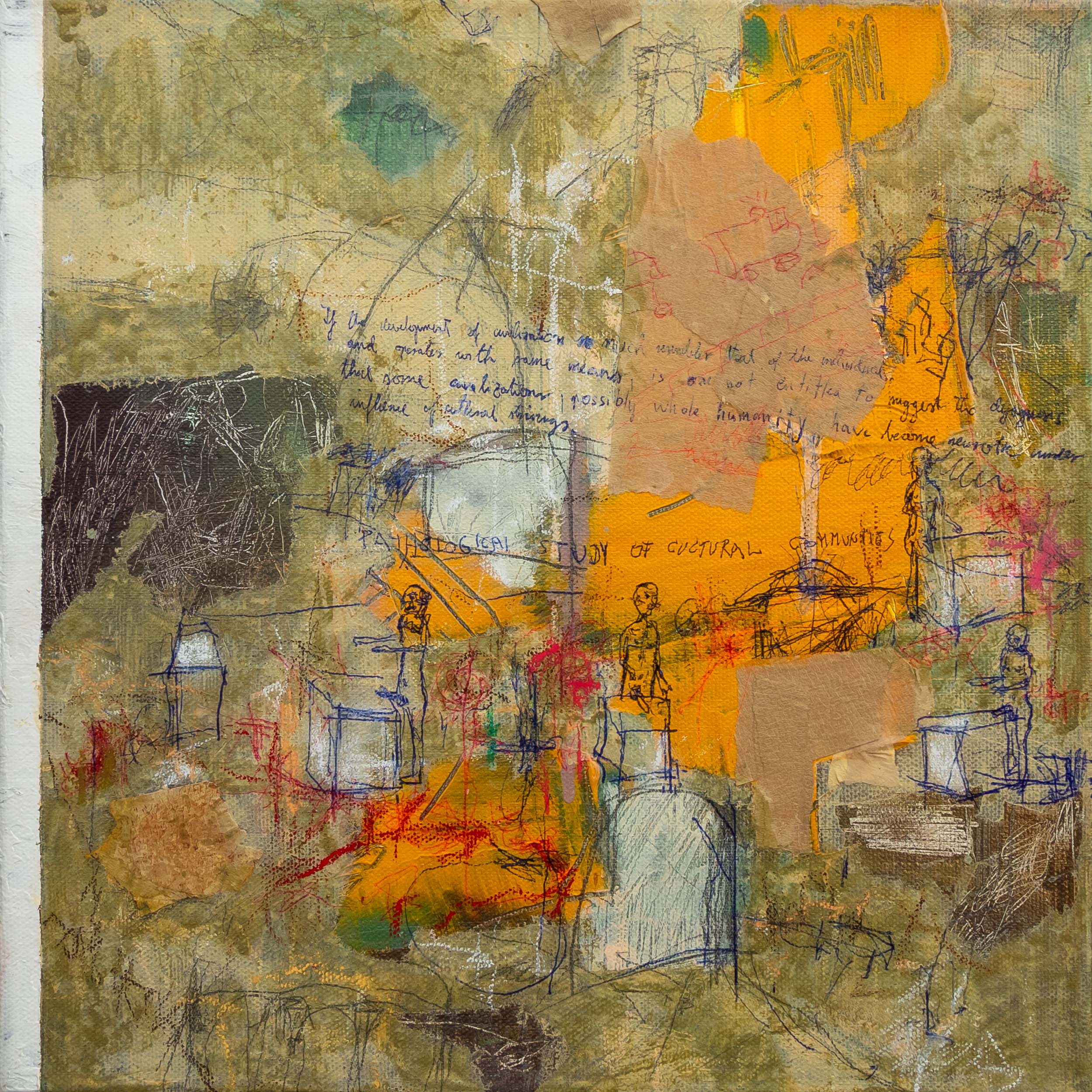
by Patrik Dvorščak
1 200,00 € incl. VAT
Peugeot 35 gathers handwritten text, scratched lines and fragments of bodies, furniture and machinery into an intimate field of exploration. Patrik Dvorščak uses the small format to condense ideas that also inform his sculptural and installation practice, giving spatial thinking a more immediate register. Vivid orange passages are interrupted by muted, translucent washes that structure the layered composition. Images, words and earlier marks remain partially visible, rewarding sustained looking as they gradually emerge from the surface.
1 in stock
Dimension
Year
Frame

Within my work I explore the fragile relationship between individual consciousness and the social structures that shape it. My particular interests are the tension that emerges when personal experience and bodily reality do not fully align with the collective expectations, roles, and symbolic systems through which society organizes everyday life. I often construct encounters between figures, objects, and crowd, creating situations in which personal perception and collective narratives collide.
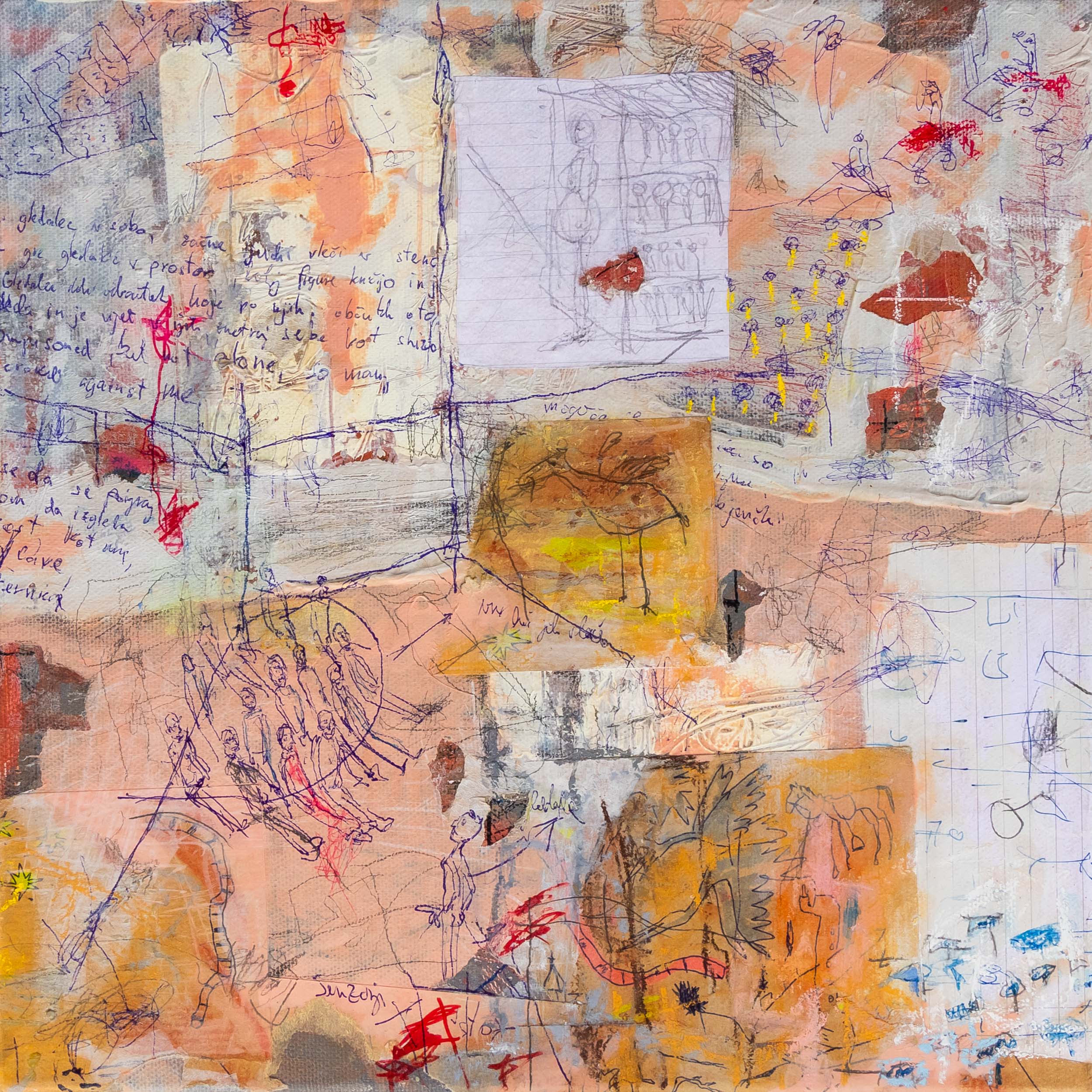
“I am imprisoned, but not alone, so many people crowd against me” is built from papers, drawings and handwriting pressed together in warm peach, ochre and pale grey. Groups of tiny figures huddle inside circles and boxes, a line of onlookers stands behind a gridded frame, and a long-legged bird stalks across a block of ochre. At the upper left, a handwritten passage in Slovenian and English gives the painting its title, setting confinement beside the press of other lives. Patrik Dvorščak turns the surface into a crowded interior, where the warmth of the colour sits uneasily against the sense of being hemmed in.
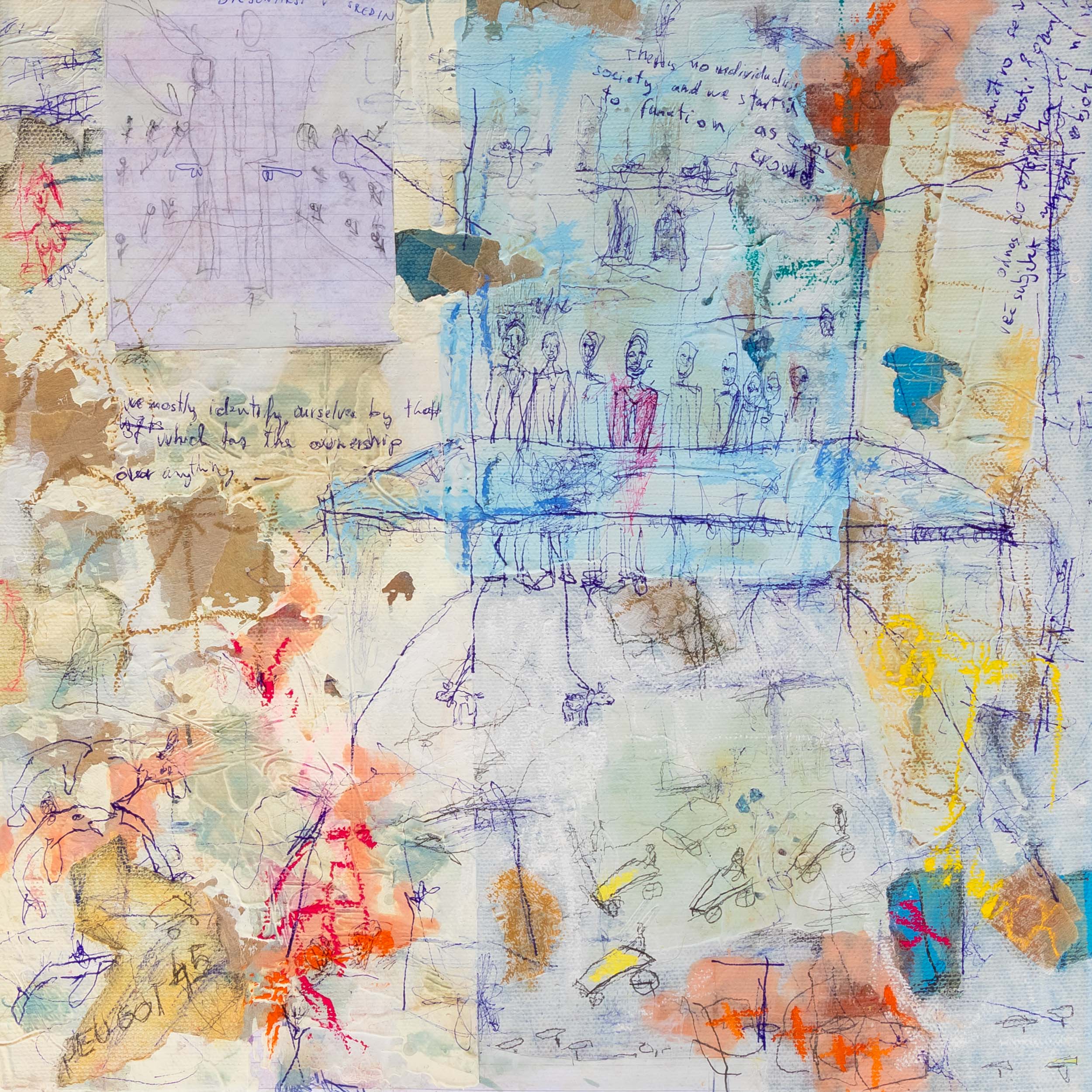
Peugot gathers drawings, handwriting and torn paper into a pale, airy field of blue, cream and soft orange. At its centre, a row of small figures stands behind a railing against a patch of sky blue, while tiny cars roll across the lower half and a name scrawled at the lower left gives the painting its title. Handwritten lines in English describe how we identify ourselves by what we own, and how, in a society without individuality, people begin to function as a crowd. Patrik Dvorščak sets these thoughts within a light, almost gentle surface, so that the critique of ownership and conformity arrives quietly, through small figures and everyday objects.
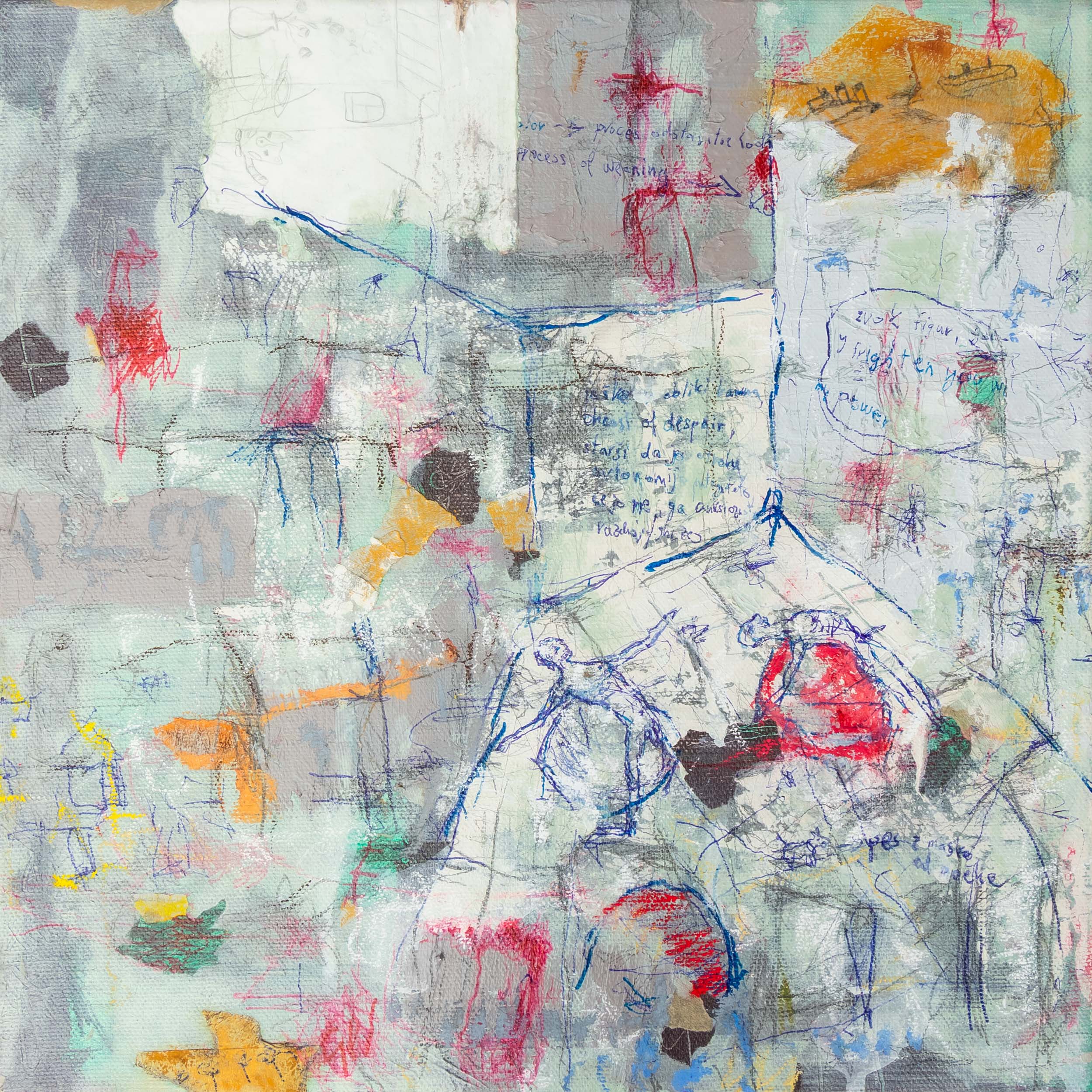
“After auto-eroticism I think therefore I am” turns a familiar philosophical line on its head, placing thought after bodily experience rather than before it. A bed sits at the centre of the composition, with miniature figures in blue ink arranged around it in a dreamlike, almost choreographed scene, while accents of red bring the body into a space that is also architectural. Handwritten fragments in Slovenian and English run through the pale, grey-green surface, never fully readable, yet carrying the irony and psychological tension Patrik Dvorščak would otherwise stage in an installation with sound. The painting holds bodily presence and self-reflection together, as though movement and thought were unfolding at once.
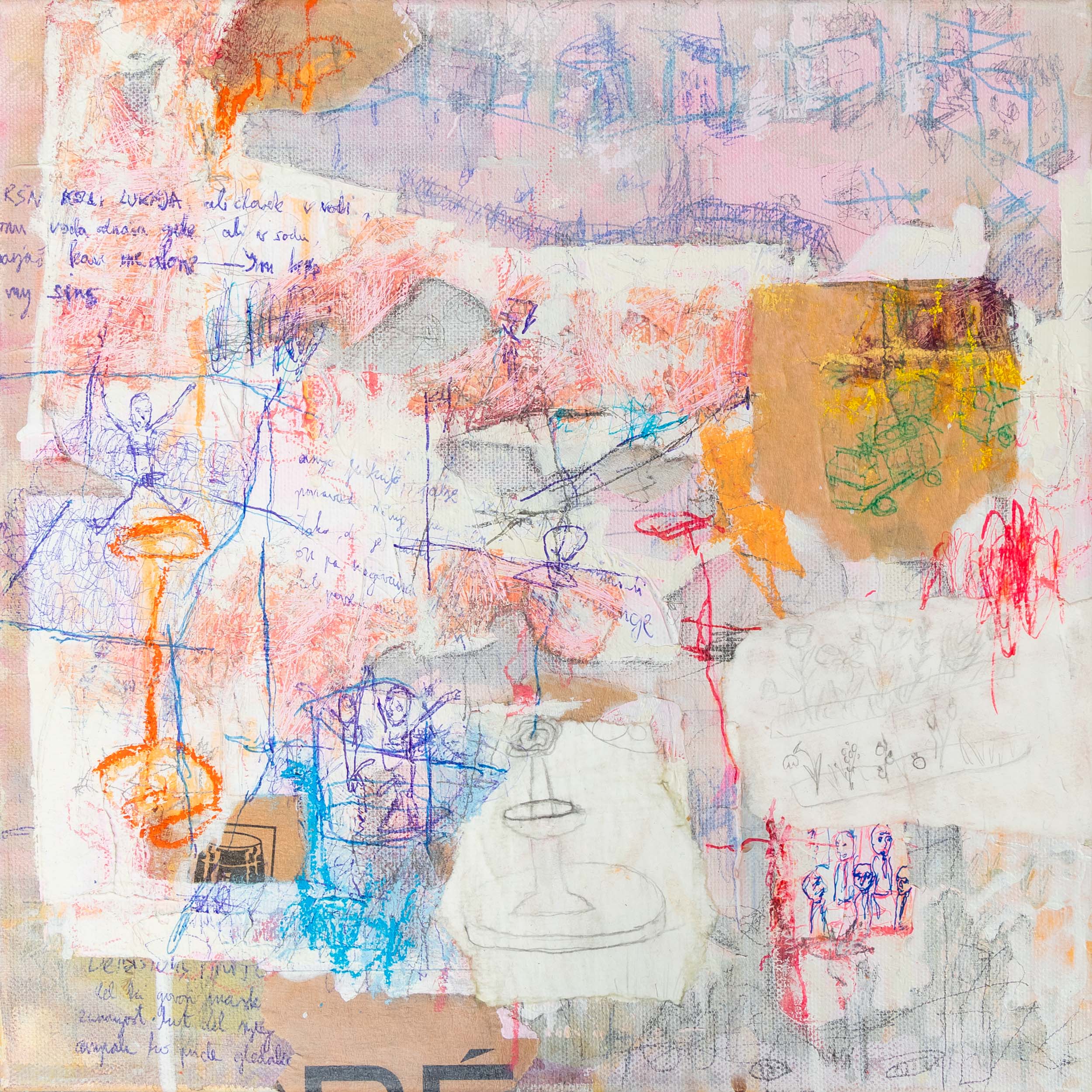
In a “Well or a Void, We Have Fun” packs drawings, handwritten fragments and torn collage come together into a small, dense field. Figures with raised arms balance on taut lines, a pencil-drawn fountain rests on a pale sheet, and a green truck is sketched over a block of cardboard. Each scene is only partly legible, giving the impression of thoughts, memories and social observations arriving at once. Blocks of paper and colour lend the surface structure and depth, while recurring lines and blue ink guide the eye across it. Warm blush tones feel playful at first, but a closer look reveals a compressed, anxious atmosphere.
Patrik Dvorščak turns intuitive mark-making into a psychological space where humour and unease share the same small room.
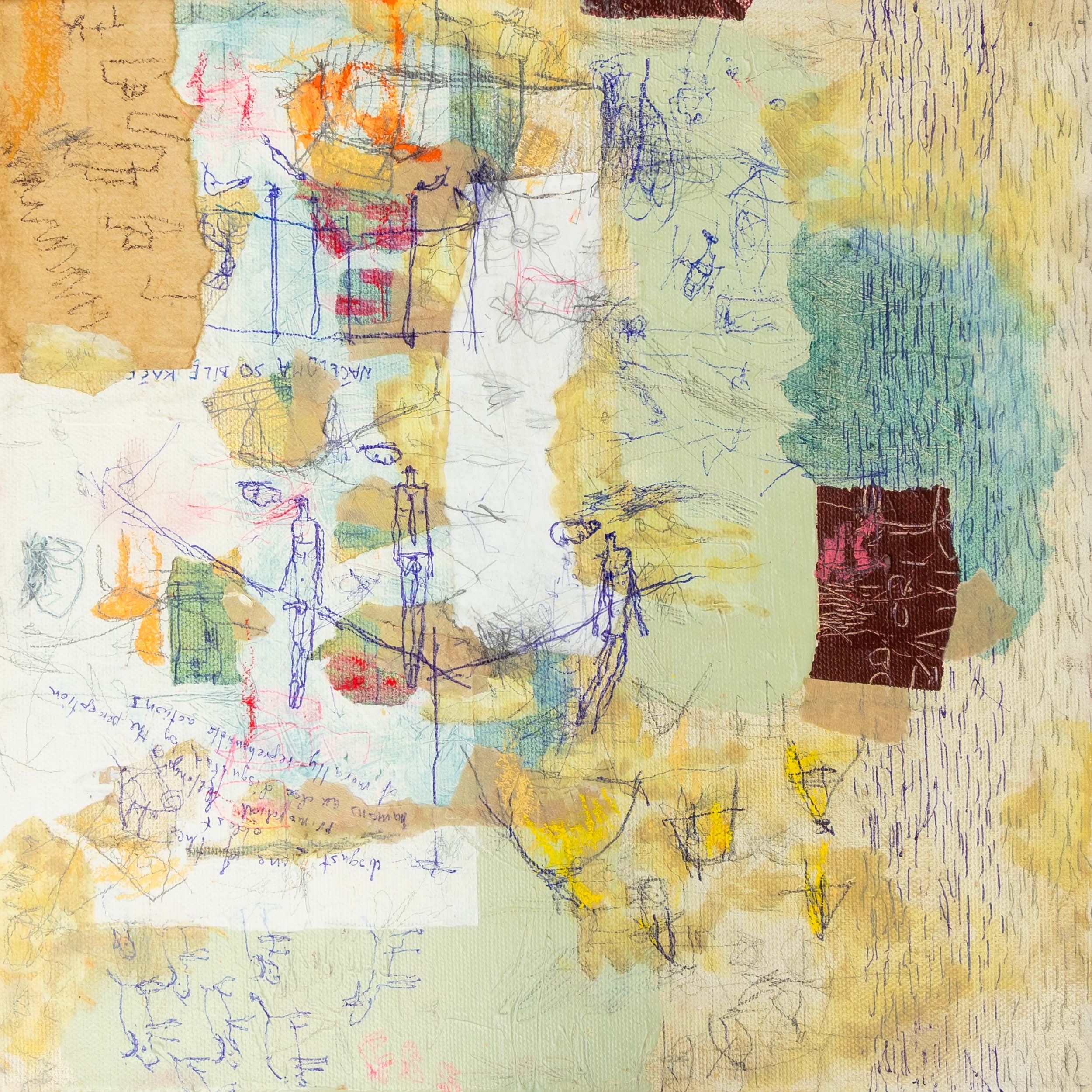
“We Celebrate the General Dismemberment of Reason II “organises drawing, handwriting and torn collage into distinct zones of activity, set within a muted, vintage palette of ochre, sage, teal and deep maroon. At its centre, three slender figures in blue ink hang between taut lines, forms that began in a dream of people stuck in mud. Fragments of text in Slovenian and English, some of them upside down, run through the surface without ever becoming fully readable. Rather than arriving all at once, the image asks the eye to travel from zone to zone, like a floor plan for an imagined installation. Patrik Dvorščak’s collective “we” shifts the work between private interior and shared social space, letting its unease surface slowly.
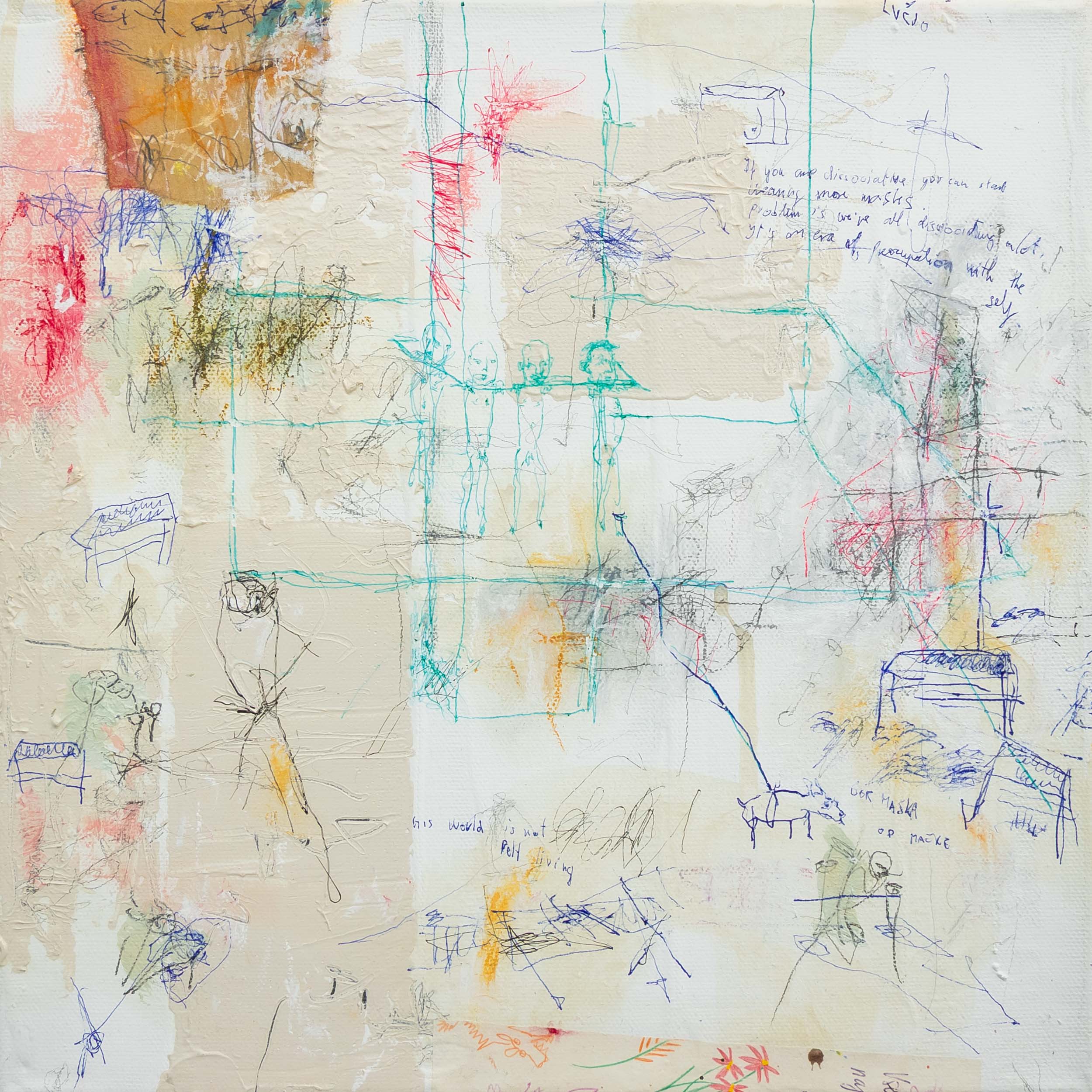
“Antinomy of Reason” unfolds across a pale, open surface where handwritten thoughts, loosely drawn objects and scattered marks surround a central group of figures. The title refers to a contradiction between ideas that each appear logically valid—a tension echoed in the painting’s shifting relationship between order and disorder. A turquoise architectural framework gives the composition structure, while scratches, overlapping lines and partially erased forms create an intimate psychological space in which memory, observation and competing thoughts coexist.
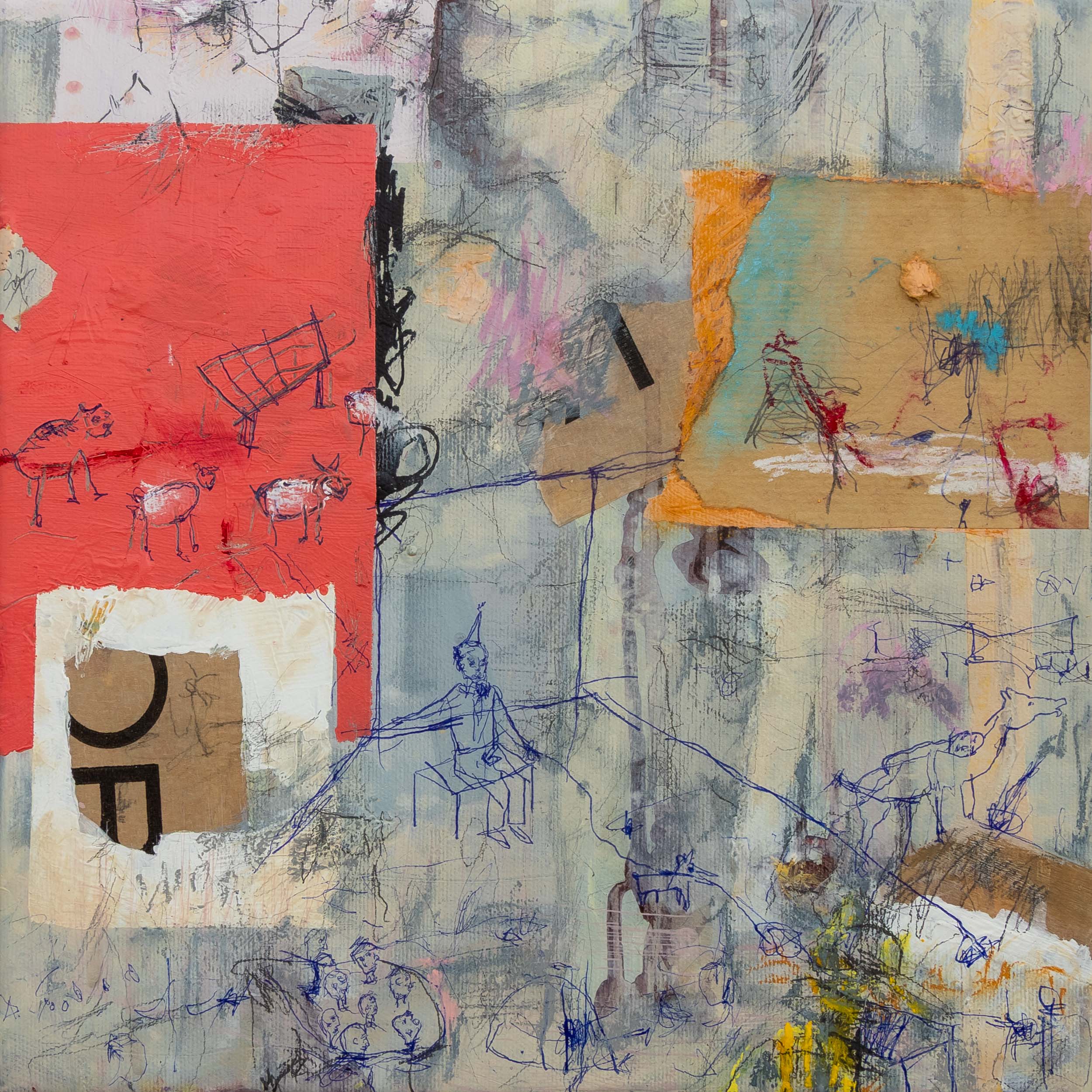
In Delusions That Contain Existential Truth, Patrik Dvorščak brings together drawn figures, fragments of colour, and layered surface marks into a scene that feels provisional, crowded, and unstable.
Small bodies, objects, and architectural suggestions appear across the work, as if personal perception is trying to find its place within a larger social field. The painting reflects Dvorščak’s interest in the fragile relationship between individual consciousness and the structures that shape everyday life.
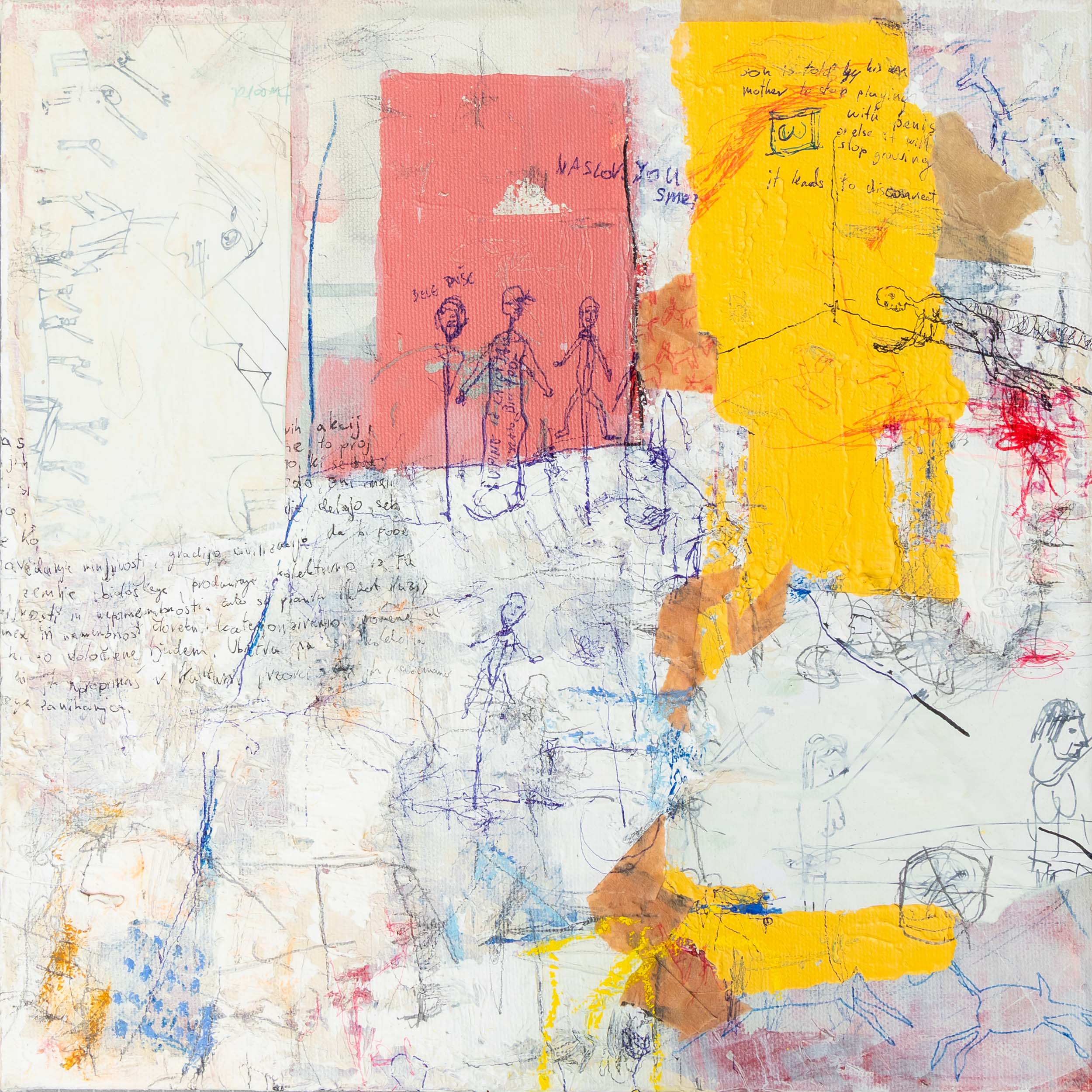
In “A self-structured disordering”, handwritten text, blocks of colour and attached paper accumulate across the surface, creating the feeling of thoughts gathering faster than they can be resolved. Some of the Slovenian writing even appears to spill beyond the composition’s edge. Whether or not we can read it, the text has a presence of its own—functioning as language, image and rhythm while drawing us into a fragmented space shaped by uncertainty, intuition and the unconscious.