
Salon is designed to help you trust your eye when collecting art. Explore the collection, choose the works that resonate with you, and let the deeper meaning behind your instinctive response reveal itself as you live with the work.
Seth Bauserman,
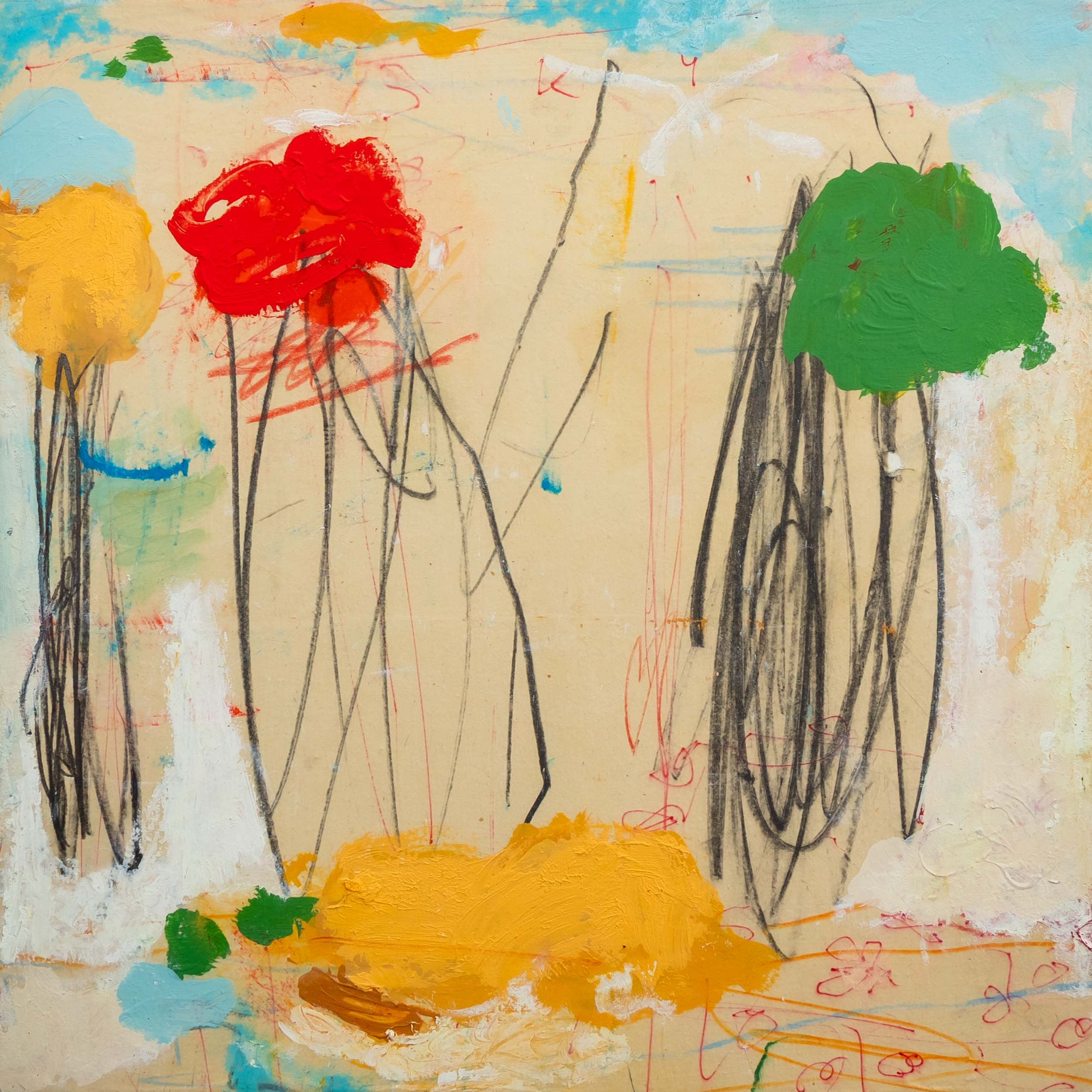
Spirit of the River 3 transforms fragments drawn from the artist’s young daughters’ artwork into a layered meditation on innocence, memory and familial identity. Bold fields of red, green and ochre hover above long graphite lines, while smaller gestures and traces remain visible beneath the surface. Working with translucent Kitakata paper, paint and pastel, Seth Bauserman allows different moments and generations to occupy the same image. Its buoyant colour carries a quieter reflection on how childhood imagery is preserved and transformed through an adult’s experience.
Seth Bauserman,
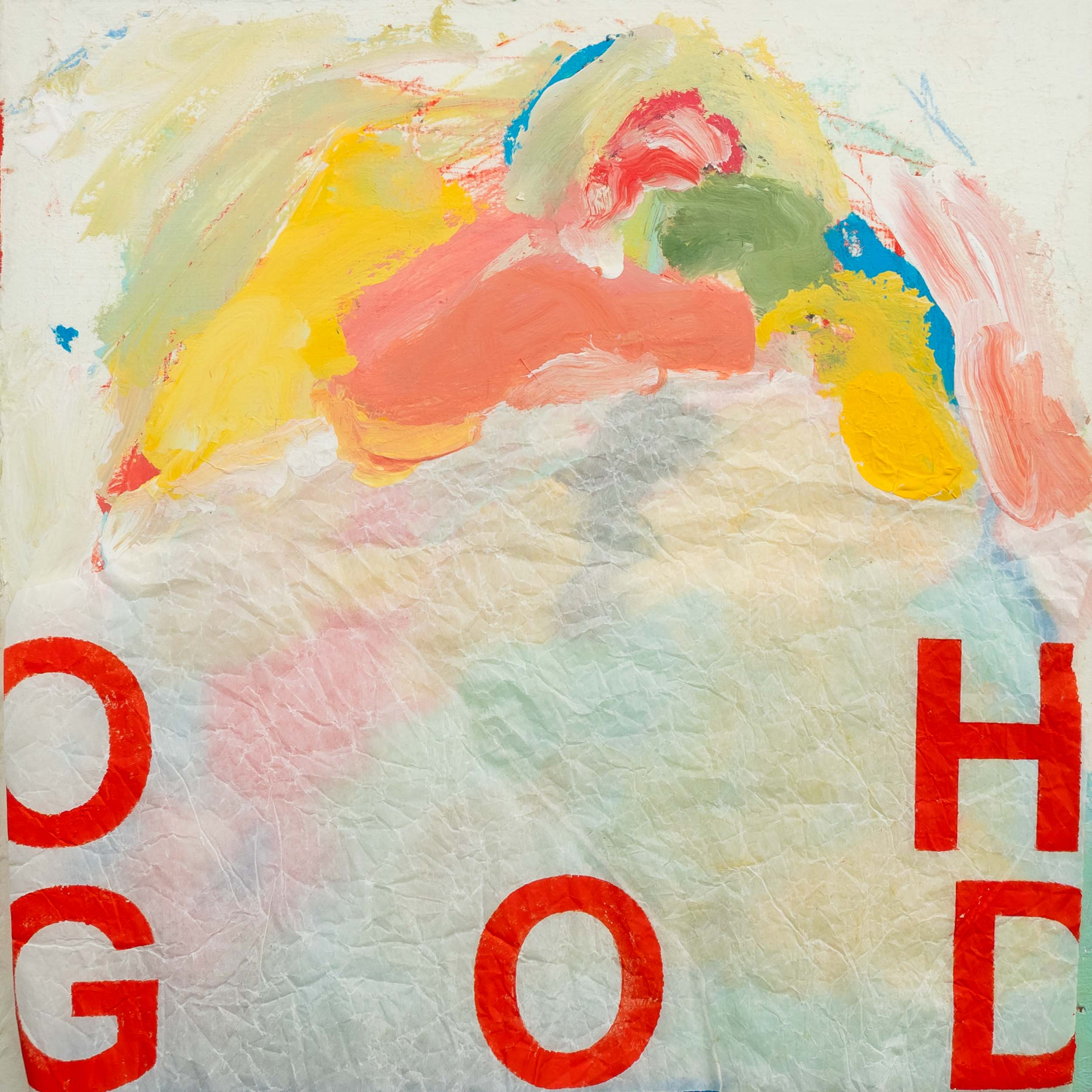
Guttural Prayer / OH GOD layers graphic text over an acrylic form drawn from a sketchbook page by Seth Bauserman’s two-year-old daughter. Made with transparent glassine and mulberry paper, the work uses layering to bring ideas of childhood innocence, memory, mortality and familial identity into tension with a distinctly adult perspective.
Wonder,
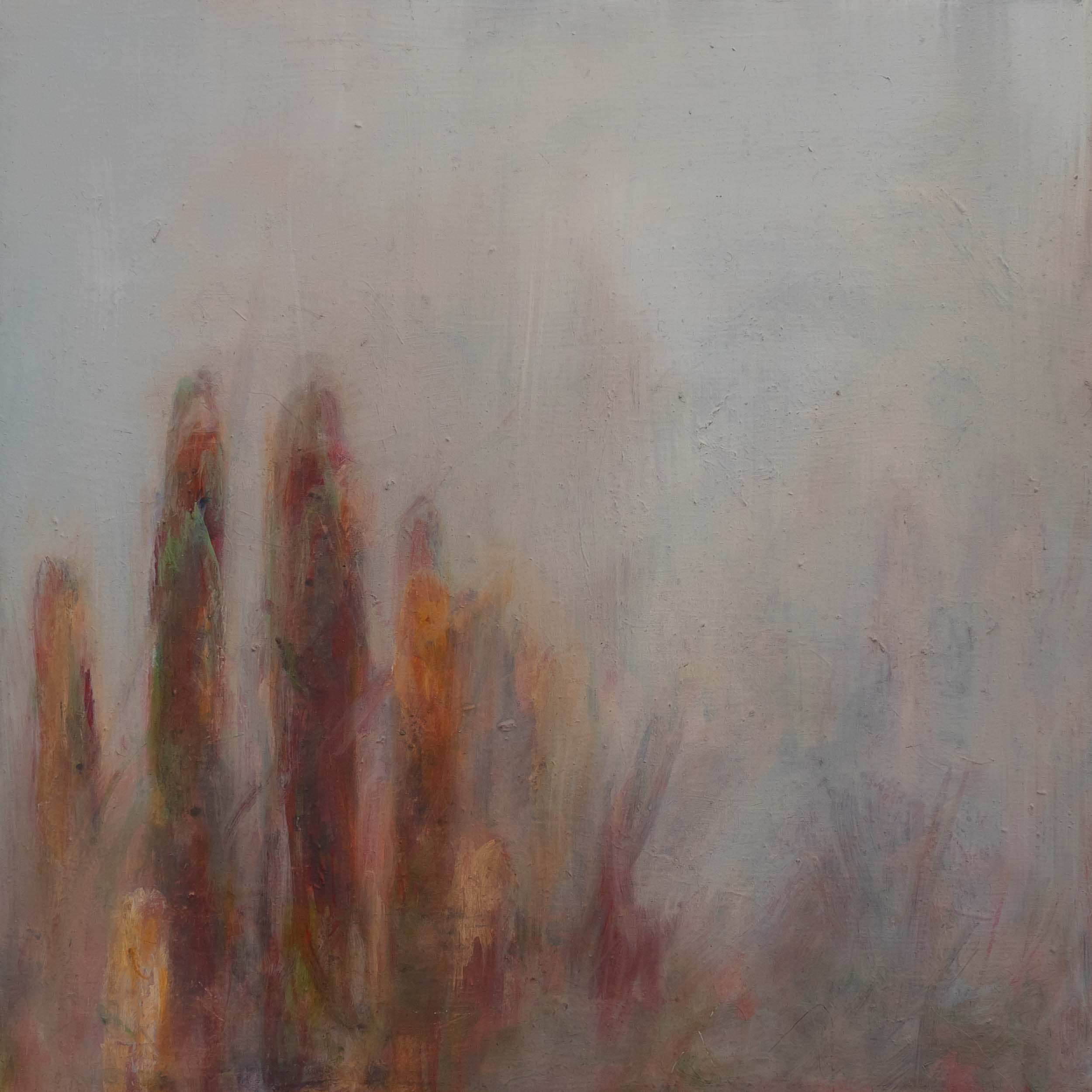
In The Family, Wonder builds an image from atmosphere rather than outline. Soft vertical forms gather against a muted field, suggesting presence without fully resolving into fixed figures or structures.
The painting sits between observation and memory. Its restraint gives the image room to unfold slowly: colour, surface, and form seem to emerge through time, rather than announce themselves at once.
This sense of accumulation connects closely to Wonder’s process. He often works over older surfaces, allowing each painting to carry traces of what came before. Here, that layered approach gives The Family its quiet emotional weight.
Sonia Martins Mateus,
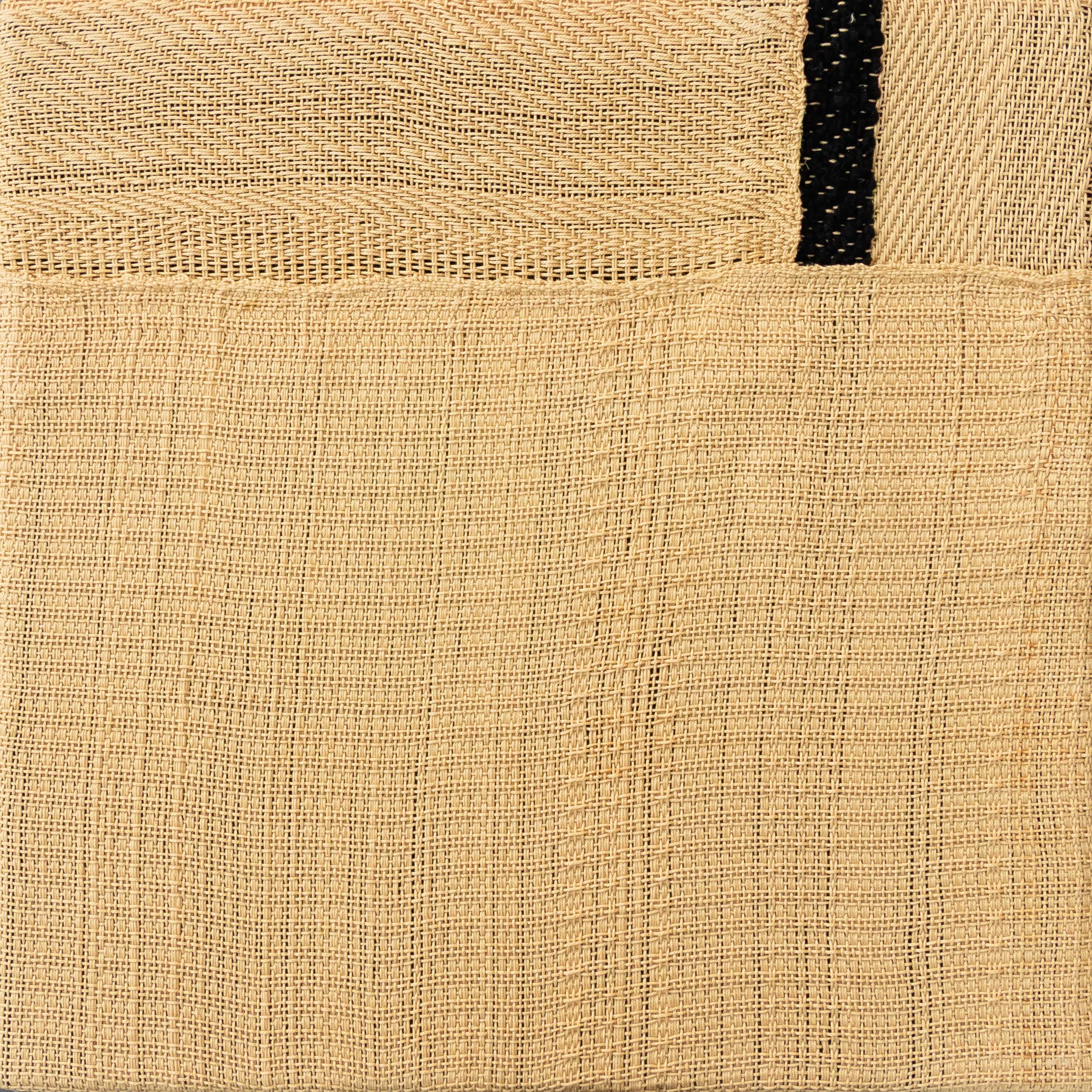
“Spatialisation I” is handwoven in yellow ochre and black cotton thread and stretched over a wooden frame. A sheer, open-weave layer overlaps the lower part of the square like a folded edge, while above it herringbone and twill passages run in different directions, broken by a narrow vertical band of black. Because the thread changes direction from zone to zone, the surface seems to shift as the viewer moves in front of it. Sonia Martins Mateus builds her compositions in layers, thinking about how architecture, figures and organic elements are placed within a landscape, and here that idea is distilled into planes, edges and thresholds of thread. Small irregularities in spacing and tension keep the artist’s hand visible, and the work enlarges the woven structure that a painted canvas usually hides, making it the subject rather than the support.
Sonia Martins Mateus,
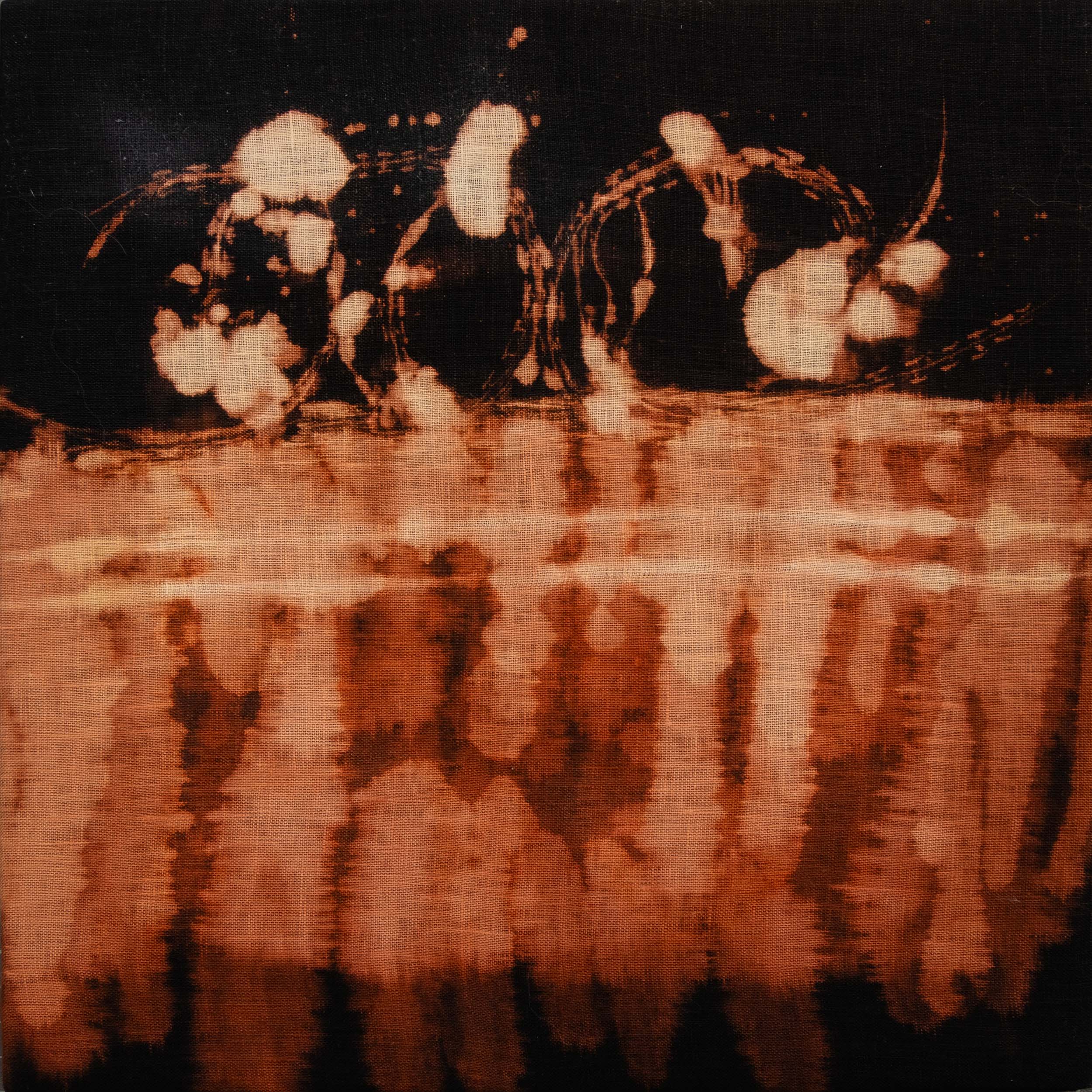
Sonia Martins Mateus’ Plastic Birds is made through painting bleach on black linen, where the image is revealed by removing, biting into, and transforming the surface rather than adding colour to it.
The work holds a compressed, frontal space. Pale ochre forms rise out of the dark ground, while looping, wire-like marks and a dense horizontal structure create a feeling of blockage or containment. The black remains active throughout the image, so that even the areas of light seem to carry shadow beneath them.
Across Martins Mateus’ practice, landscape is not only a place to look into, but a structure shaped by memory, territory, displacement, and material force. In Plastic Birds, that question becomes direct: the painting offers an image, but also resists entry.
Seth Bauserman,
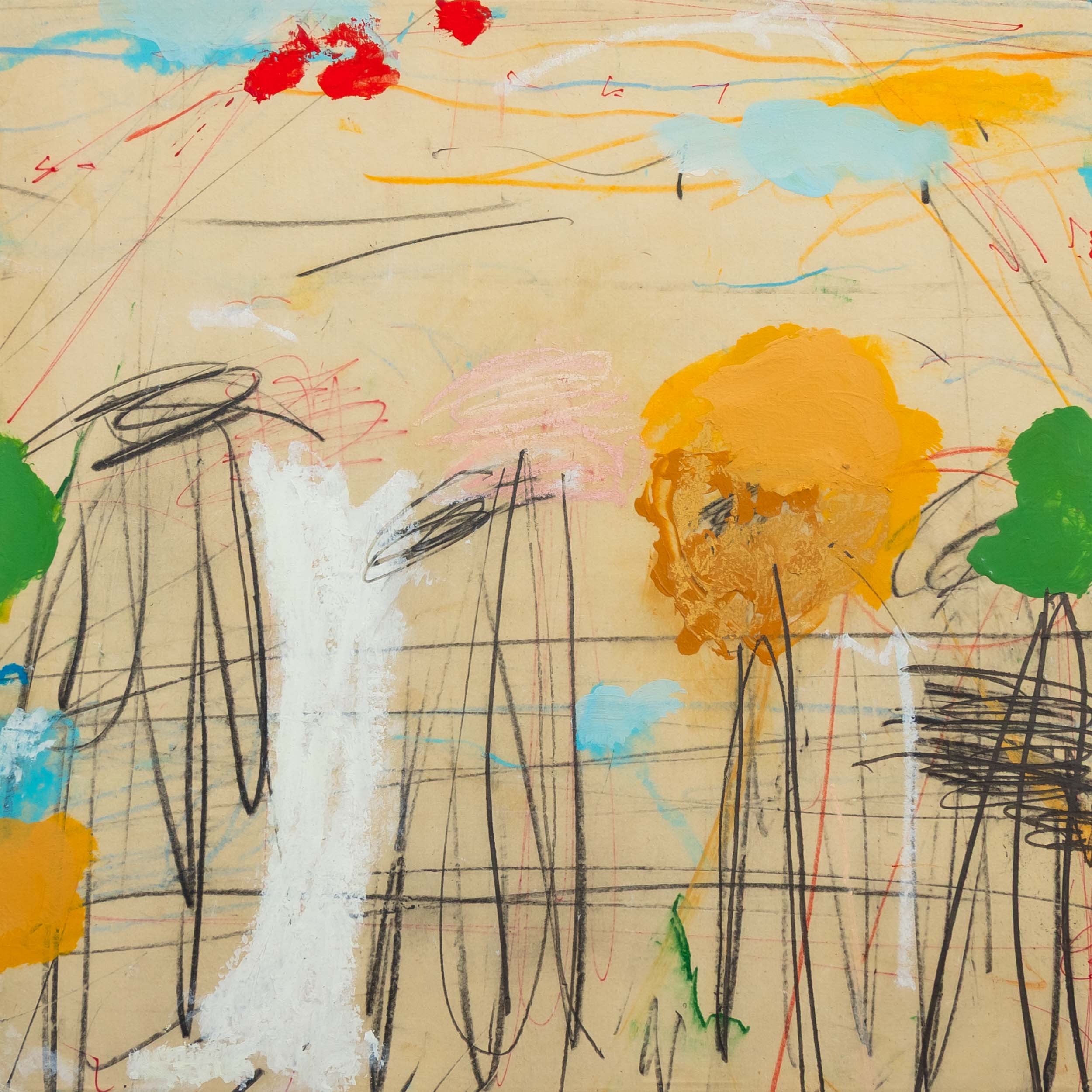
In “Four of Us”, four loosely defined presences gather across a field of graphite lines, translucent colour and dense passages of paint. Each has its own weight and character, yet overlapping marks bind them within a shared, unsettled space. The title invites a reading of the work as an abstract family portrait, drawing on Seth Bauserman’s use of imagery from his young daughters’ artwork. Layers of Kitakata paper leave earlier gestures visible beneath the surface, so that the work’s apparent spontaneity carries a sense of time, inheritance and relationships still in the making.
Tarik Chebl,
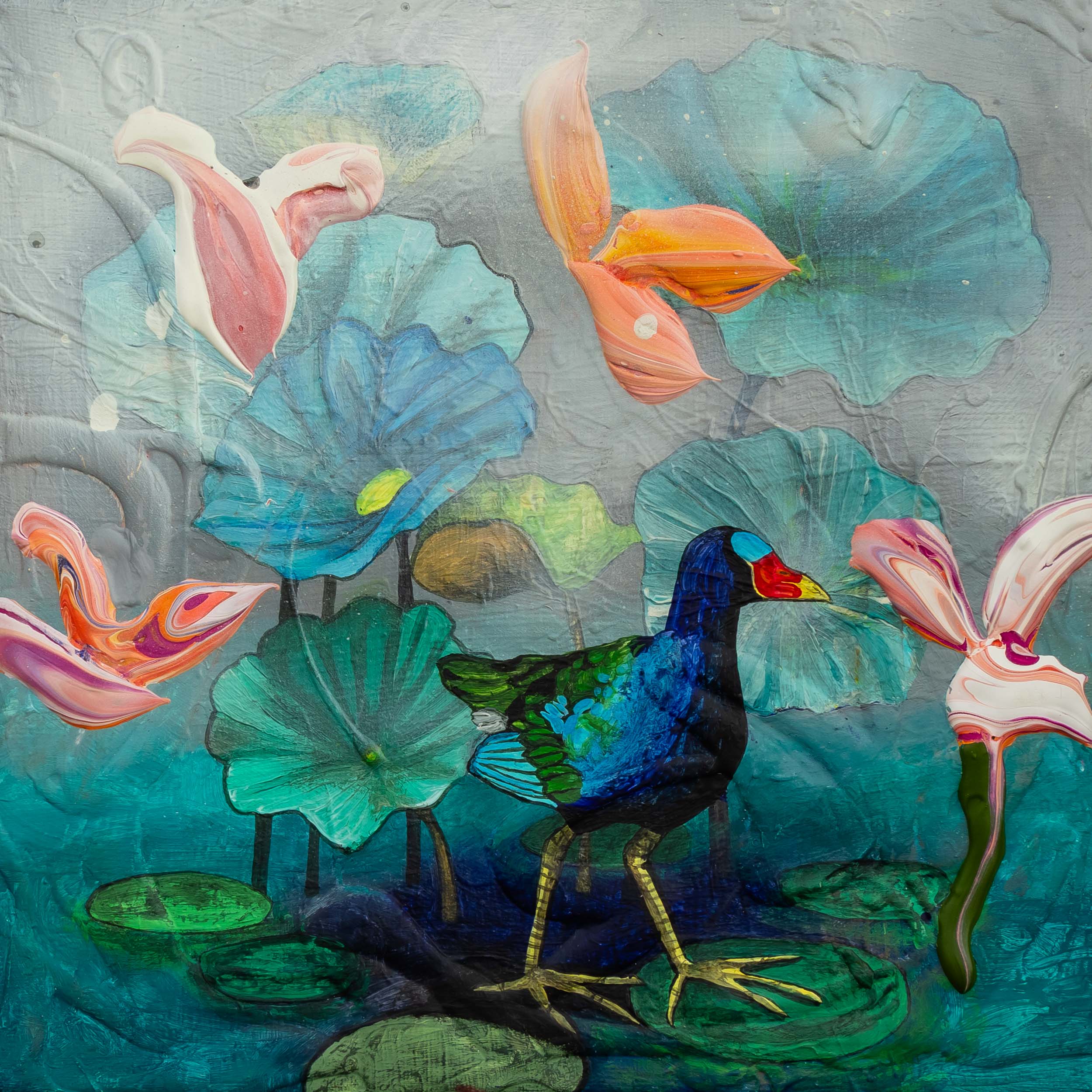
In Acquatic Bird, Tarik Chebli builds an imagined wetland from dense paint, softened colour, and layered organic forms. Lily pads, flowers, water, and bird appear to emerge from the surface rather than sit neatly on top of it.
The bird becomes the work’s quiet centre: vivid, alert, and slightly strange, held within a world that feels abundant and withdrawn from human presence. Around it, the thickened surface suggests the dense stuff of its ecosystem — vegetation, water, mud, and growth — while more precise passages allow individual forms to come elegantly into focus.
Chebli’s practice often turns toward fantasised, non-human nature as a place of attention and resistance. Here, that imagined nature world concentrated into one small scene: a creature seen closely, within a world still forming around it.
Lisa Pettibone,
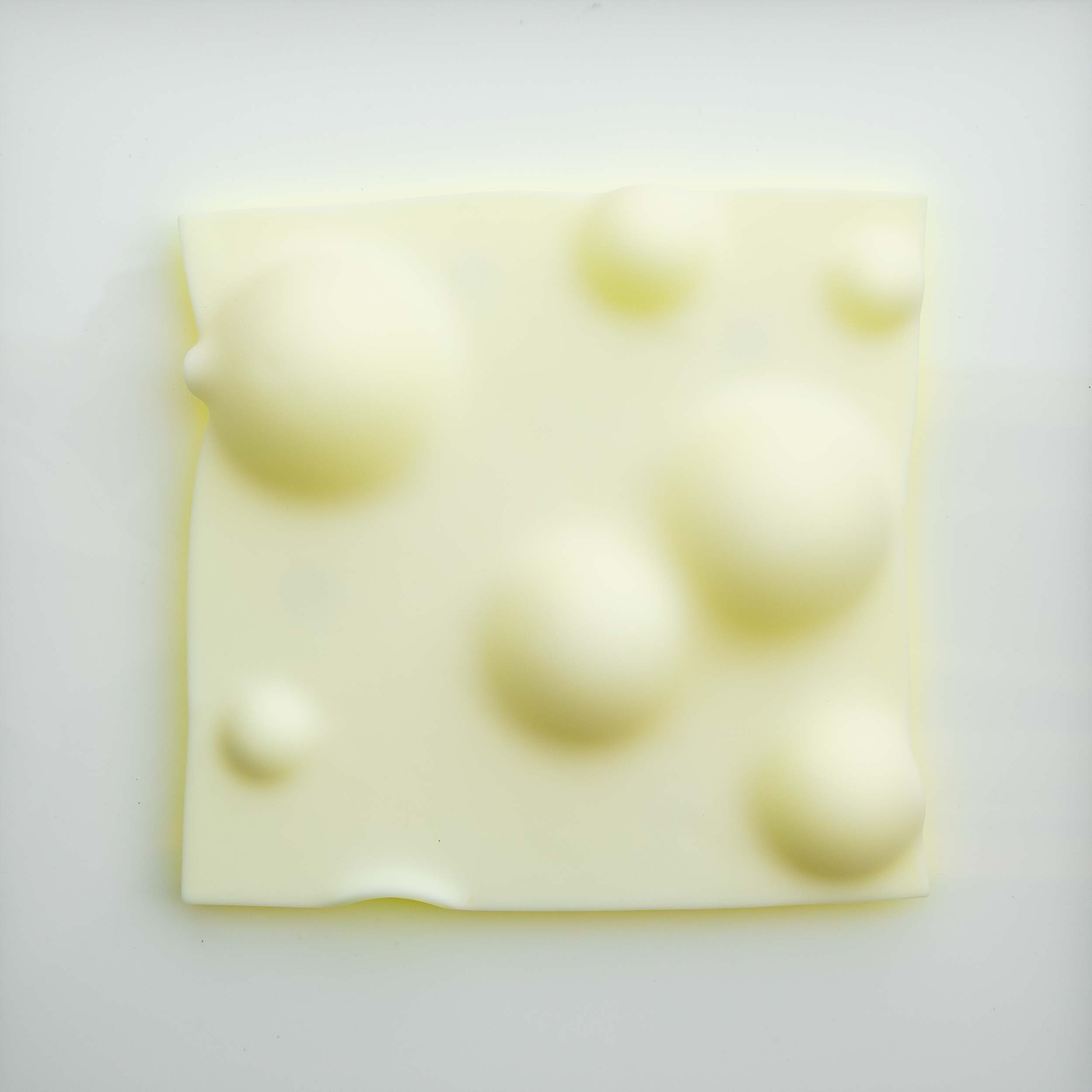
Glass forms rise from the surface as if pressing through from beneath, shaped by the memory of heat and pressure. A fluorescent yellow backing casts a reflected glow, giving the colour a felt, atmospheric presence. The work shifts with the viewer’s position — light and shadow revealing new depths as one moves around it.
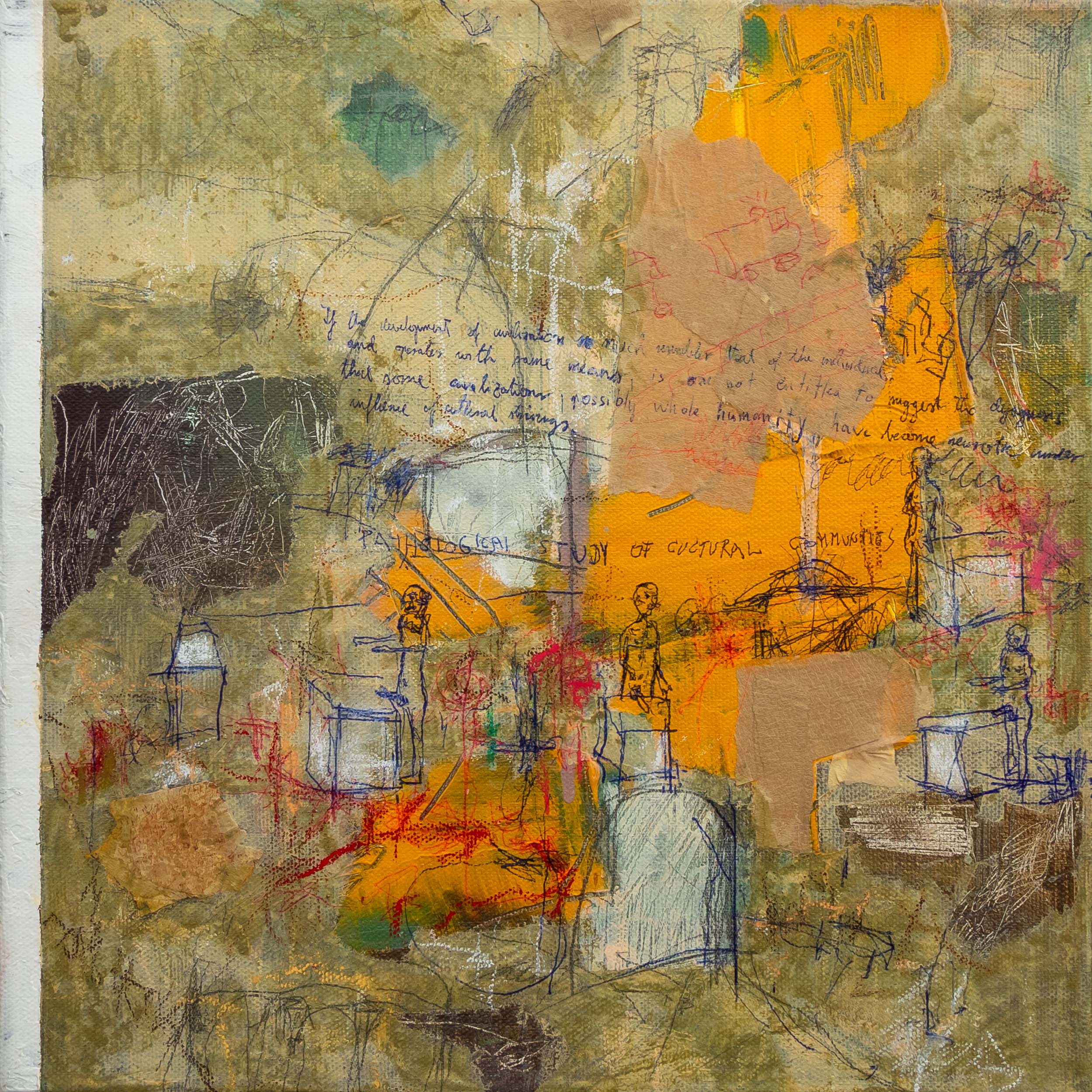
Patrik Dvorščak,
Peugeot 35 gathers handwritten text, scratched lines and fragments of bodies, furniture and machinery into an intimate field of exploration. Patrik Dvorščak uses the small format to condense ideas that also inform his sculptural and installation practice, giving spatial thinking a more immediate register. Vivid orange passages are interrupted by muted, translucent washes that structure the layered composition. Images, words and earlier marks remain partially visible, rewarding sustained looking as they gradually emerge from the surface.
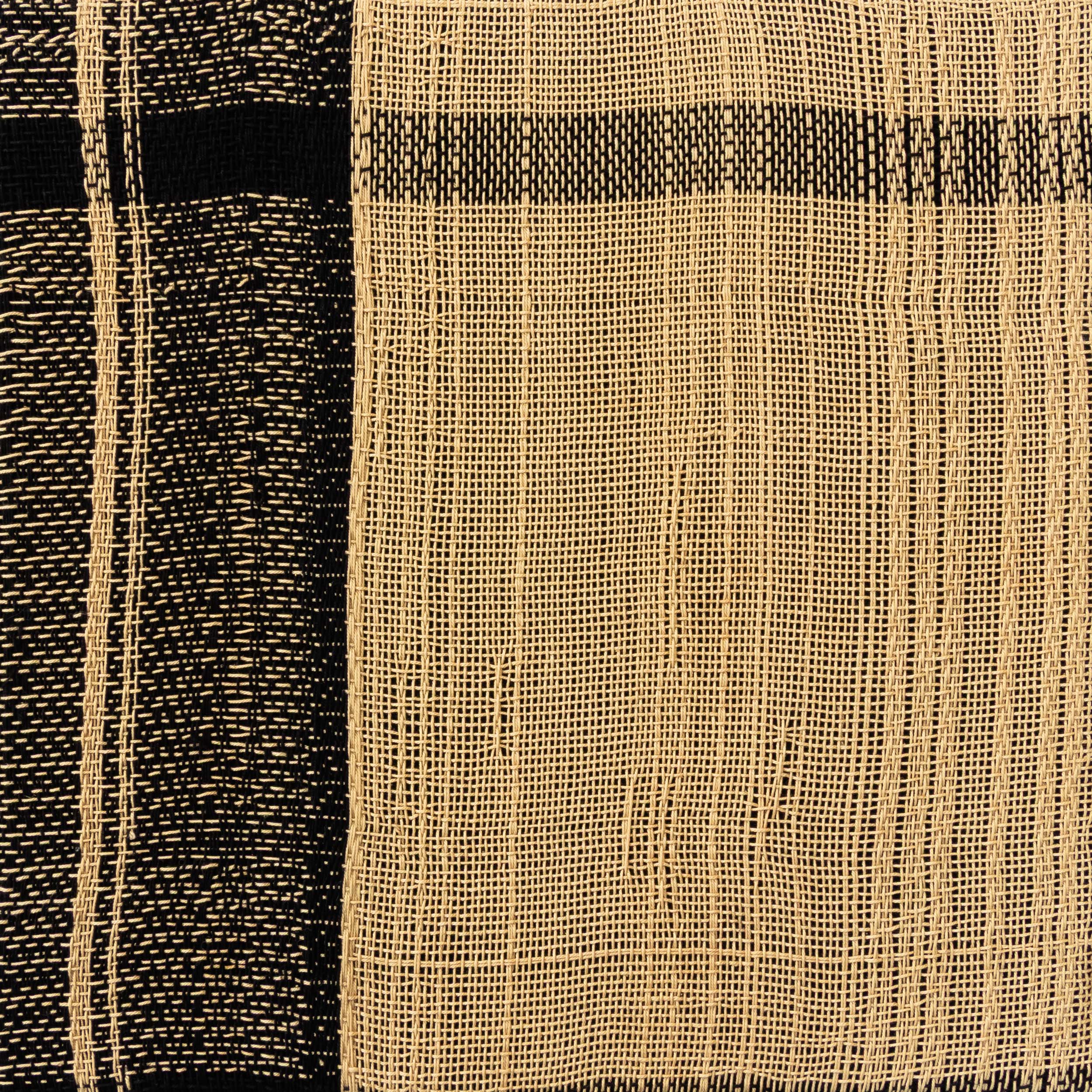
Sonia Martins Mateus,
“Spatialisation IV” turns the landscape idea that runs through Sonia Martins Mateus’s work towards the horizon. Broad black bands stretch across a dense field of ochre and black thread like strata of earth or the lines of a distant terrain, while a frayed seam at the left edge leaves the loose ends of the weave exposed. Thread is treated as paint here, built up in layers, with every variation in spacing and tension left visible, so that the hidden structure of canvas becomes the image itself.
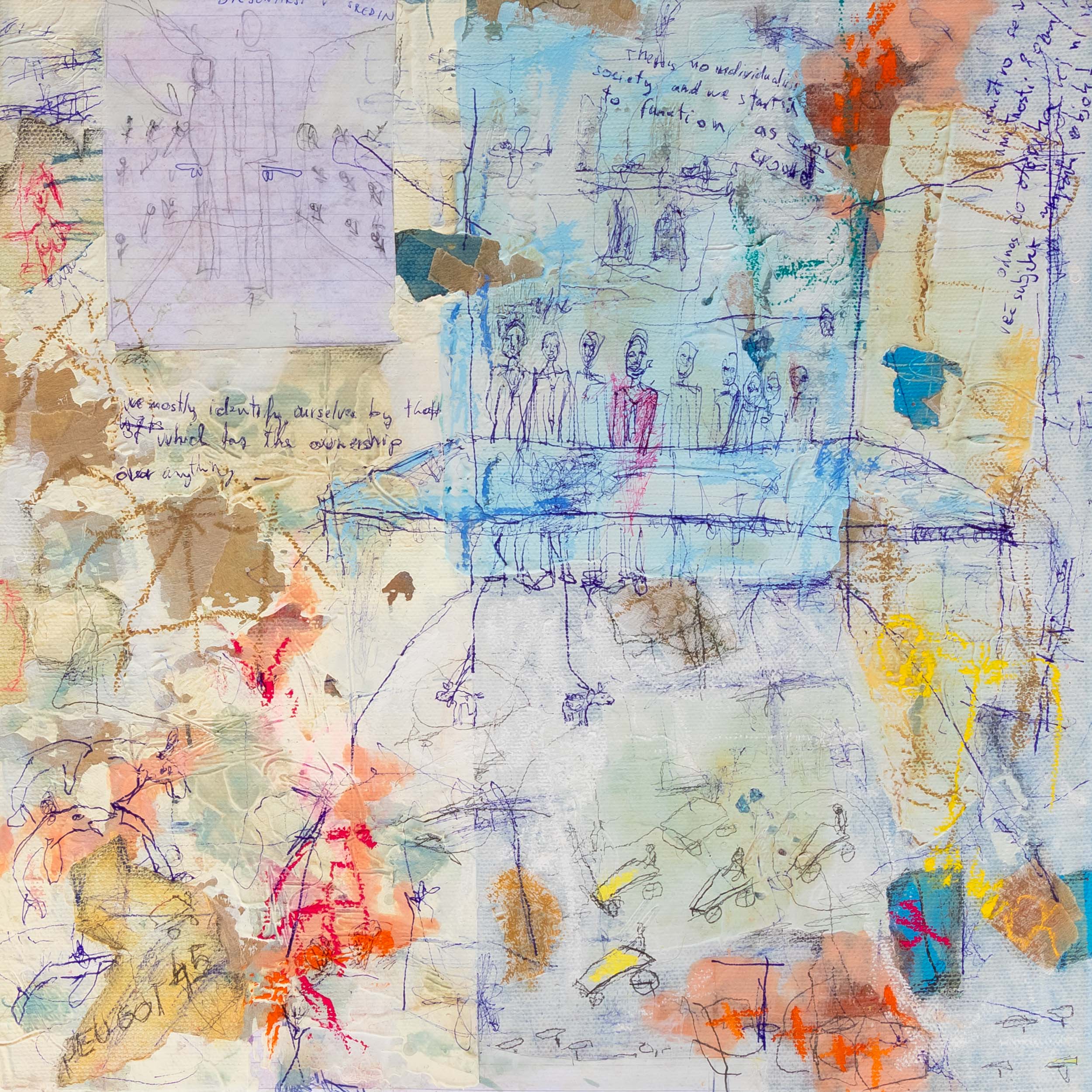
Patrik Dvorščak,
Peugot gathers drawings, handwriting and torn paper into a pale, airy field of blue, cream and soft orange. At its centre, a row of small figures stands behind a railing against a patch of sky blue, while tiny cars roll across the lower half and a name scrawled at the lower left gives the painting its title. Handwritten lines in English describe how we identify ourselves by what we own, and how, in a society without individuality, people begin to function as a crowd. Patrik Dvorščak sets these thoughts within a light, almost gentle surface, so that the critique of ownership and conformity arrives quietly, through small figures and everyday objects.
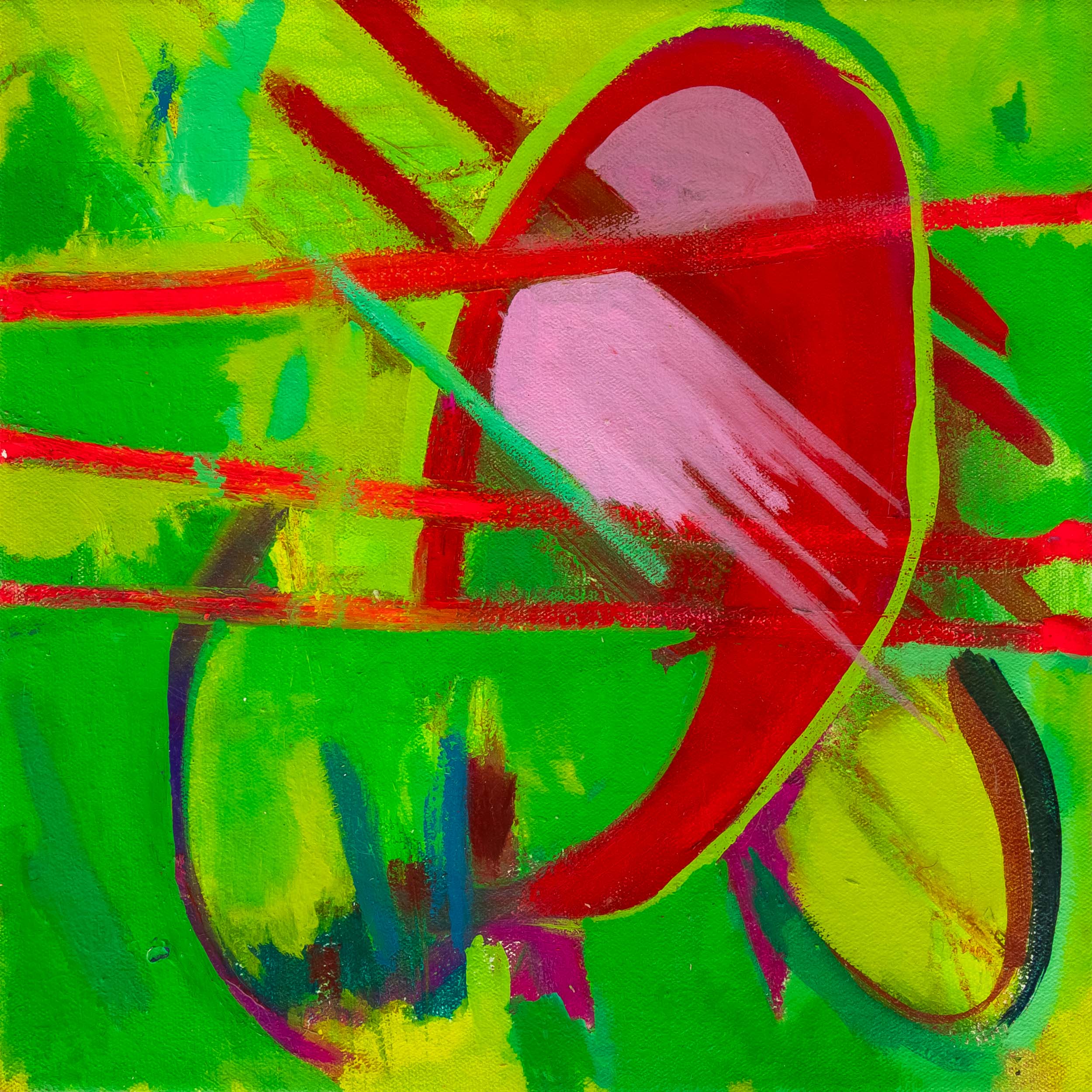
Liza Grobler,
“Things That Grow” looks onto a patch of ground, where three rounded forms swell like seeds, fruit or small hills. Liza Grobler paints impressions gathered while walking through a landscape, and here she turns to what lies close to the earth: life building quietly, then appearing all at once. Red lines slice across the green, giving the soft shapes something hard to push against. There is no obvious top or bottom, so the image can be turned and still hold together, as if revealing the energy hidden in the ground.
Sonia Martins Mateus,
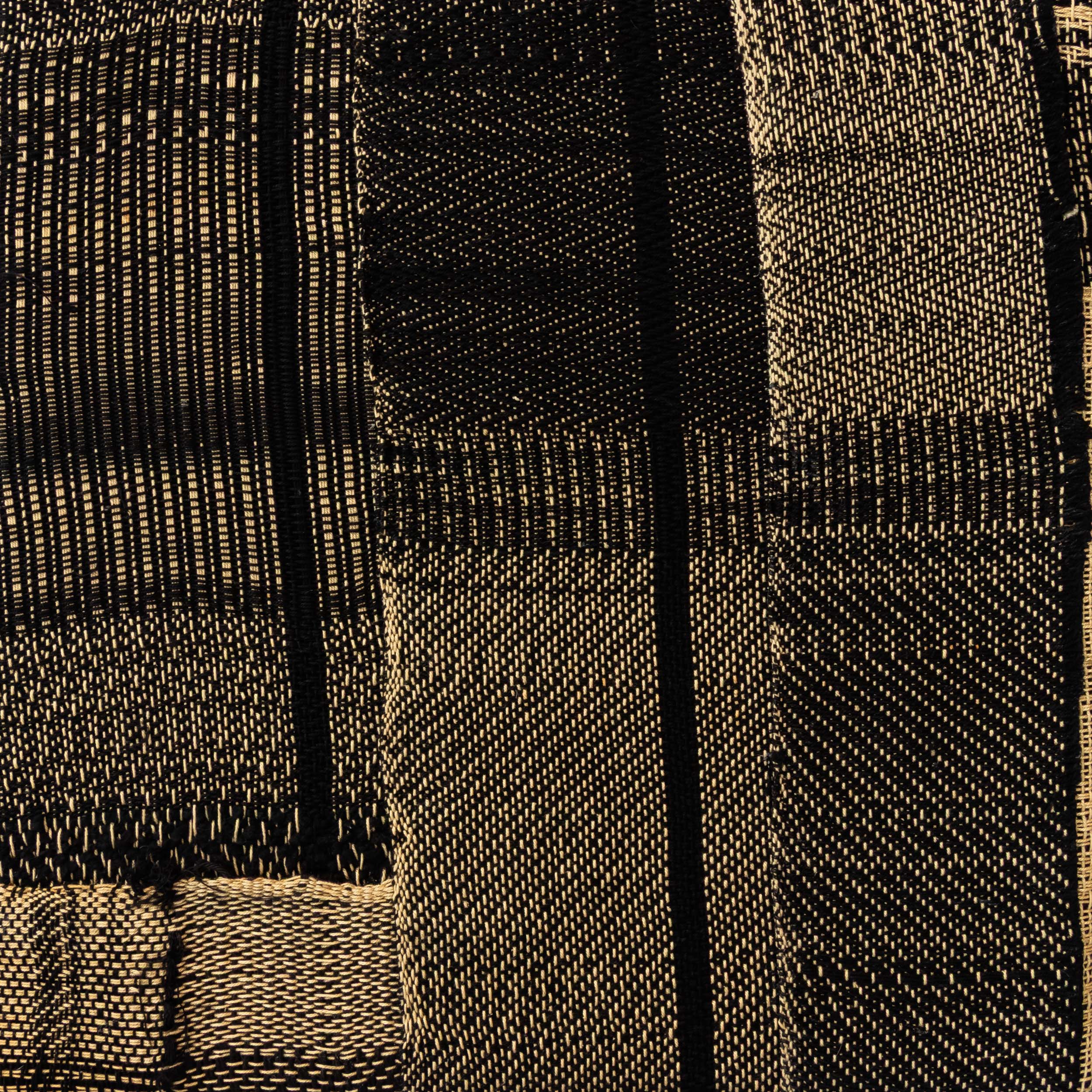
“Spatialisation II” is handwoven in yellow ochre and black cotton thread on a wooden frame. Three tall black bands rise through an open, gauze-like weave, their dense patterning loosening into ladder-like structures towards the bottom. Fine black lines run horizontally across them, and small tufts of loose thread are knotted into the surface, their frayed ends left visible.
These gathered ends bring forward what a weaver would normally conceal at the back of the work, turning the unfinished into a deliberate mark. Sonia Martins Mateus builds her compositions in layers, and here the bands and scattered tufts read almost as architectural forms and organic growth set within a pale landscape of thread. Slight variations in spacing and tension keep the artist’s hand present throughout, and the work magnifies the structure of canvas itself, making the woven ground the subject rather than the support.
Diana Hyslop,
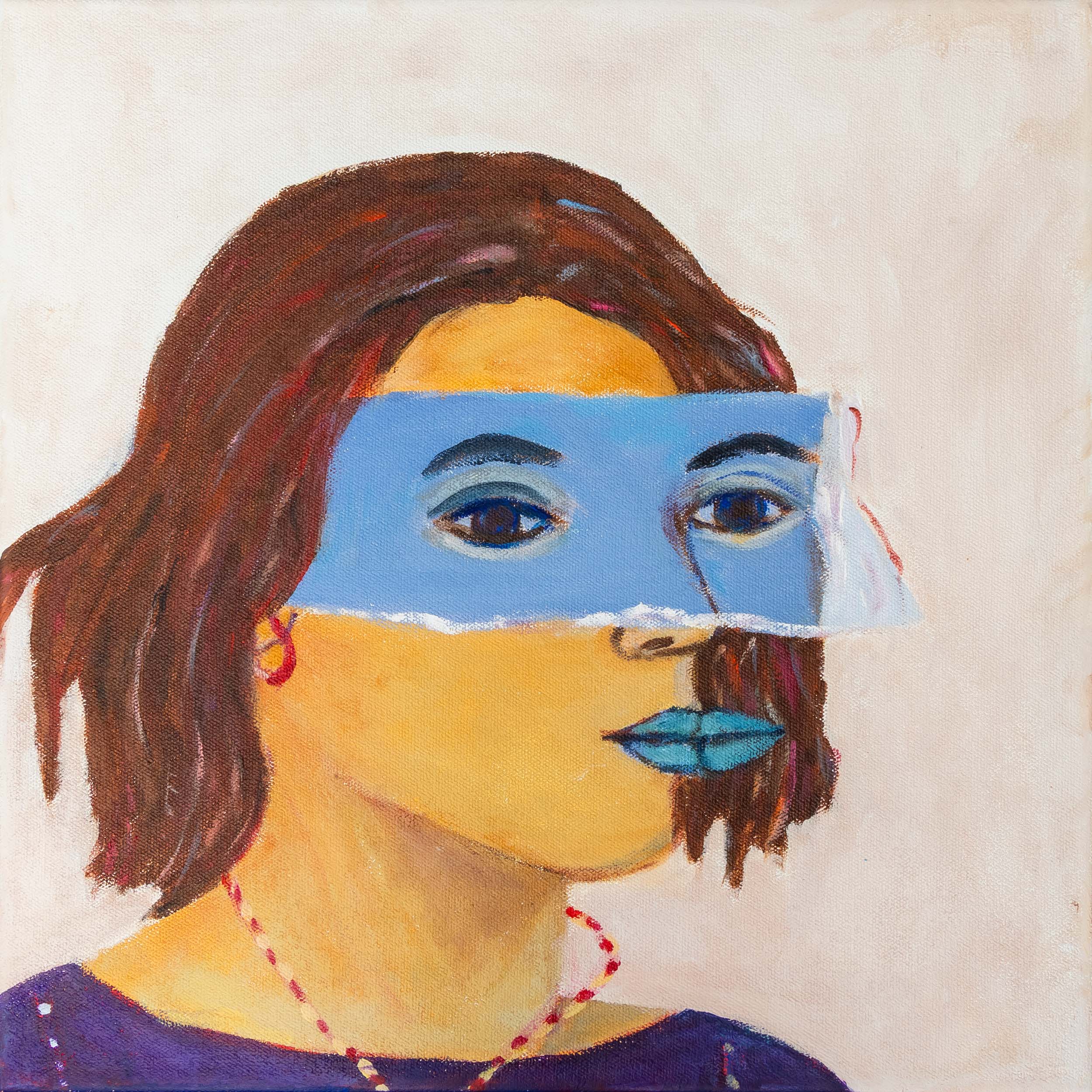
“Watching” began as a portrait of a woman in Diana’s studio, but the face has been fragmented and rearranged into something closer to a painted collage. Its cut-out-like forms recall magazine imagery, Dada composition and Cubist portraiture, while the flashes of red in the lips and nails lend the figure a character that feels at once coy and slightly cruel. There is also something intriguingly self-directed in the gesture—as though the subject is absorbed in the act of watching herself.
Tarik Chebl,
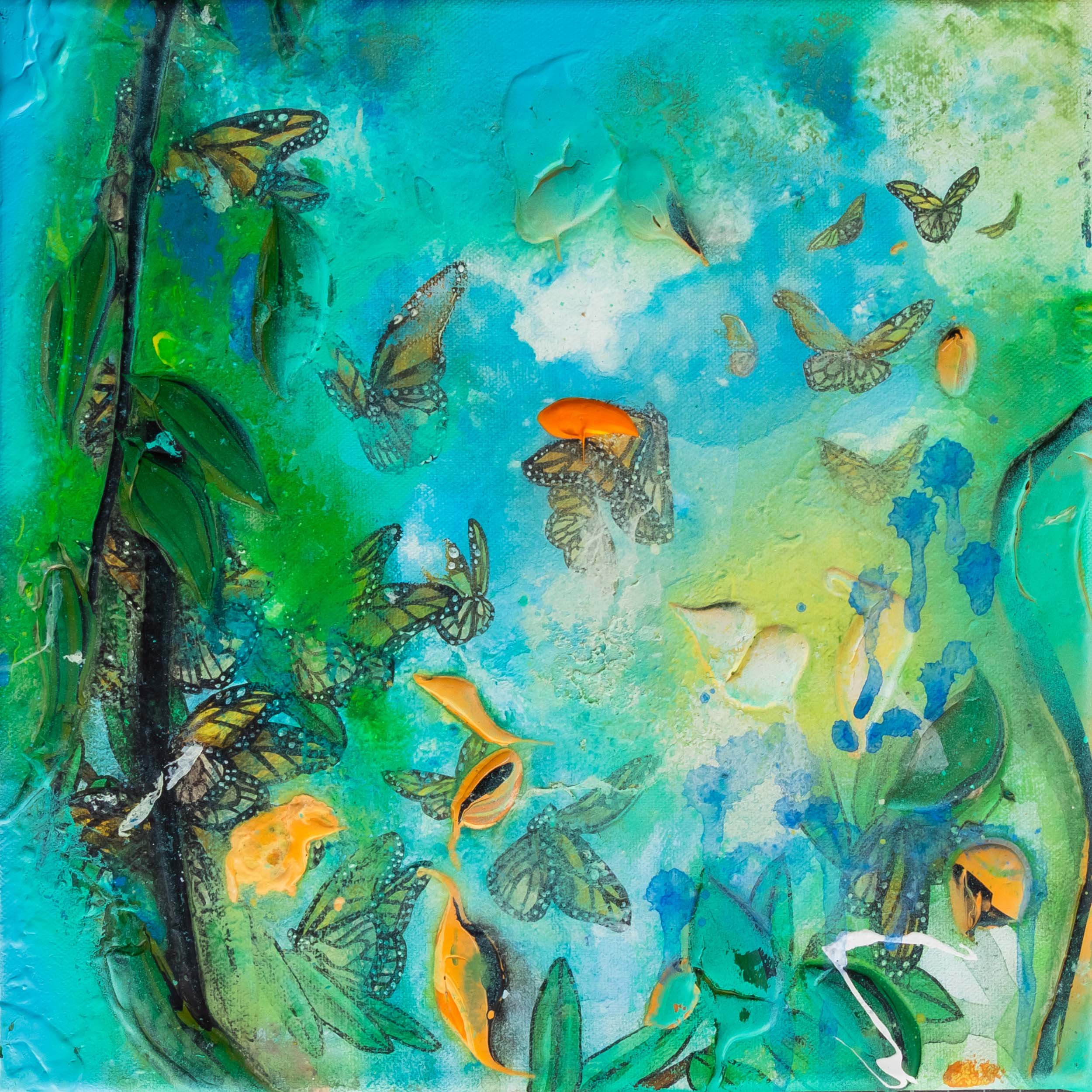
“Monarchs Migration” follows a swarm of monarch butterflies drifting through a luminous, watery field of turquoise, lime and sky blue. Tarik Chebli is drawn to the monarch’s long journey from Mexico to Canada, a route followed for generations. In Mexican tradition, the monarch is also linked to the return of the dead. Lighter and more atmospheric than his dense jungle paintings, the work sets this unbroken passage against the national borders it now crosses, a quiet reminder that nature moves freely where people draw lines.
Tarik Chebl,
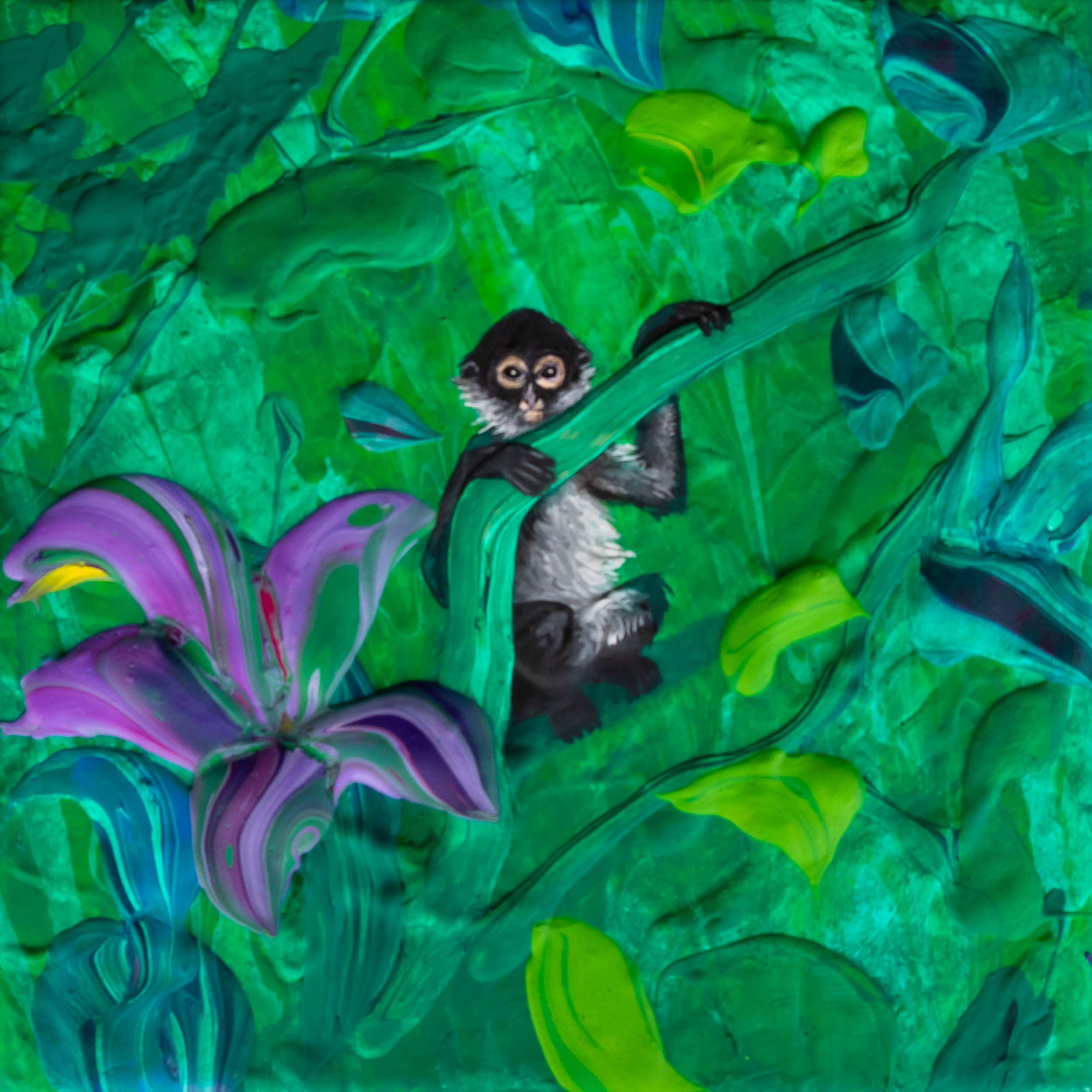
“Baby Spider Monkey” is seductive and tender in equal measure. A small, wide-eyed animal clings to a thick ribbon of vine, its dark fur and pale chest set against a jungle of acid greens built from heavily layered acrylic. Beside it, a violet lily opens at the edge of the frame, as delicate as the creature itself. Tarik Chebli chose the subject for its fragility, and the painting holds it within an environment so vivid and overgrown that charm shades into unease: a young life, and a single flower, held in a world far larger and stranger than themselves.