
Salon is designed to help you trust your eye when collecting art. Explore the collection, choose the works that resonate with you, and let the deeper meaning behind your instinctive response reveal itself as you live with the work.
Sonia Martins Mateus,
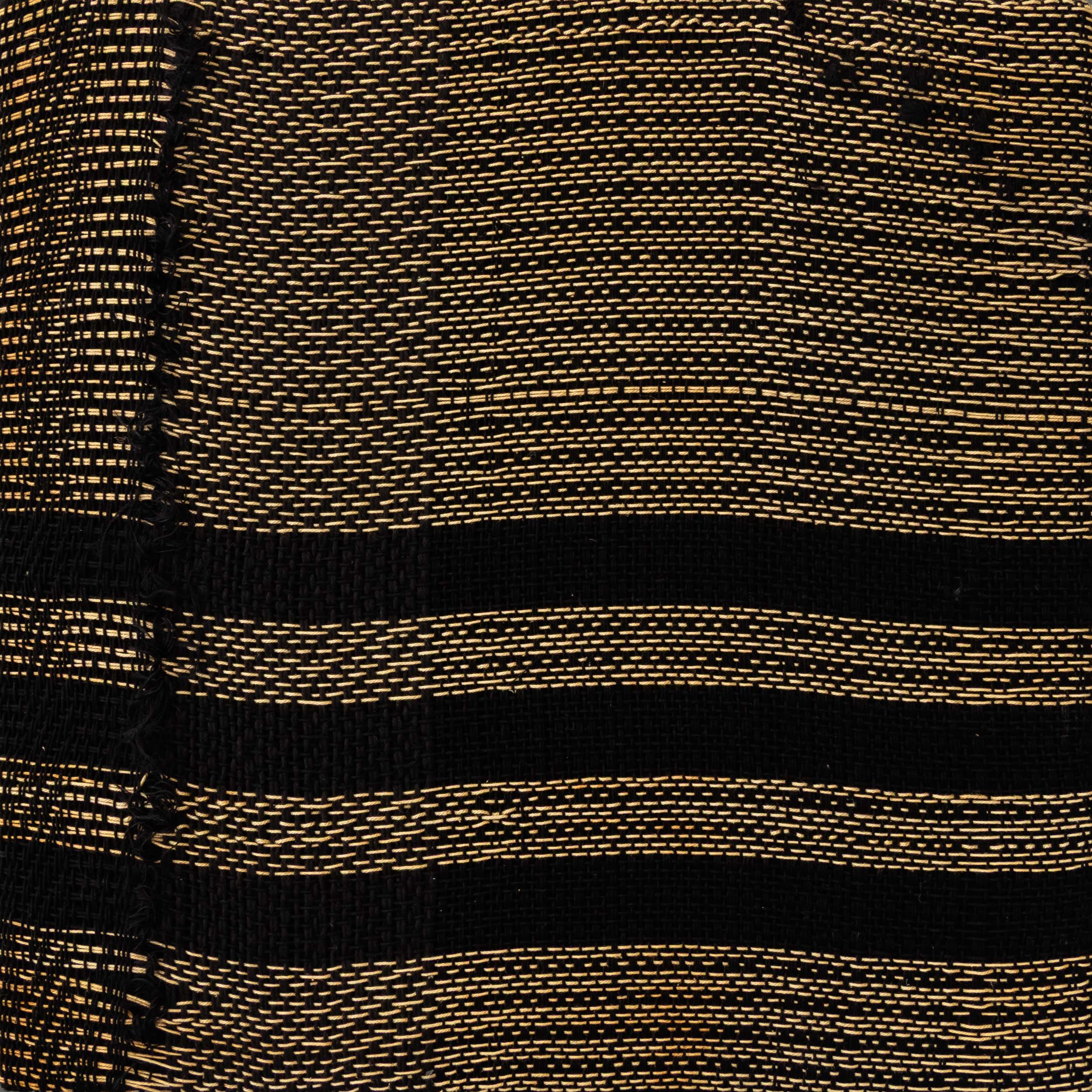
“Spatialisation III” grows out of Sonia Martins Mateus’s interest in how people, architecture and organic elements are placed within a landscape. Working with thread as others work with paint, she builds the composition in layers, setting a dense, dark weave beside an open, translucent one so that the two read like solid and void, or built form and open ground. The handwoven structure, usually hidden beneath a painted image, becomes the subject itself, with every irregularity of spacing and tension left visible.
Patrik Dvorščak,
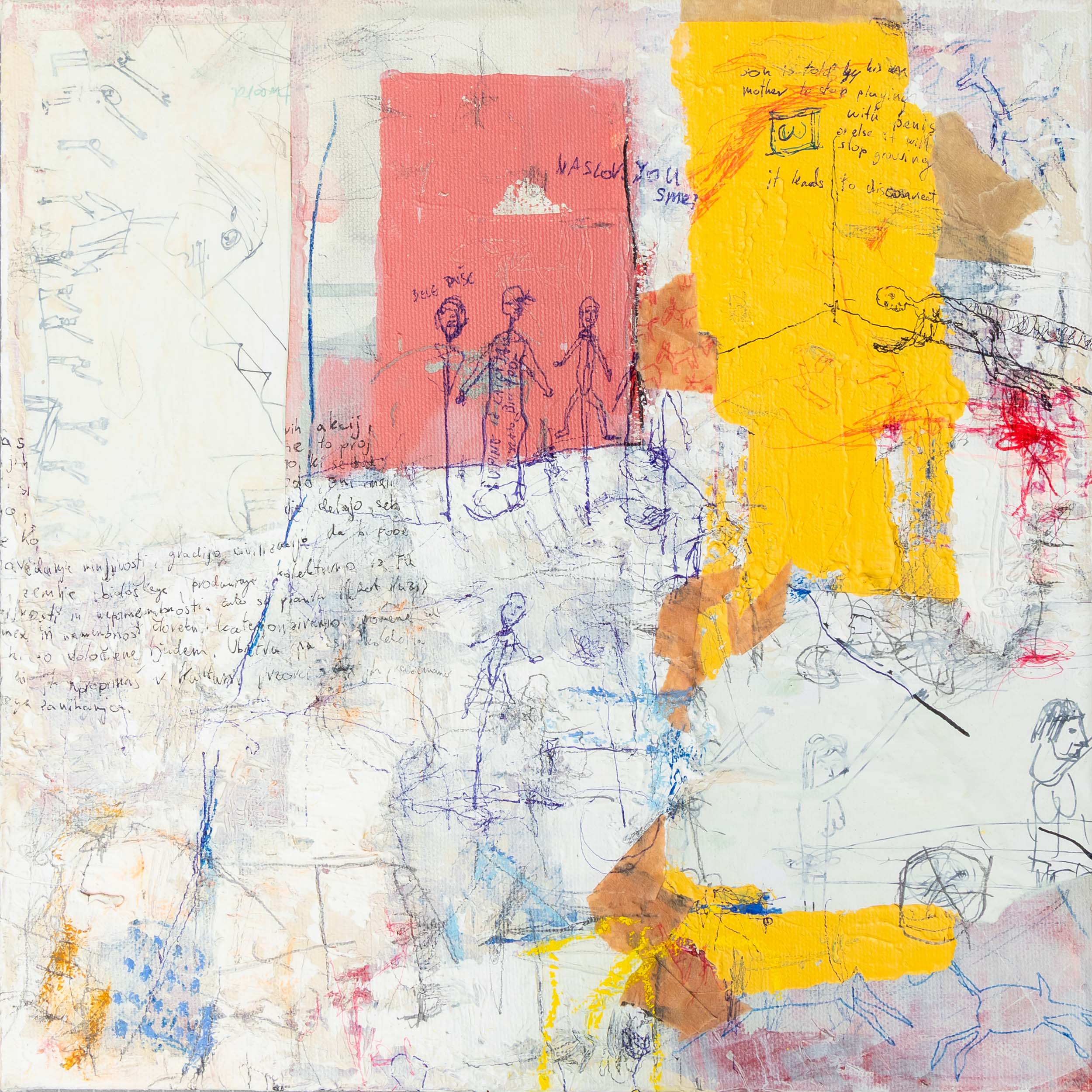
In “A self-structured disordering”, handwritten text, blocks of colour and attached paper accumulate across the surface, creating the feeling of thoughts gathering faster than they can be resolved. Some of the Slovenian writing even appears to spill beyond the composition’s edge. Whether or not we can read it, the text has a presence of its own—functioning as language, image and rhythm while drawing us into a fragmented space shaped by uncertainty, intuition and the unconscious.
Tarik Chebl,
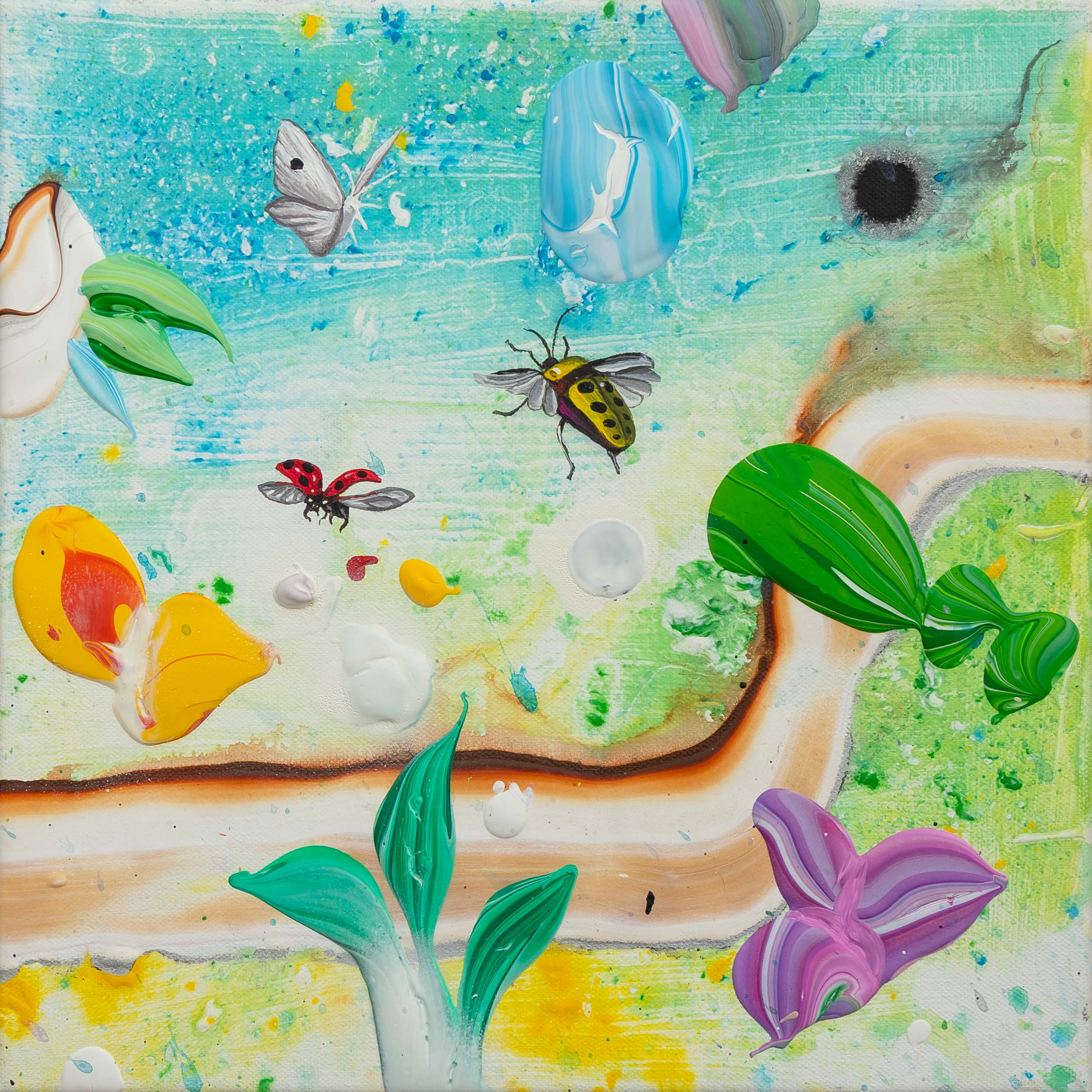
In Little Rakuen, Tarik Chebli extends the imagined world of his Rakuen series: a blue-green field crossed by a winding ribbon, with insects, plant forms, and thick passages of paint appearing across the surface. The composition holds together through movement, as the eye travels between small details and broader atmospheric areas.
Chebli describes his practice as a way of painting an idealised, non-human nature — a space shaped by biodiversity, ecosystems, and sensory abundance. In this work, the insects and plants bring moments of recognition, while the abstract ground keeps the environment fluid and speculative.
Patrik Dvorščak,
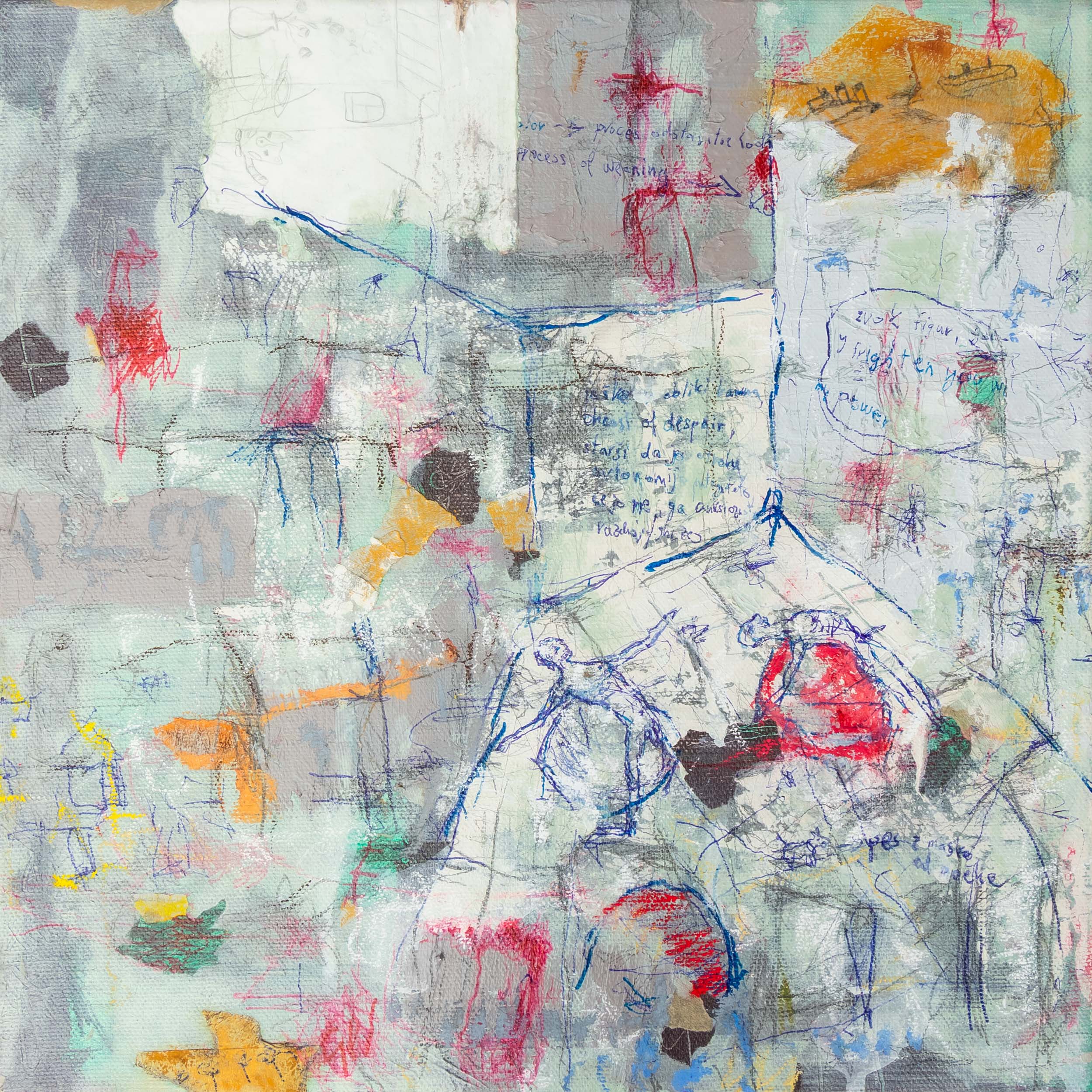
“After auto-eroticism I think therefore I am” turns a familiar philosophical line on its head, placing thought after bodily experience rather than before it. A bed sits at the centre of the composition, with miniature figures in blue ink arranged around it in a dreamlike, almost choreographed scene, while accents of red bring the body into a space that is also architectural. Handwritten fragments in Slovenian and English run through the pale, grey-green surface, never fully readable, yet carrying the irony and psychological tension Patrik Dvorščak would otherwise stage in an installation with sound. The painting holds bodily presence and self-reflection together, as though movement and thought were unfolding at once.
Tarik Chebl,
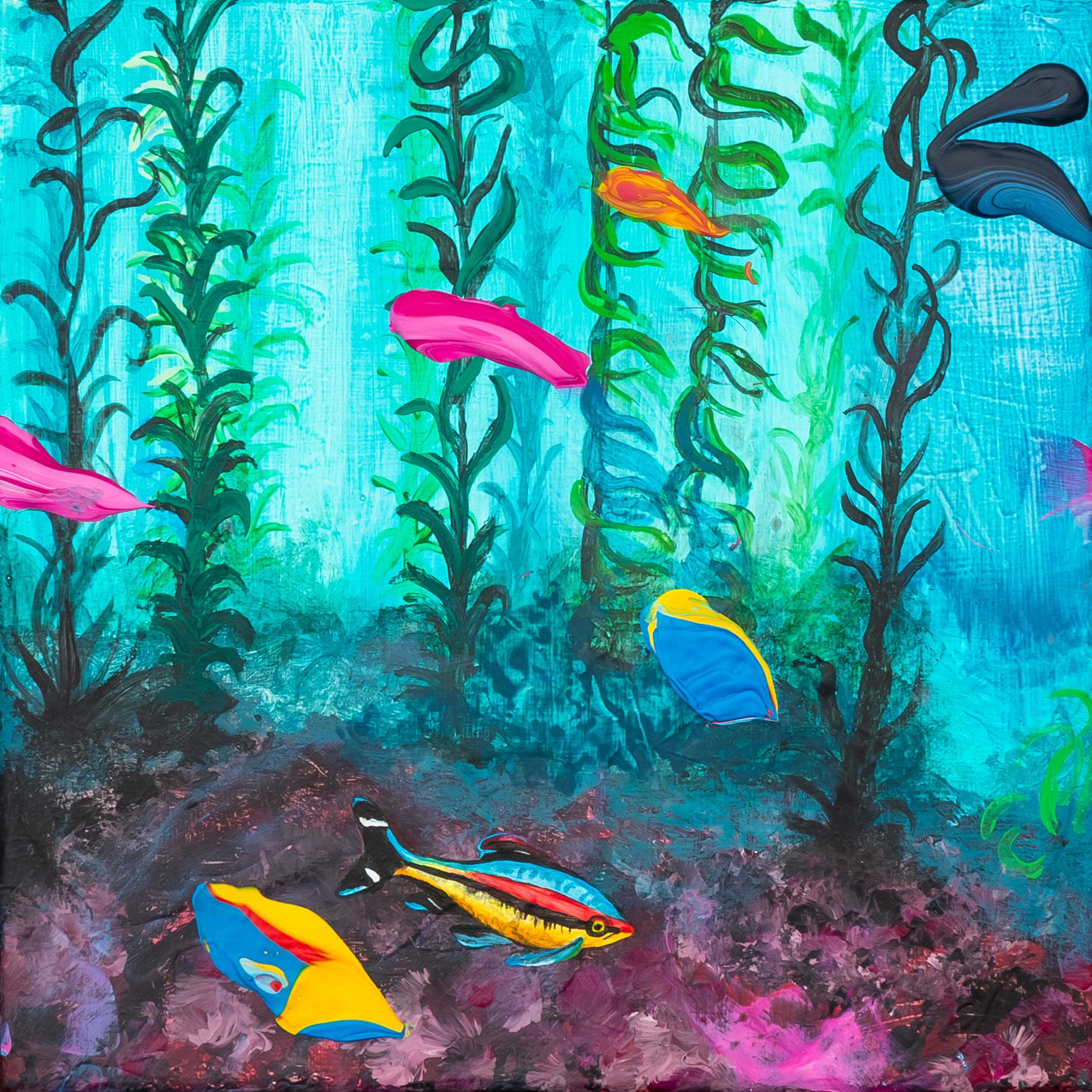
Seaweed Forest by Tarik Chebli opens into an imagined underwater world, where strands of kelp rise through a blue field and thick passages of paint gather like organic matter on the seabed.
The work holds together two registers central to Chebli’s practice: dense, tactile materiality and moments of precise revelation. Small fish-like forms appear from within the surface, their bright colour and relief drawing the eye without fully separating from the painted ecosystem around them.
Chebli describes his work as a way of looking away from the human image and toward rare, fragile, non-human life. Here, that idea is carried through a scene that feels less like a fixed view than a habitat slowly emerging from paint.
Lisa Pettibone,
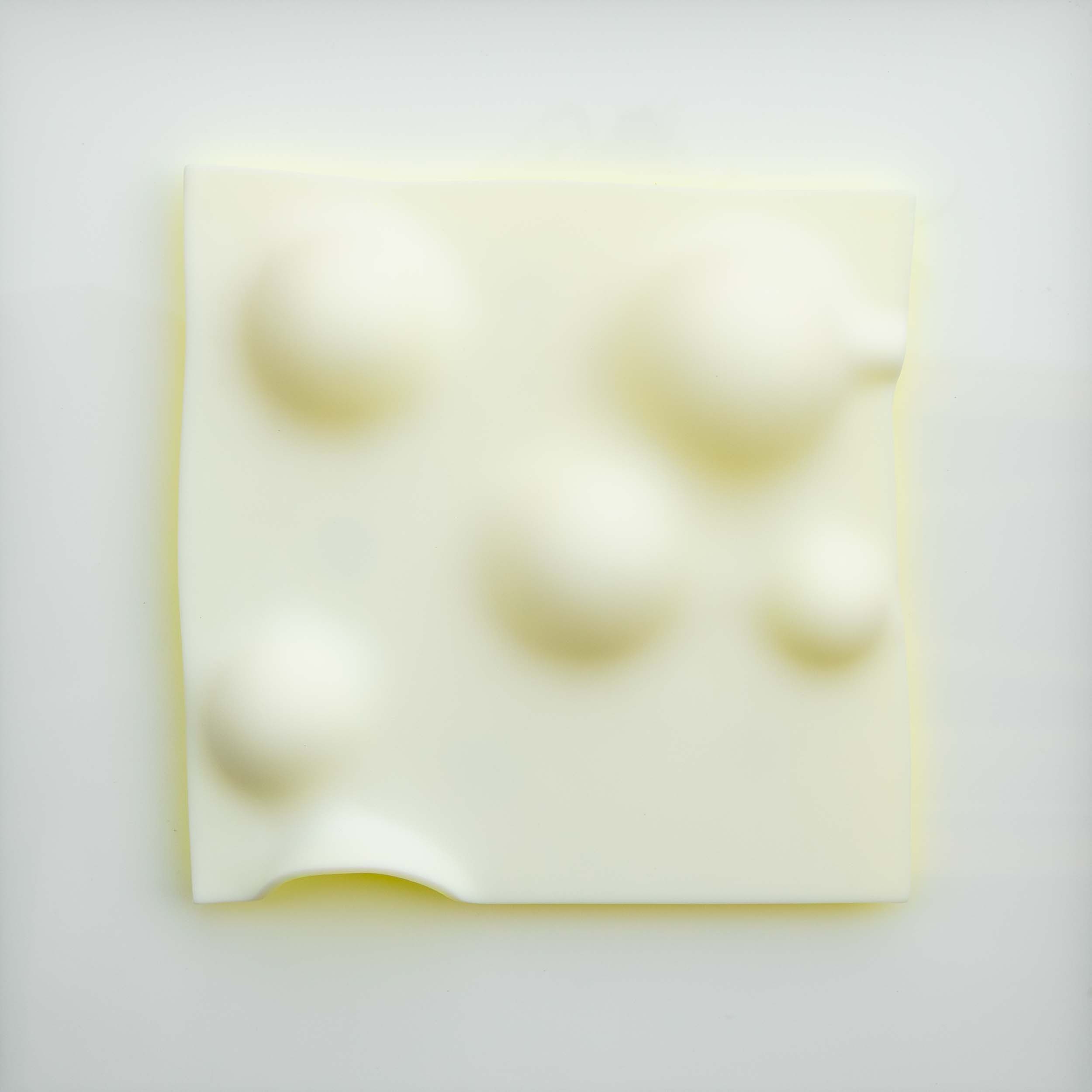
Emerge II is formed from pale butter-yellow glass, its smooth surface interrupted by soft, rounded undulations and a gentle lift along the lower edge. These subtle distortions preserve the effects of heat, gravity and pressure, making the rigid material appear momentarily pliable. Fluorescent yellow behind the glass intensifies its warmth and creates a faint glow around the work. As the light shifts, depth and shadow change, allowing the restrained relief to become more active as the viewer moves.
Norman O'Flynn,
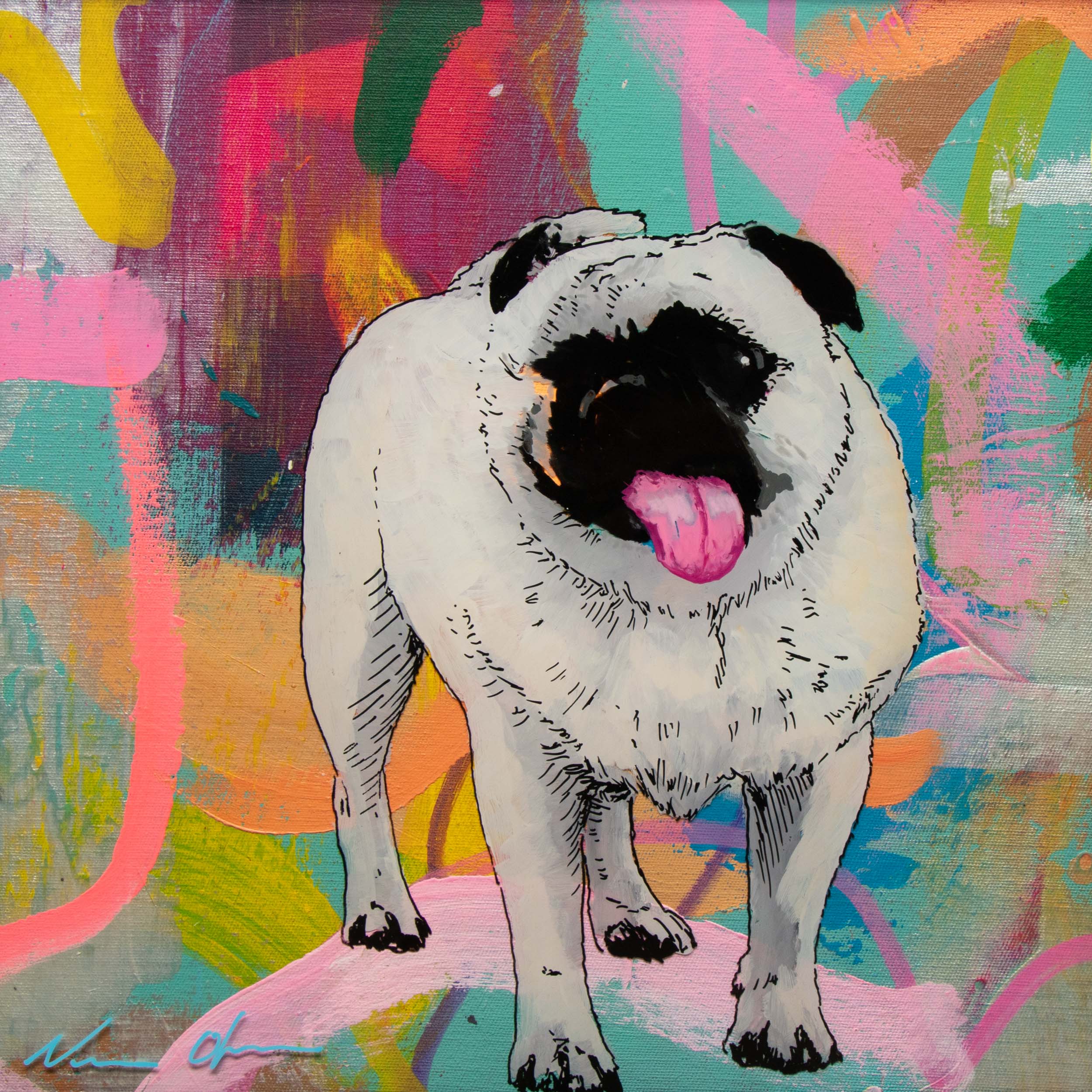
A highly realistic pug sits at the centre of Dog Days 2, isolated against a background of fluid, brightly coloured marks. The contrast gives the familiar animal the character of a pop-cultural emblem: immediately recognisable, yet subtly transformed by its new surroundings. Painted on the reverse of acrylic glass, the work also changes with the light and reflections around it, adding another shifting layer to its playful collision of figuration and abstraction.
Sonia Martins Mateus,
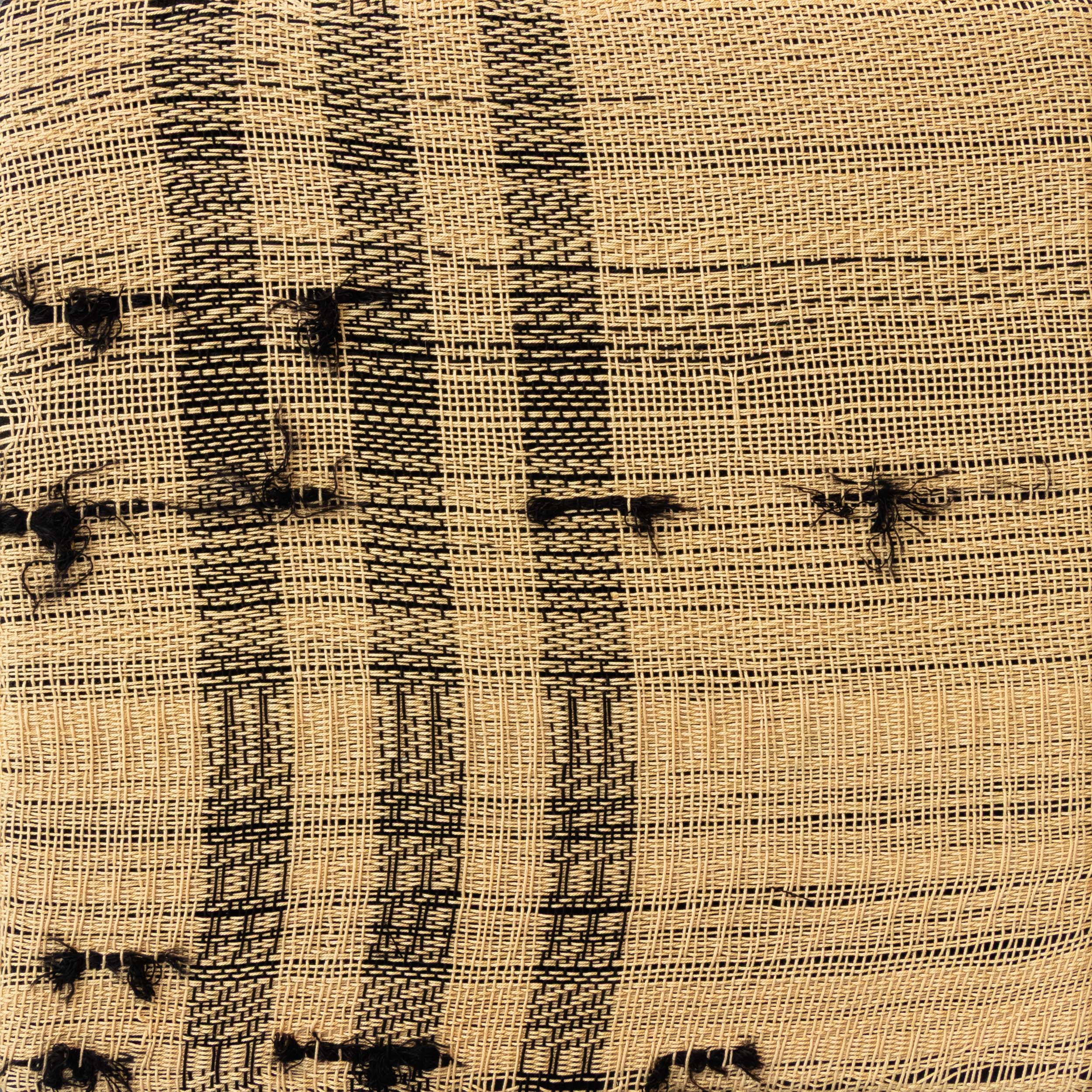
“Spatialisation V” is the most architectural of Sonia Martins Mateus’s series, a patchwork of woven blocks in ochre and black thread, each turned in a different direction. Herringbone, diagonal twill and fine vertical striping meet at hard edges, while a single black line runs down the centre like a beam or a doorway. The blocks read as rooms, walls and plots of land seen from above, a plan in which built form and open ground are pieced together, the idea of spatialisation that runs through her work. Because the thread changes direction from one block to the next, the surface seems to shift as the viewer moves, and the visible seams and small irregularities of tension keep the hand of the weaver present.
Wim Legrand,
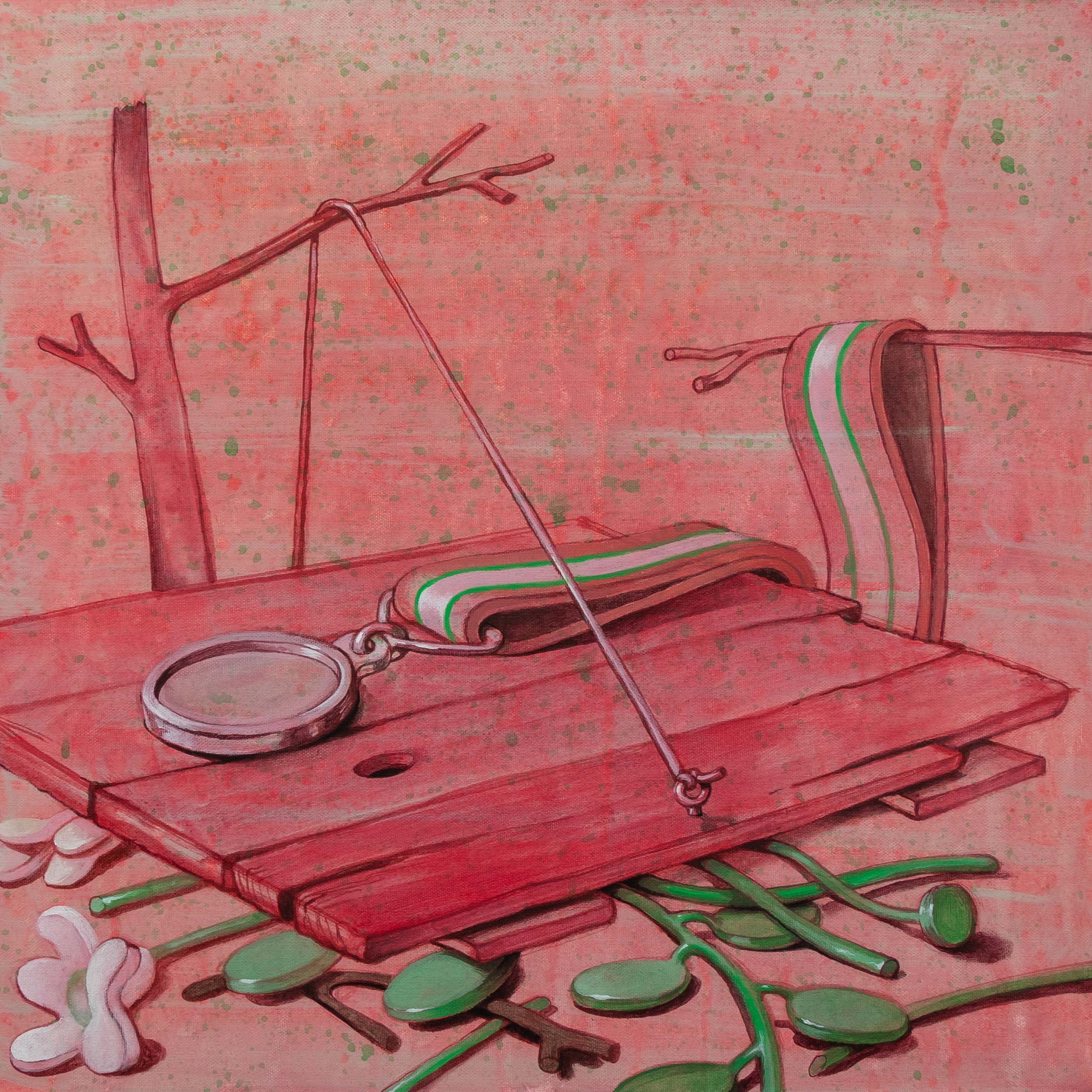
“Trap I” suspends a simple trap mechanism between anticipation and aftermath. A restrained palette of rose-pink, pale green and earthy tones gives the scene an uncanny stillness, while a blank attendance medal introduces questions of recognition, memory and the value we attach to symbolic rewards.
Tarik Chebl,
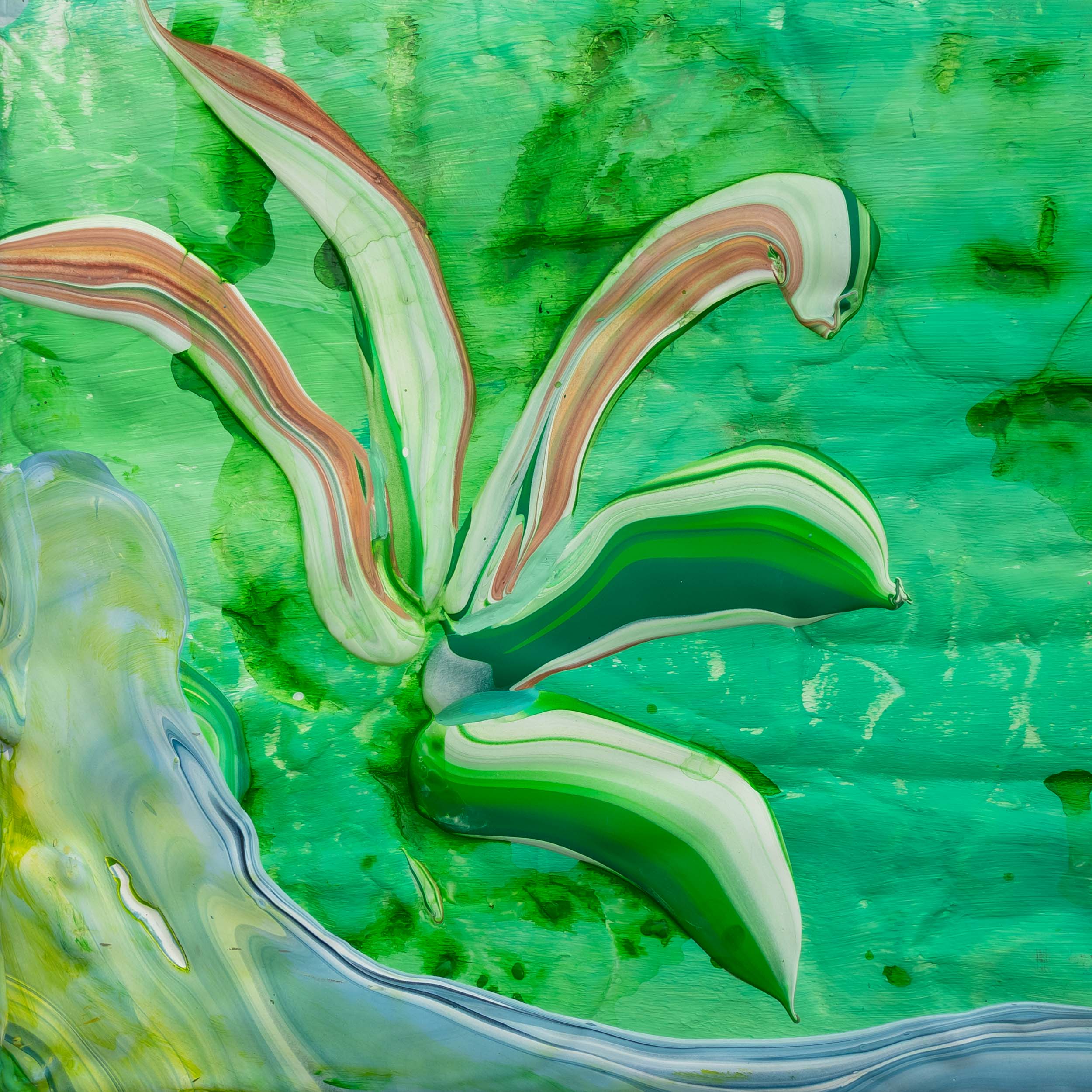
Plant brings a single ribbon-like botanical form into close focus, allowing it to unfurl across a richly textured ground. Its fluid movement and layered surface make the familiar feel newly animated—part plant, part gesture, part imagined life. By isolating a detail that might otherwise disappear within a larger scene, Tarik Chebli invites sustained looking and reveals nature as something strange, energetic and continually transforming.
Tarik Chebl,
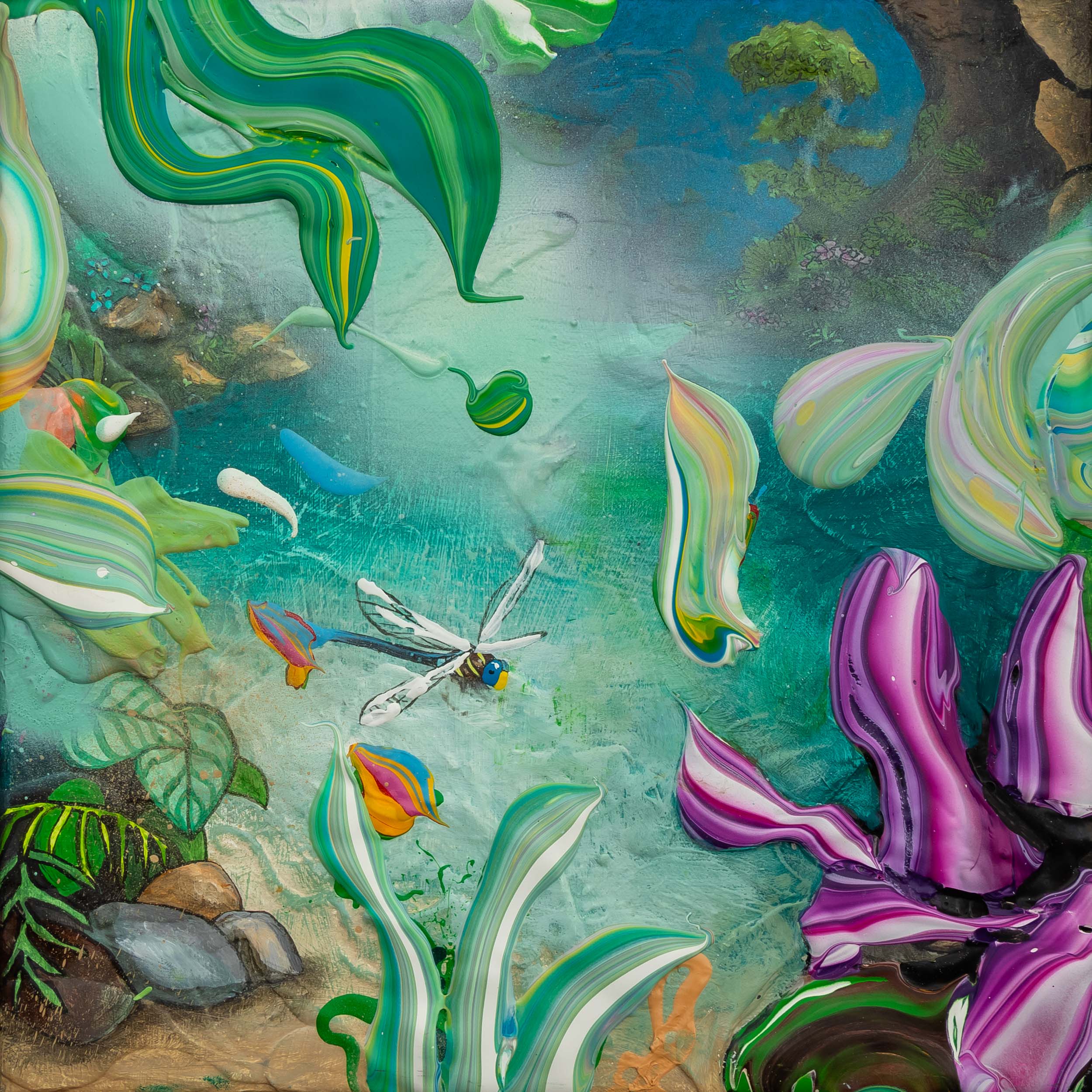
In ‘Dragonfly’, Tarik lets the creature emerge gradually from a dense, vividly coloured environment. Strong gestures and foliage-like forms draw the eye inward from the edges, creating a small moment of discovery as the dragonfly comes into view. Behind it, a delicately detailed background brings a quieter register to the painting, with an atmosphere reminiscent of traditional Japanese prints. The work moves between observation and imagination, reflecting Tarik’s view of a composition as an ecosystem in which every element has its place within a fragile balance.
Chebli’s practice often moves between detailed brushwork and thick, material surfaces. In Dragonfly, that balance gives the image its particular tension: the creature is precise, while the world around it remains open, dense, and partially hidden.